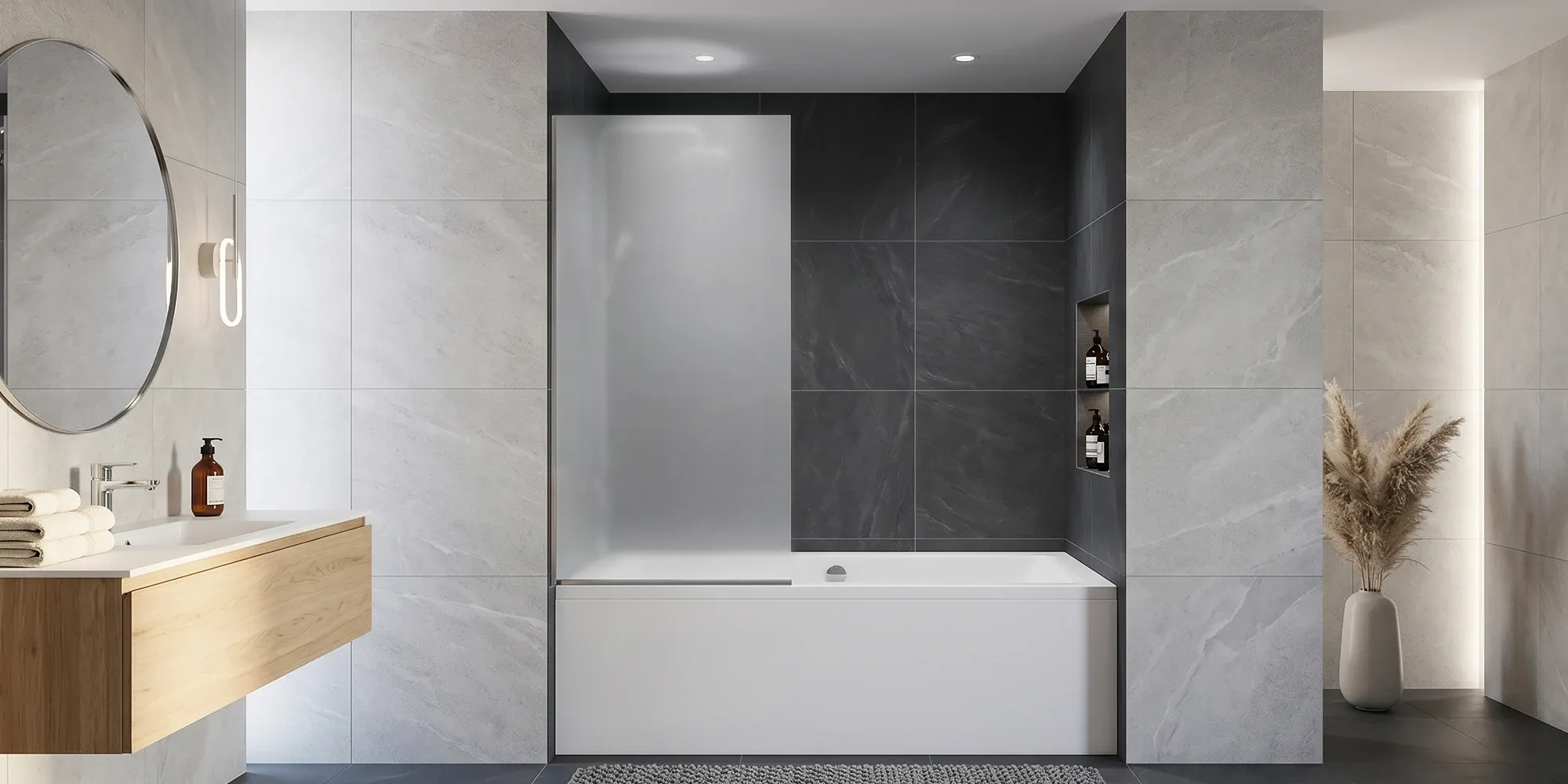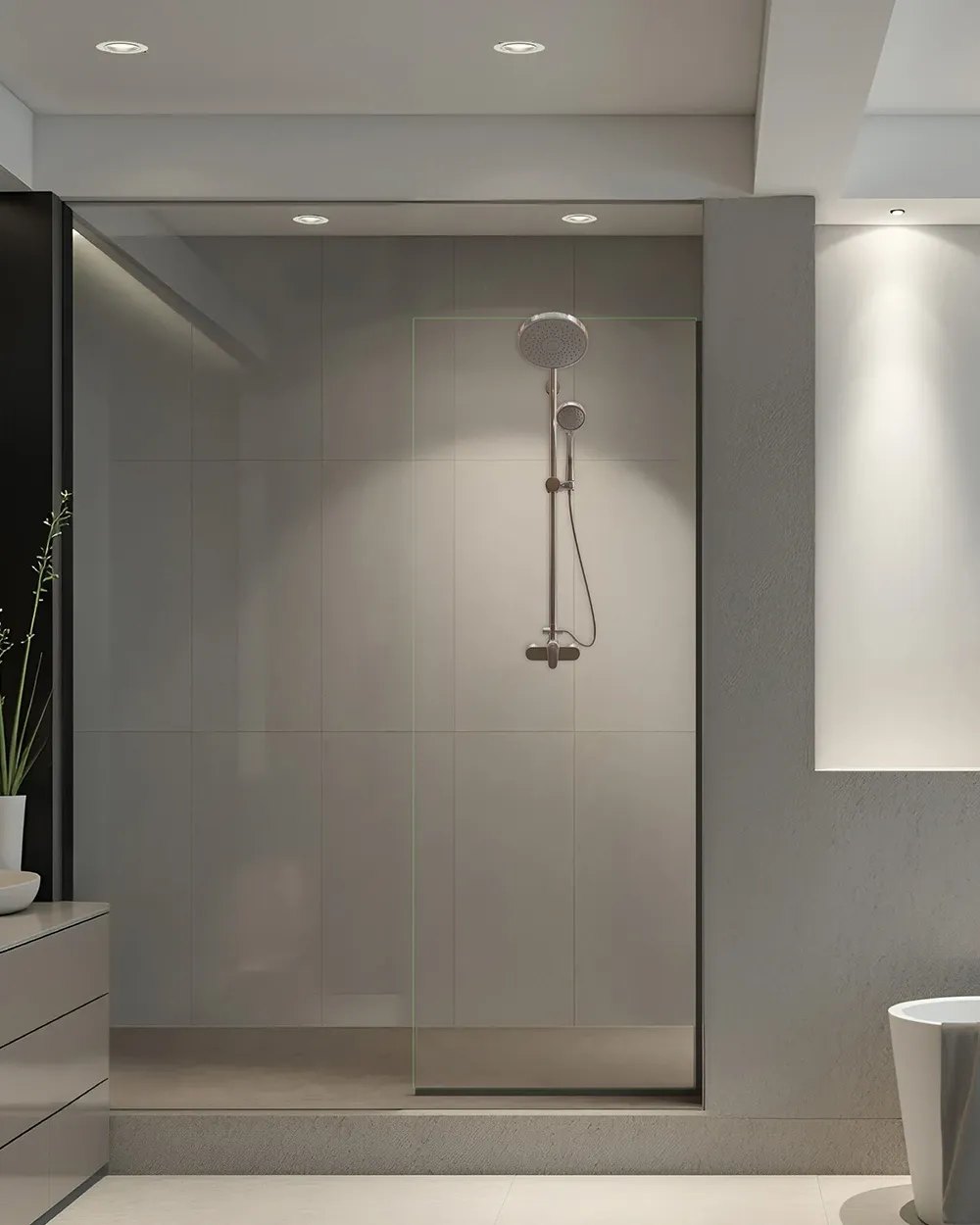
A single fixed shower screen can help keep water inside a walk-in shower — if the screen is wide enough and the shower head is angled correctly. Here's when a fixed panel is enough, when you need a return panel or full hinged enclosure, and how to size and position the glass for real splash control.
Reviewed by John Flouhouse, Installation Team Lead at Dulles Glass — the crew that measures, fabricates, and installs custom fixed shower screens and walk-in enclosures.
A fixed shower screen gives a walk-in shower its clean, open look. But before ordering one panel of glass, most homeowners want to know the same thing: will it actually keep water off the bathroom floor?
The short answer: yes, in most properly designed walk-in showers. The longer answer depends on three things — the width of the screen, the position of the shower head, and the shape of the opening.
At Dulles Glass, we size every fixed shower screen around the opening width, shower head location, pan slope, and how much splash protection the homeowner wants — then we fabricate each frameless fixed shower panel to those exact measurements. The guidance below is the same set of checks our install team runs before recommending a configuration.
Key Takeaways
- A single fixed screen works when the panel covers roughly two-thirds of the opening as a starting point — depending on shower head position and pan slope — and the shower head sprays away from the open edge.
- Common screen width: 36 to 48 inches for many 60-inch walk-in showers. Narrower panels work for narrower openings.
- Shower head position matters more than screen width. A back-wall shower head angled inward controls splash even with a smaller screen.
- Add a short return panel for openings wider than 60", multiple shower heads, or rain shower heads.
- Choose a hinged enclosure when a vanity, toilet, or nearby wall sits close to the open side, or when you want maximum splash control.
Quick Answer: Will a Fixed Screen Stop Splash?
A single fixed shower screen can be enough for walk-in showers where the shower head points away from the open side and the panel covers roughly two-thirds of the opening. For wider walk-ins, multiple shower heads, or rain shower heads, plan on a return panel or a full hinged enclosure to control splash.
When a Fixed Shower Screen Is Enough
Most walk-in showers under 60 inches wide are good candidates for a single fixed glass panel. The configurations where one panel reliably controls splash:
- Alcove-style walk-in with the shower head on the back wall or the wall where the screen is anchored, angled toward the floor.
- Standard 36- to 48-inch-wide opening where the fixed screen covers most of the entry side.
- Single shower head (no rain head, no body sprays).
- Properly sloped shower pan that drains water away from the open side toward the drain.
- Threshold height at least 1 inch above the surrounding floor (or curbless pans with a perimeter linear drain).
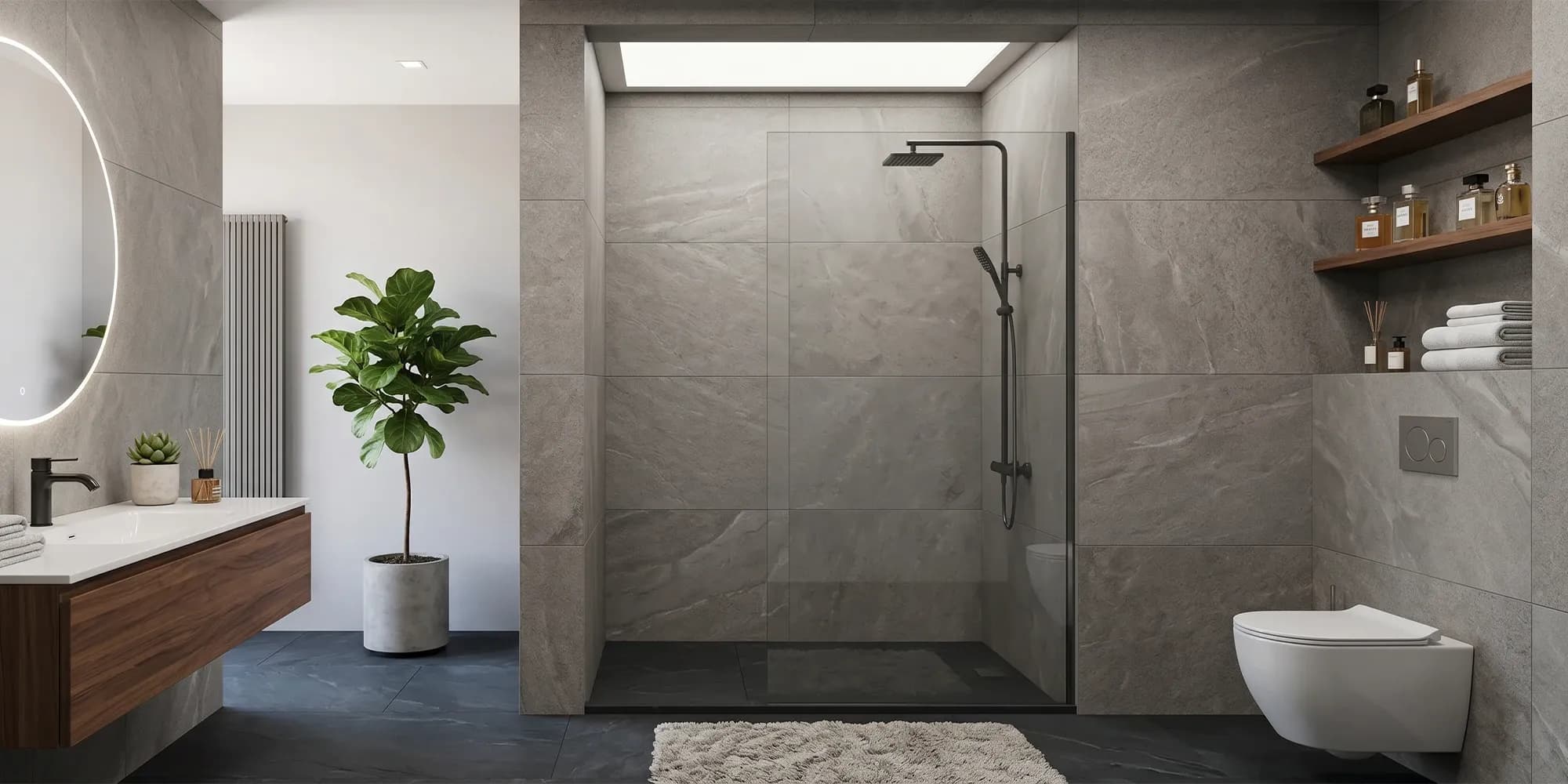
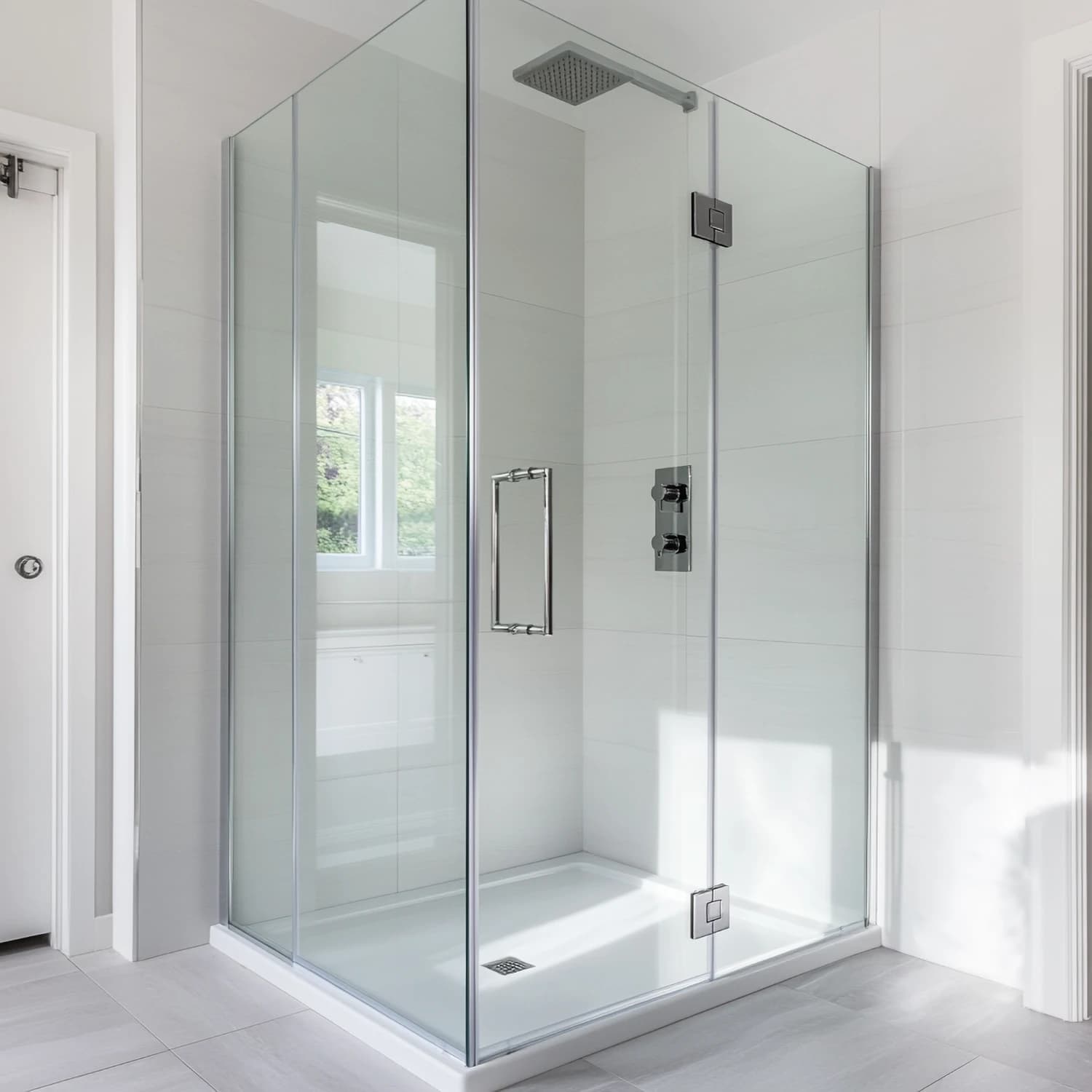
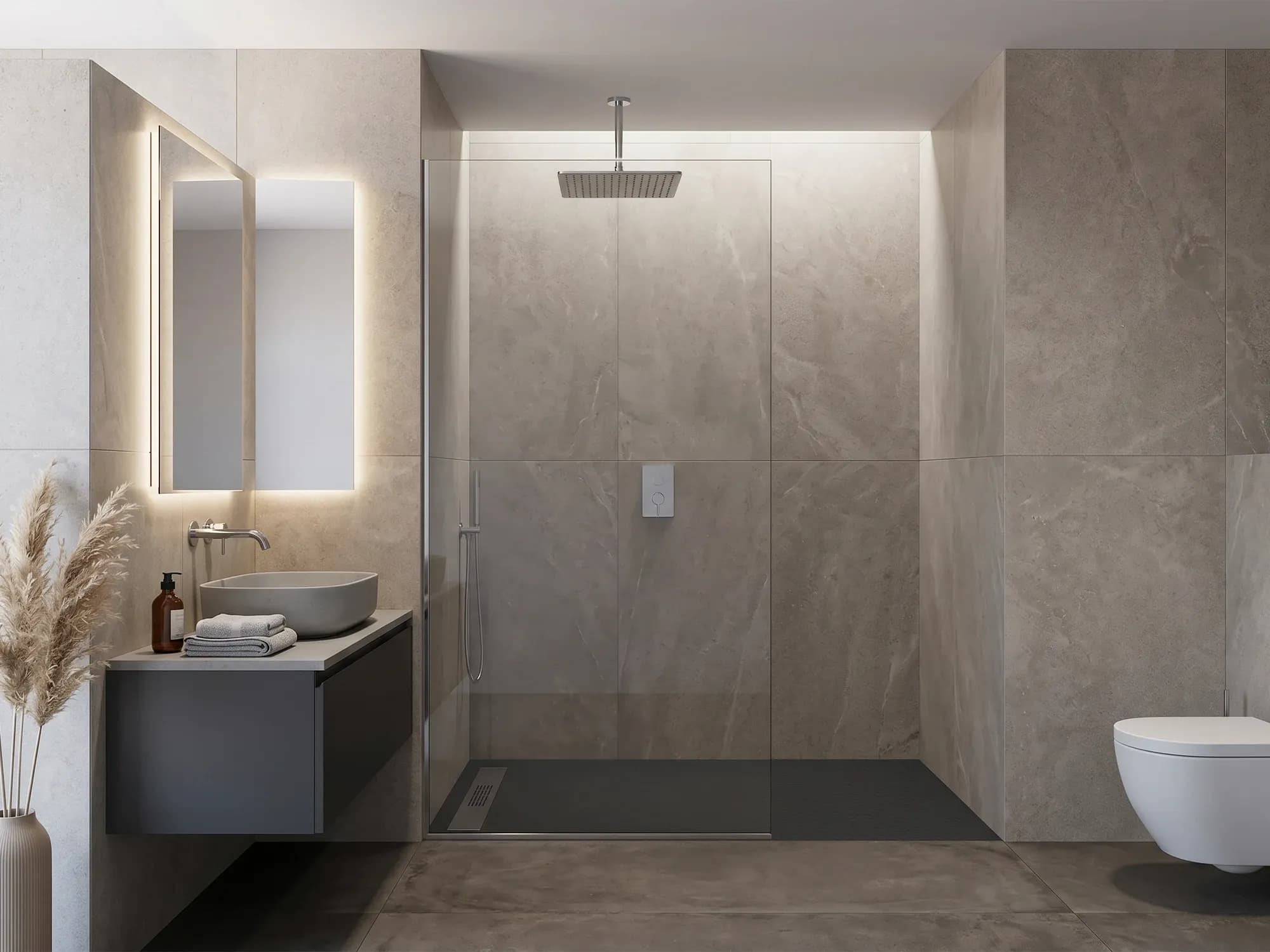
Single fixed shower screen on a walk-in shower — back-wall shower head angled inward, panel covers roughly two-thirds of the opening.
In these layouts, the open one-third of the entry usually stays dry because the shower head spray cone hits the back wall and the fixed panel, not the open side.
When a Single Fixed Panel Isn't Enough
Some configurations splash past any single panel, no matter how wide:
- Openings wider than 60 inches — covering roughly two-thirds of the opening starts to require a panel wider than glass-weight limits allow without reinforcement.
- Multiple shower heads or body sprays — spray cones overlap and bounce off walls in ways a single panel can't deflect.
- Rain shower heads mounted overhead — water falls vertically with no directional control, hitting every surface inside the shower.
- Shower heads on the open-side wall — spray points toward the open edge and exits the shower past the panel.
- Layouts with a vanity, toilet, or wall close to the open side — even normal spray hits nearby surfaces.
The most common splash mistake
Mount the shower head on the open-side wall and then try to stop splashing with a fixed panel on the same side. The water sprays away from the panel, not against it. Move the shower head to the back wall or the screen-side wall before deciding what glass configuration you need.
How Shower Head Position Affects Splash
Shower head angle and mounting wall are the biggest factors in splash control — bigger than panel width, bigger than threshold height, bigger than glass thickness.
What we see in measurements
In the walk-in showers we measure, the most common splash complaint traces back to a shower head aimed at the open side or a pan that slopes the wrong way — not to the glass being too narrow. When the head sits on the back or screen-side wall and the pan drains toward the drain, a single fixed panel covering about two-thirds of the opening controls splash in the large majority of the layouts we see. Glass width is rarely the part that fails.
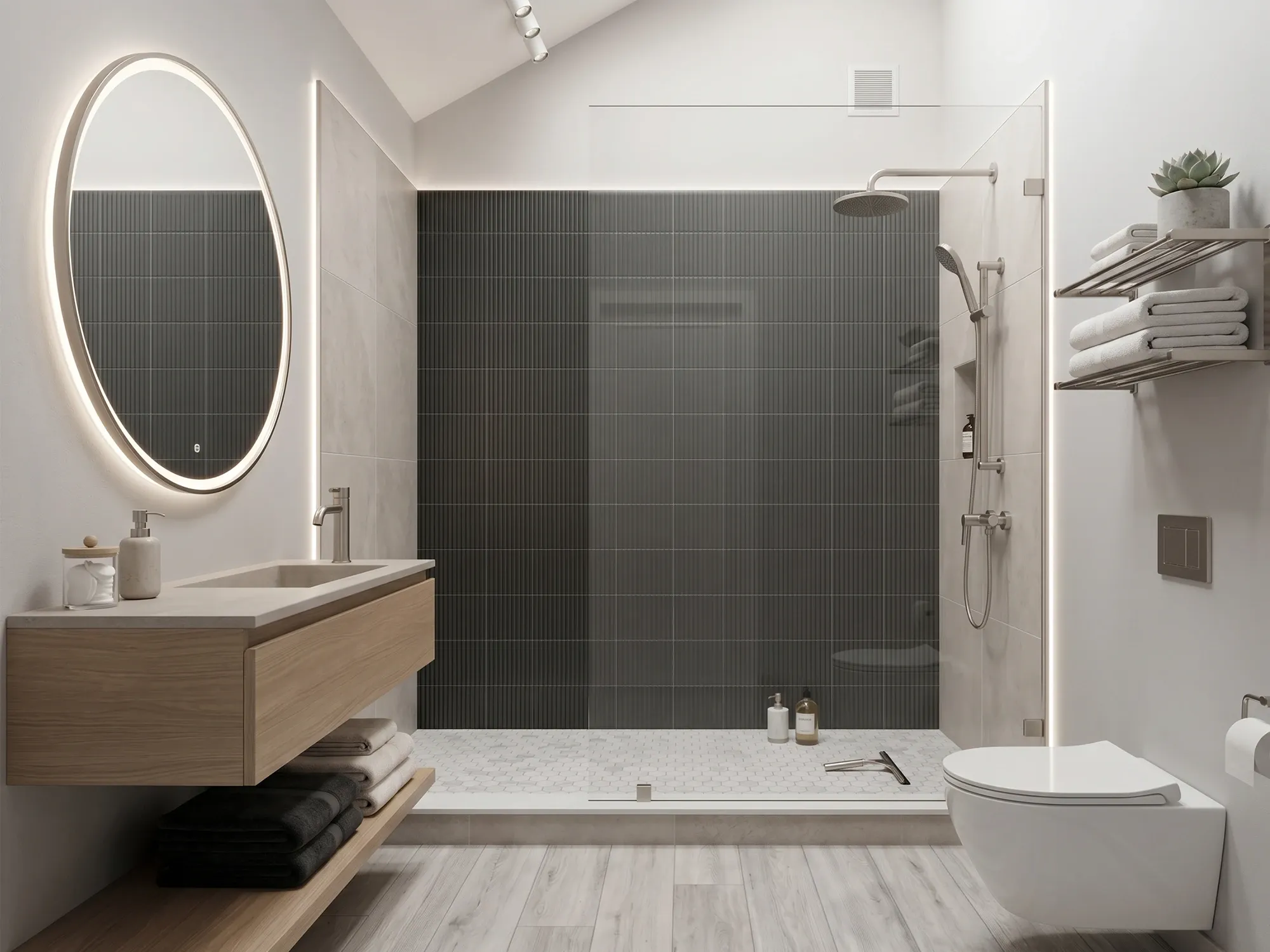
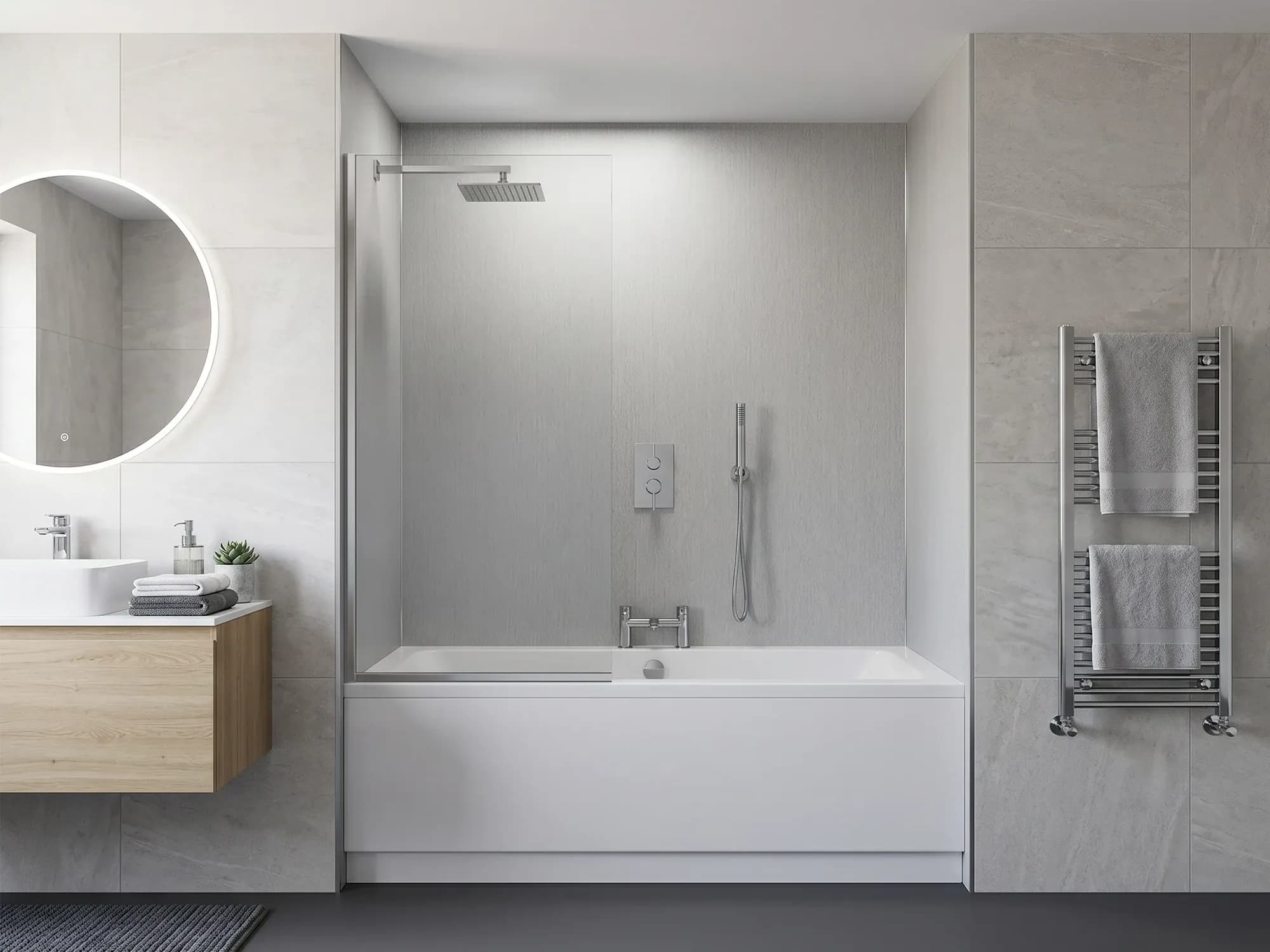
Fixed glass shower screen in a walk-in shower with the shower head angled away from the open side.
A back-wall shower head angled away from the open side keeps spray off the entry edge.
Best: shower head on the back wall
Mount the shower head on the wall opposite the entry, angled downward at roughly 30 degrees from horizontal. Spray hits the floor and the screen-side wall; almost nothing reaches the open side of the screen.
Good: shower head on the screen-side wall
Mount the shower head on the wall the fixed screen is anchored to, angled away from the open side. Spray hits the back wall, then the floor. The fixed panel blocks any sideways splash.
Avoid: shower head on the open-side wall
Spray points directly toward the open side. Even a 48-inch screen may not stop the spray pattern from exiting the shower. If the rough-in is already on this wall, plan for a full hinged enclosure or relocate the plumbing during the remodel.
Shower head positions that reduce splash with a fixed shower screen.
Back-wall and screen-side mounting keep spray contained; open-side mounting sends water past the panel.
Sizing a Fixed Shower Screen for Splash Control
Use the table below as a starting point. Final sizing should account for shower head location, curb height, and any local code or installation constraints — which is why our team confirms these on site before a fixed shower panel is fabricated.
| Opening width | Recommended screen width | Notes |
|---|---|---|
| 36" | 24"-28" | Covers ~70% of opening; ideal for small walk-ins |
| 42" | 30"-34" | Roughly two-thirds coverage as a starting point; standard alcove walk-in |
| 48" | 34"-38" | Mid-range; consider a return for multiple heads |
| 54" | 38"-44" | Wider walk-in; works with single back-wall shower head |
| 60" | 42"-48" | Upper limit for single-panel control without a return |
| Over 60" | Custom — usually with a return panel | Single panel rarely controls splash on its own |
Glass thickness is commonly 3/8-inch tempered glass for these widths. Above 48 inches wide, the panel may need 1/2-inch tempered glass or a structural support clamp at the top.
Reduce Splash With a Single Fixed Panel
If you've committed to a single fixed screen and want to maximize splash control:
- Move the shower head to the back wall if the rough-in allows. This is the single biggest splash reducer.
- Angle the shower head downward. 30 to 45 degrees off horizontal puts spray on the floor instead of the opposite wall.
- Use a handheld shower head with a wand hook at a lower height (around 60 inches). Lower spray height means less horizontal travel.
- Check the pan slope. A flat or outward-sloping pan undermines any glass configuration. The slope should run toward the drain at 1/4 inch per foot minimum.
- Set the threshold curb 1 inch above the surrounding floor. A flush threshold lets stray water cross the line.
When to Add a Return Panel or Hinged Enclosure
The right call when a single fixed screen isn't enough usually isn't a wider screen — it's adding a return panel or moving to a hinged enclosure.
Return panel (90-degree fixed return)
A short fixed glass panel (typically 6-12 inches) installed at 90 degrees to the main screen at the open end. It catches the splash exiting the shower without closing the walk-in feel. Common on walk-ins between 60 and 72 inches wide.
Hinged enclosure with fixed panel
The fixed glass panel extends most of the opening width, and a hinged glass door fills the remaining gap at the entry. Best for layouts with multiple shower heads, rain heads, or fixtures close to the open side. See our frameless hinged shower doors for door-plus-fixed-panel configurations.
Here's how the three configurations compare for splash control and walk-in feel:
| Configuration | Best for | Splash control | Walk-in feel |
|---|---|---|---|
| Single fixed screen | Openings under 60" with a single back-wall or screen-side shower head and a properly sloped pan | Good — when the shower head sprays away from the open side | Most open |
| Fixed screen + return panel | Openings around 60-72", or a vanity, toilet, or wall close to the open side | Better — the 90-degree return catches spray at the open end | Mostly open |
| Hinged enclosure (fixed panel + door) | Multiple shower heads, rain heads, or when you want maximum splash control | Best — the door closes the entry | Most enclosed |
If splash control matters more than the open walk-in look, a hinged door with a fixed return is the right call. A single fixed screen is the cleaner choice when the layout cooperates.
What Dulles Glass Checks During Measurement
Before we specify a fixed glass panel, return panel, or hinged enclosure, our install team confirms each of these during the in-home measurement:
- Opening width — the actual finished dimension, not the rough framing.
- Shower head wall and spray direction — the single biggest factor in splash control.
- Curb or curbless threshold — and whether a perimeter linear drain is in place.
- Pan slope and drain location — water needs to run toward the drain, away from the open side.
- Nearby vanity, toilet, or wall exposure — surfaces close to the open edge that stray spray can reach.
- Whether a return panel or hinged door is the better fit — based on the layout, not a one-size template.
Those measurements then drive the custom fabrication: every fixed shower panel is cut, tempered, and edge-finished to the exact opening rather than trimmed from a stock size.
Need Help Choosing the Right Fixed Shower Screen?
Walk-in shower layouts vary widely — what works in a 36-inch alcove won't work in a 72-inch curbless wet room. Dulles Glass fabricates and installs custom fixed glass panels, hinged enclosures, and return panel configurations. We confirm shower head position, opening width, and pan slope during the in-home measurement, then specify the right configuration for your bathroom.
Explore our Tela shower screens, frameless shower doors, custom shower doors, and professional shower installation — or request a quote and our team will walk through splash control before fabrication starts.
Frequently Asked Questions
Are fixed shower screens enough to stop water splash?
A single fixed shower screen can be enough for walk-in showers where the shower head points away from the open side and the panel covers roughly two-thirds of the opening. For wider walk-ins, multiple shower heads, or rain shower heads, plan on a return panel or a full hinged enclosure to control splash.
How wide should a fixed shower screen be to control splash?
For a standard 60-inch walk-in shower, plan on a fixed screen between 36 and 48 inches wide. The screen should cover the shower head side and at least two-thirds of the opening. Narrow screens (under 30 inches) leave too much spray gap unless the shower head is angled inward.
Does the shower head position matter for a fixed shower screen?
Yes. Shower head angle and position are the single biggest factor in splash control. Mount the shower head on the back wall (opposite the screen edge) or on the wall behind the fixed panel, and angle the spray downward and inward. A shower head facing the open side of a walk-in will splash water past any fixed screen.
When do I need a return panel instead of a single fixed screen?
Add a short return panel (a 90-degree glass piece at the open end) when the opening is wider than 60 inches, when you have multiple shower heads, or when the bathroom layout puts a vanity or wall close to the open side. The return cuts spray on the open end without closing the walk-in feel.
Is a fixed shower screen open at the bottom?
Depending on the mounting method, a fixed shower screen may have small clearances around the glass, but splash control depends more on pan slope, curb height, and shower head direction than on the bottom gap alone. Properly sloped pans drain water into the shower; if the pan is flat or slopes outward, even a full enclosure won't fully stop splash.
Sources and Installation Standards
- ANSI Z97.1 / 16 CFR Part 1201 — safety glazing standards for shower doors and fixed panels.
- International Residential Code shower pan slope and threshold guidance, published by the International Code Council.
- Dulles Glass install-team notes on walk-in shower splash patterns.
Planning a walk-in shower with a fixed glass screen?
Dulles Glass fabricates and installs custom fixed shower screens, return panels, and hinged shower enclosures. Request a quote and our team will confirm your opening width, shower head position, and splash-control needs before fabrication.
Why choose Dulles Glass
54+
Years Glass expertise
10,000+
Projects Measured and installed Yearly
3-Year Warranty
On custom installations
4.9/5 Rating
Customer Reviewed
Ready to start your glass project?
Tell us what you are planning and our glass experts will help you find the right solution.