Most bathtub doors use tempered glass. Frameless tub screens typically use 3/8-inch glass, while framed sliding tub doors usually use 1/4-inch glass. Here's how to choose the right thickness, finish, and tint.
Reviewed by John Flouhouse, Installation Team Lead at Dulles Glass
Bathtub doors are made with tempered glass — the same kind of heat-treated safety glazing used in shower enclosures and storm doors. For most frameless bathtub screens, 3/8-inch glass is the standard. Framed and semi-framed sliding tub doors usually use 1/4-inch glass supported by a metal channel. From there, the main choices are finish and appearance: clear, low-iron HD, frosted, bronze, or gray.
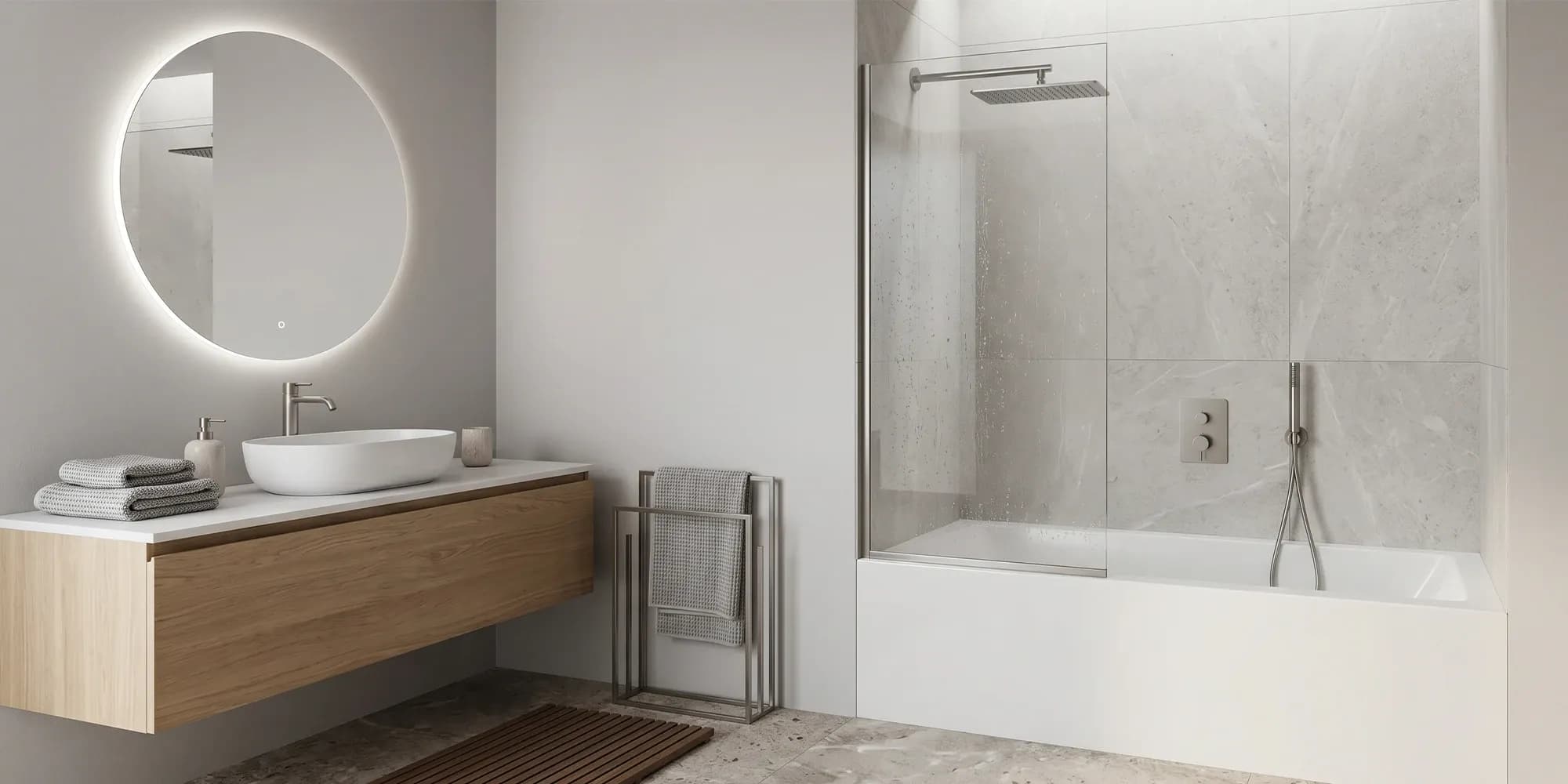
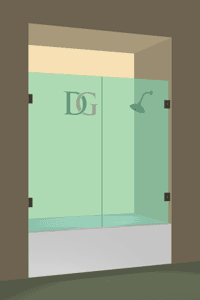
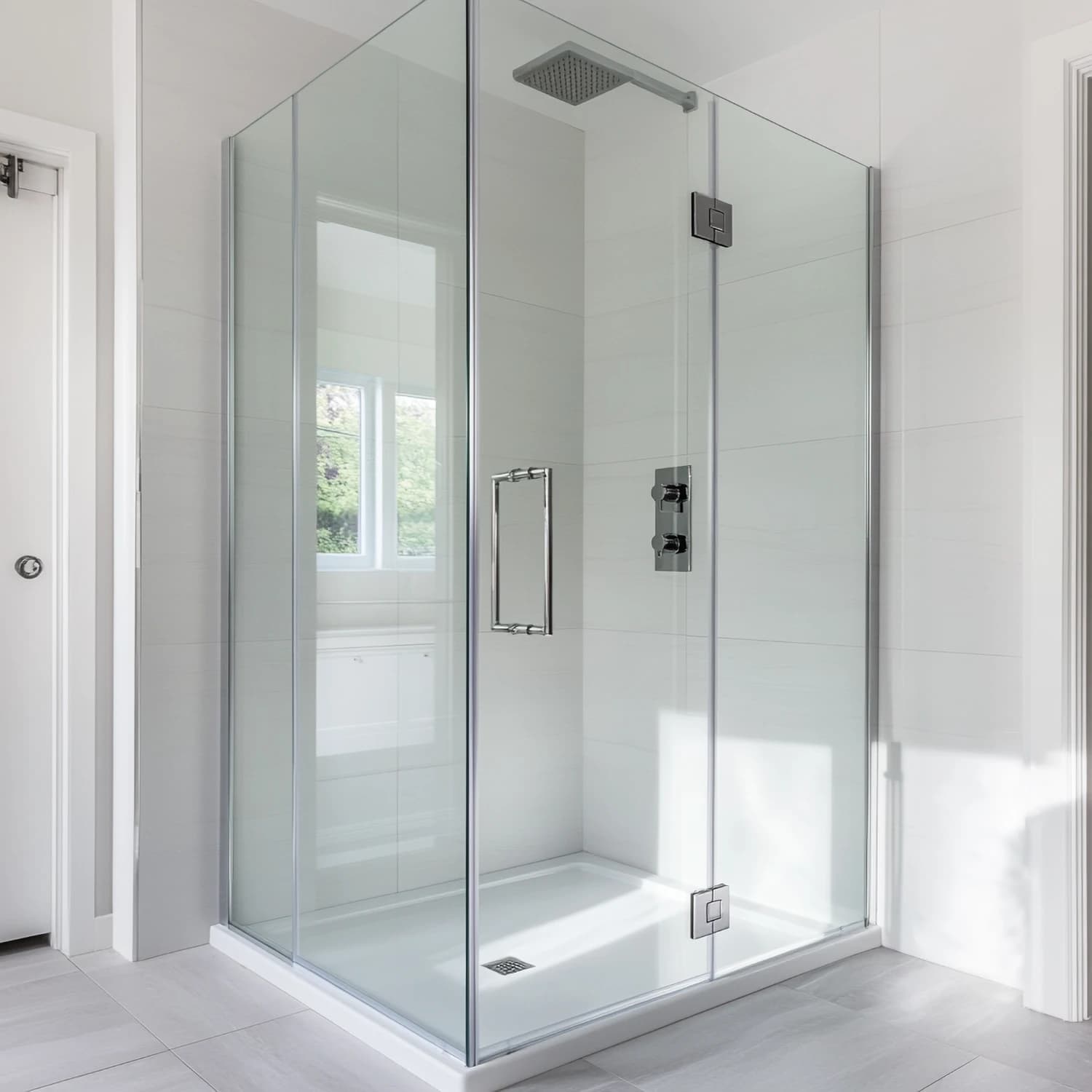
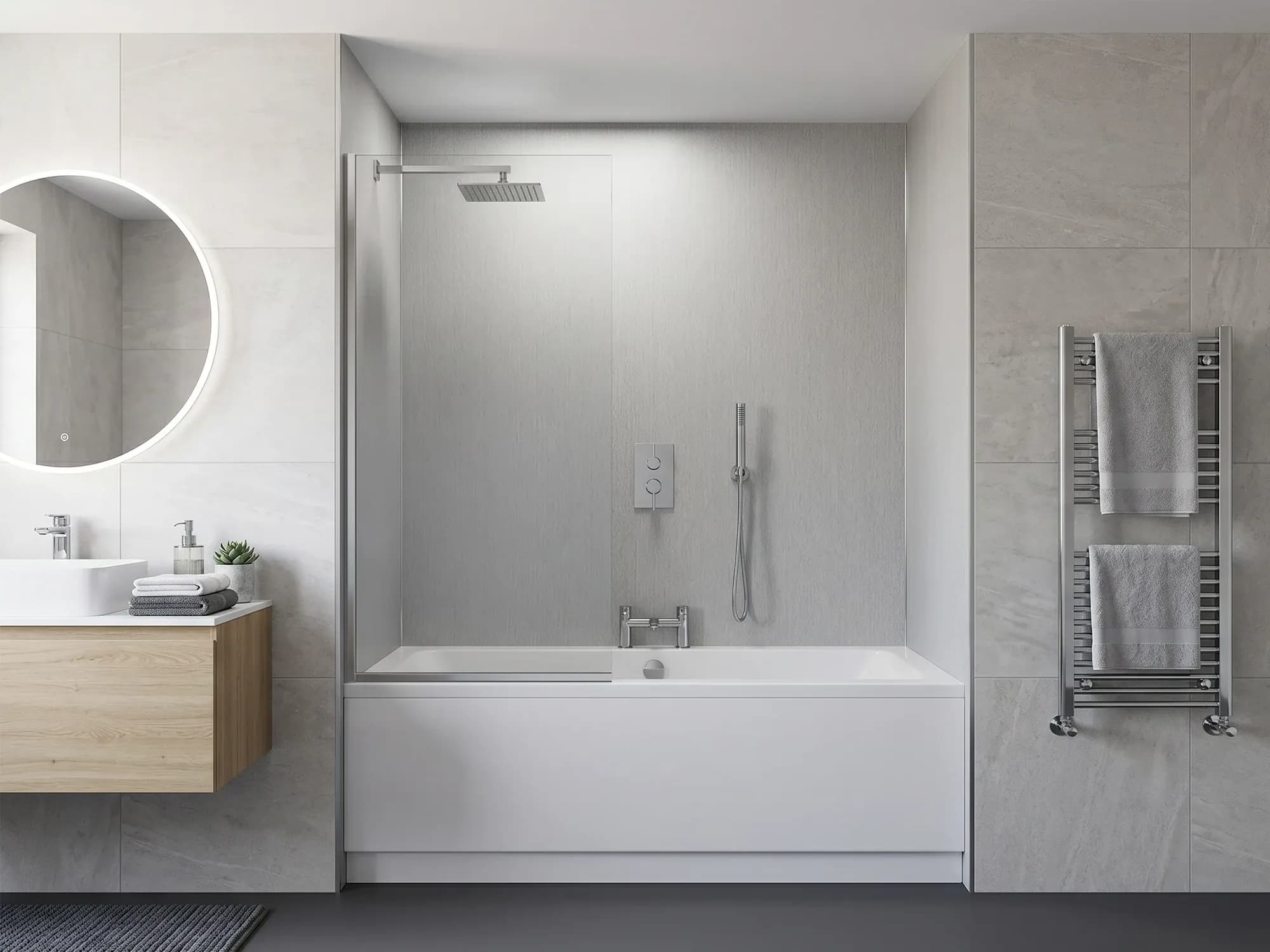
A clear tempered glass bathtub screen — the standard choice for most tub-shower combos.
Key Takeaways
- Bathtub door glass must be safety glazing — tempered glass is the standard material used for tub and shower doors.
- Frameless thickness: 3/8 inch standard. Premium upgrade: 1/2 inch.
- Framed/semi-framed thickness: 1/4 inch in a metal channel.
- Finish options: clear, low-iron HD, frosted, bronze tint, gray tint.
- Most installs use clear 3/8-inch tempered glass with optional ClearShield coating for easier cleaning.
Quick Answer: Bathtub Door Glass Type
Bathtub doors use tempered safety glass. Frameless bathtub screens typically use 3/8-inch glass, while framed or semi-framed sliding tub doors usually use 1/4-inch glass. Most homeowners choose clear glass, with low-iron HD glass and frosted glass as the most common upgrades.
Are Bathtub Doors Glass or Plastic?
Most permanent bathtub doors are glass, not plastic. Tempered glass is more durable, easier to clean, and has a more finished look than acrylic or vinyl panels. Plastic panels are more common in temporary or budget shower screens.
Why Bathtub Doors Use Safety Glass
For bathtub and shower doors, safety comes first. That's why tub doors are made with safety glazing, most commonly tempered glass. Tempering is a heat-treatment process that makes glass roughly four times stronger than ordinary annealed glass, and when it does break, it crumbles into small blunt pebbles instead of sharp shards.
Safety glazing in shower and tub doors is governed by two U.S. standards — ANSI Z97.1 and 16 CFR Part 1201 — and reputable bathtub door manufacturers build to these safety requirements. For homeowners, the practical takeaway is simple: a properly built tub door is safe and code-compliant.
Bathtub Door Glass Thickness
Three thicknesses are common for bathtub doors:
| Thickness | Used in | Notes |
|---|---|---|
| 1/4 inch (6mm) | Framed and semi-framed sliding tub doors | Glass sits in a metal channel that provides structural support |
| 3/8 inch (10mm) | Frameless screens and hinged tub panels | Standard for frameless. The glass itself carries the load |
| 1/2 inch (12mm) | Wider frameless panels or premium look | Used on panels wider than 60 inches or for more substantial visual weight |
Most frameless bathtub screens and hinged tub panels use 3/8-inch glass — thick enough to be self-supporting at standard widths and to give the glass a substantial visual edge. 1/4-inch glass is typically used with framed or semi-framed systems, where the metal channel provides added support.
Bathtub Door Glass Finishes and Tints
Five common finish options for bathtub door glass — our team can help you choose the finish that works with your tile, fixtures, and privacy needs:
Clear (standard)
The default choice. Shows the tub interior fully and gives a small bathroom that "feels larger" effect. It has a faint green tint at the edges in 3/8-inch thickness, most visible against pure-white tile.
Best for: small bathrooms and open sight lines.
Low-iron HD glass
Iron oxide is removed during manufacture, eliminating the green tint of standard clear glass. The result is water-clear glass with no visible color cast. It's worth the upgrade in white-on-white bathrooms or when the glass edges are visually prominent.
Best for: white tile and high-end finishes.
Frosted (acid-etched)
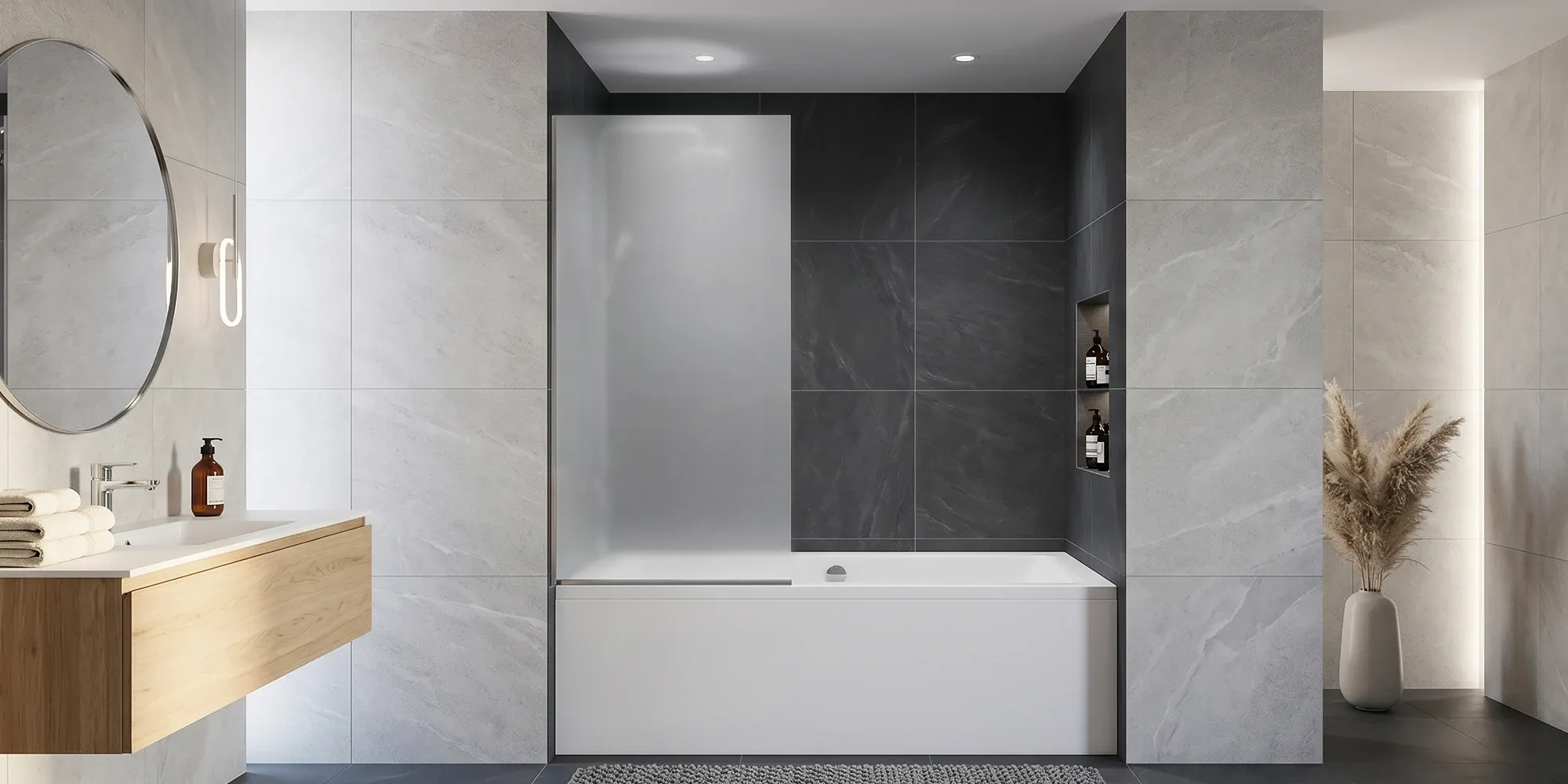
Uniformly cloudy glass that lets light through but blocks the view. Good for shared bathrooms where privacy matters. Available in fully frosted, banded frosted (frost only in the middle), or patterned (rain, reed, bubble).
Best for: privacy.
Bronze tint
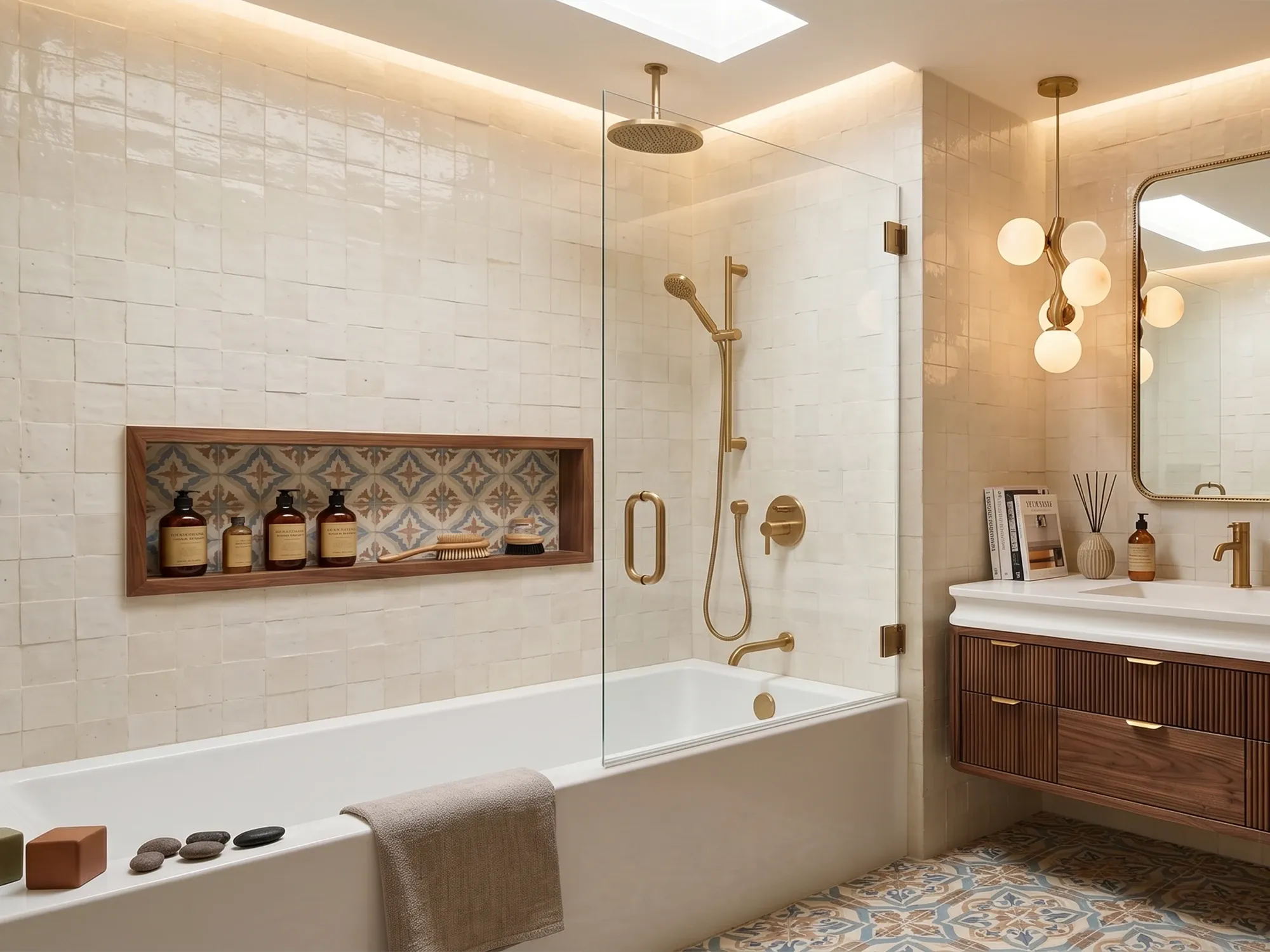
Warm yellowish-brown body tint. Pairs with brass fixtures, oil-rubbed bronze hardware, and warm-toned bathroom palettes. Doesn't provide privacy — just adds visual warmth.
Best for: warm metals and traditional palettes.
Gray (smoke) tint
Cool charcoal body tint. Pairs with chrome fixtures, gray tile, and modern cool-toned palettes. Same privacy notes as bronze — tints the view but doesn't block it.
Best for: cool, modern bathrooms.
Low-Iron HD Glass: Worth the Upgrade?
Standard 3/8-inch clear tempered glass has a slight green tint that comes from iron oxide in the glass formulation. The green is most visible at the edges of thick glass and against pure-white surroundings (white tile, white grout, white fixtures).
Low-iron glass gives you a clearer, cleaner look by reducing the green edge tint you may notice on standard clear glass. The result is a clearer, brighter look, especially around exposed glass edges.
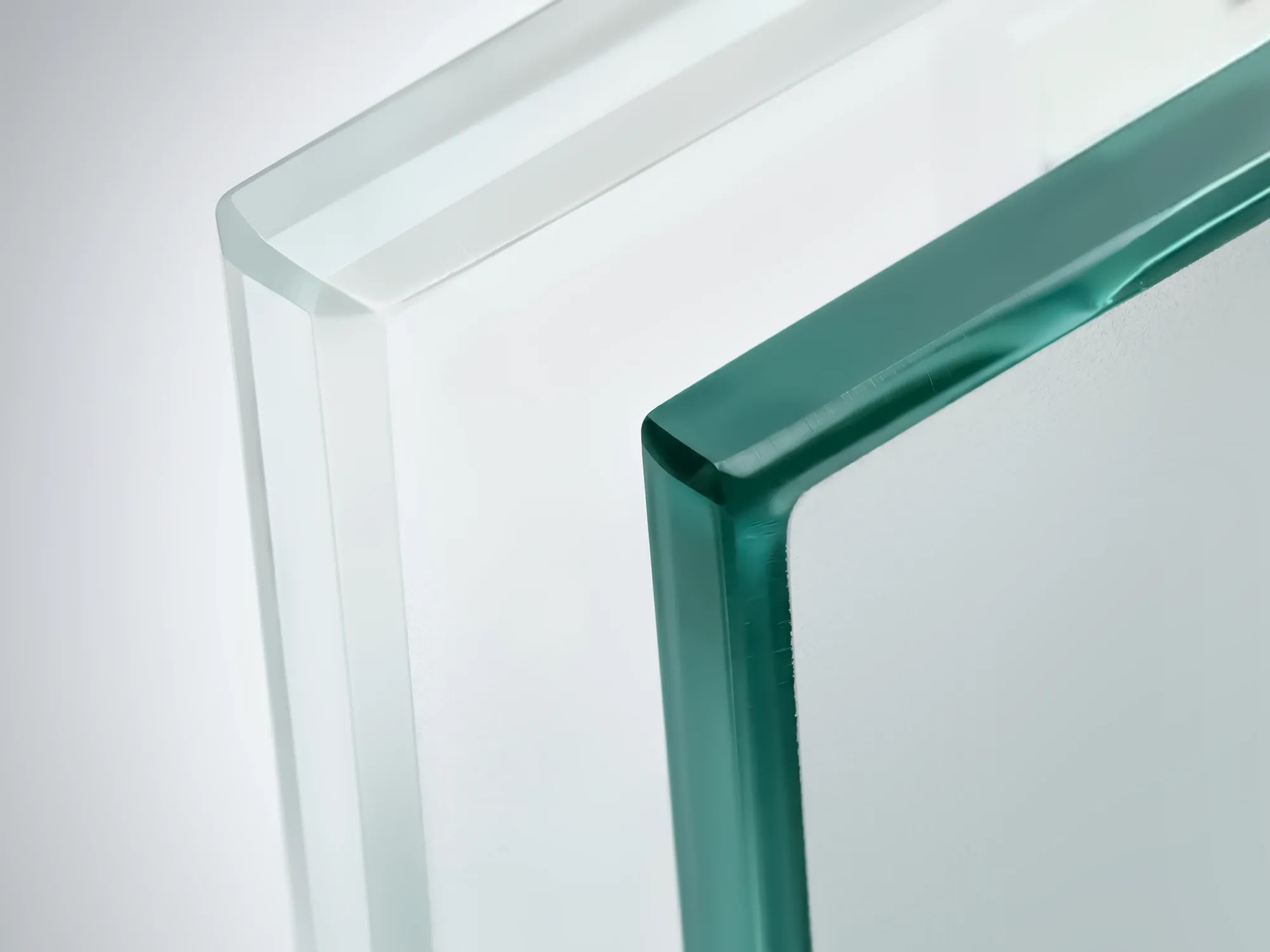
Low-iron glass edge (no green cast) next to a standard clear glass edge.
Where the upgrade is worth it for bathtub doors:
- White-on-white bathrooms — the green tint is most noticeable
- Modern designs where the glass is a primary visual element
- Resale listings — low-iron reads more upscale in photos
Where it's less necessary:
- Bathrooms with beige, warm, or gray tile (the green tint is invisible against non-white)
- Budget-constrained remodels where the upgrade cost is better spent elsewhere
When to Choose Frosted Bathtub Door Glass
Frosted glass is the right call when privacy is a real need:
- Shared bathrooms where someone might walk in during a bath or shower
- Master baths adjacent to a bedroom with open sight lines
- Guest bathrooms where temporary occupants might want full visual privacy
The trade-off is the visual openness. Frosted glass blocks the sight line that makes a clear bathtub screen feel larger in a small bathroom. For privacy without losing all of the open feel, banded frosted (frost only across the middle band of the panel) is the compromise.
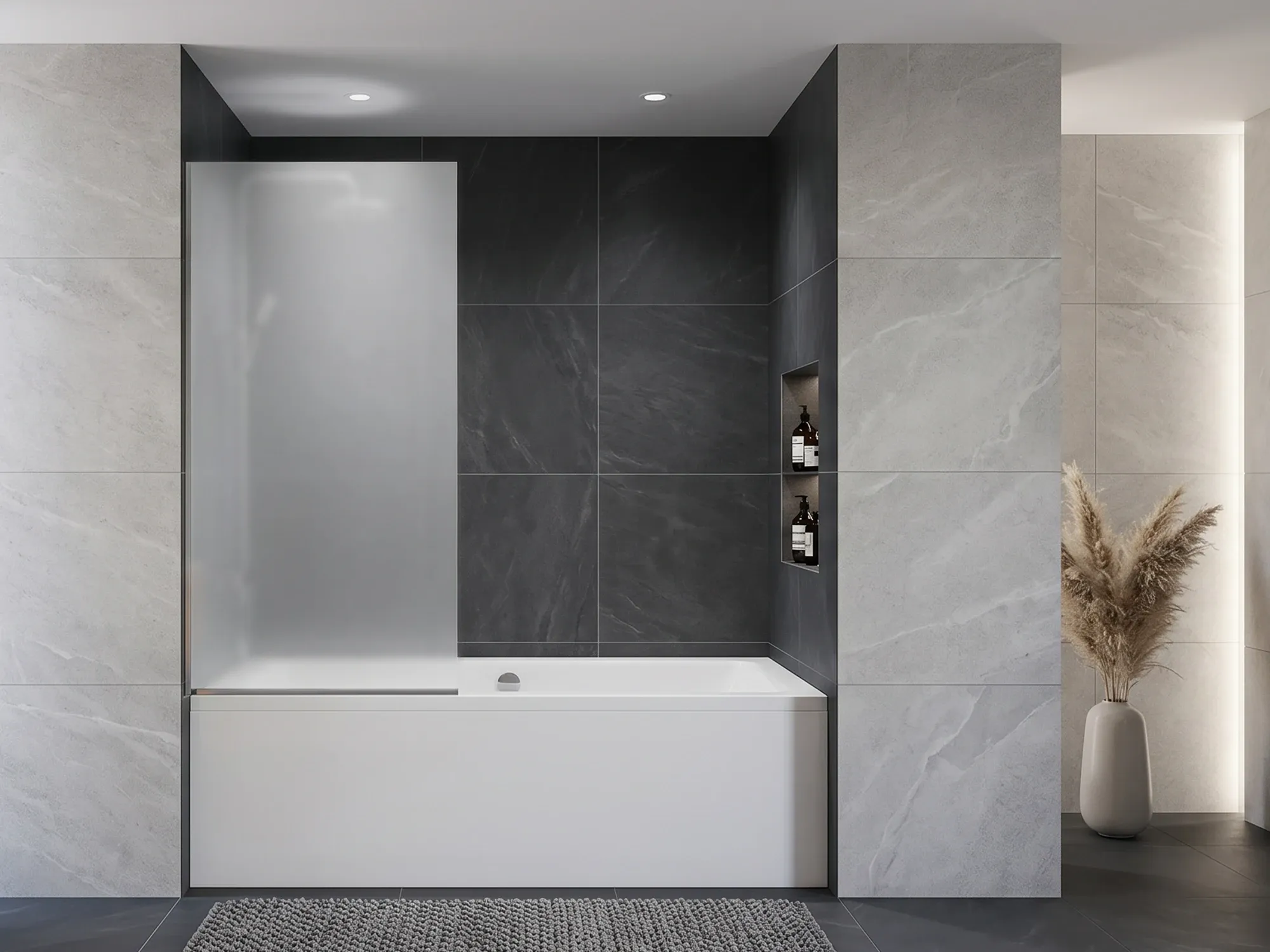
A frosted tempered bathtub screen — light still passes through, but the view is blocked for privacy.
Which Bathtub Door Glass Should You Choose?
| If you want… | Choose |
|---|---|
| Best value | Clear 3/8-inch tempered glass |
| No green edge tint | Low-iron HD glass |
| Privacy | Frosted or banded frosted glass |
| A warm bathroom palette | Bronze-tinted glass |
| A modern gray or chrome palette | Gray-tinted glass |
| A framed sliding tub door | 1/4-inch tempered glass |
Clear 3/8-inch tempered is the default for almost every bathtub door. Low-iron is the upgrade that shows in photos; frosted is the upgrade that solves a real privacy problem.
Installer Recommendation
From Our Install Team
For most tub-shower combinations, we recommend clear 3/8-inch tempered glass for frameless screens. It gives the best balance of strength, clean appearance, and value. If the bathroom has bright white tile, low-iron HD glass is usually the upgrade worth considering first.
Need Help Choosing Bathtub Door Glass?
The right glass type depends on your bathroom palette, privacy needs, and visual goals. Dulles Glass offers all five finishes — clear, low-iron HD, frosted, bronze, and gray — and confirms the right one during your in-home measurement. You can browse the full range of bathtub enclosures, doors, and screens to see the options.
If your project goes beyond the tub, our custom shower doors come in the same glass choices. Our team handles professional installation. When you're ready, request a quote with your bathroom palette in mind.
Frequently Asked Questions
What type of glass is used for bathtub doors?
Bathtub doors use tempered safety glass. Standard thickness is 3/8 inch for frameless configurations and 1/4 inch for framed or semi-framed kits. U.S. safety codes require safety glazing for tub and shower doors, and tempered glass is the standard material used to meet it.
What thickness of glass should a bathtub door be?
Frameless bathtub doors and screens use 3/8 inch tempered glass. Framed or semi-framed sliding tub doors use 1/4 inch glass set into a metal channel. The thicker glass is needed for frameless because the glass itself is structural.
What are the different finishes of bathtub door glass?
Clear, low-iron (HD or ultra-clear), frosted (acid-etched), bronze tint, and gray tint. Clear is standard; low-iron eliminates the green tint at the edges; frosted adds privacy; bronze and gray match warm or cool bathroom palettes.
Is tempered glass safe for bathtub doors?
Yes. Tempered glass is heat-treated to be roughly four times stronger than annealed glass and breaks into small blunt pebbles instead of dangerous shards. ANSI Z97.1 and 16 CFR Part 1201 require safety glazing in any shower or tub door, and tempered glass is the standard material that complies.
Should I choose low-iron glass for a bathtub door?
Low-iron glass is worth considering for a bathtub door in white-on-white bathrooms or when the glass edges are visible and the green tint of standard clear glass would clash. For most installs, standard clear glass is the right balance of cost and look.
Are bathtub doors glass or plastic?
Most permanent bathtub doors are glass, not plastic. Tempered glass is more durable, easier to clean, and has a more finished look than acrylic or vinyl panels. Plastic panels are more common in temporary or budget shower screens.
Not sure which glass is right for your bathroom?
Dulles Glass can help you choose the best thickness, finish, and hardware for your tub enclosure. We measure, fabricate, and install bathtub doors.
Why choose Dulles Glass
54+
Years Glass expertise
10,000+
Projects Measured and installed Yearly
3-Year Warranty
On custom installations
4.9/5 Rating
Customer Reviewed
Ready to start your glass project?
Tell us what you are planning and our glass experts will help you find the right solution.