The price gap between a $500 framed shower door and a $1,500-$3,500 frameless hinged shower door is real — and so is the difference between them. Here's what you're actually paying for, where the value is, and the scenarios where the upgrade pays off versus the ones where it doesn't.
Reviewed by John Flouhouse, Installation Team Lead at Dulles Glass — based on hands-on frameless shower door fabrication and installation. Last reviewed May 2026.
For most homeowners staying five years or longer, a frameless hinged shower door is worth the cost because it is easier to clean, has a cleaner resale look, and avoids the framed bottom track that often wears first. For rentals, low-use guest baths, or tight installed budgets, framed or semi-framed is usually the better value.
Walk into any showroom and you'll see three categories of shower door at three price points: framed (cheapest), semi-framed (middle), and frameless (most expensive). The visual difference is obvious — full metal frame, partial metal frame, no metal frame. The price difference is also obvious. What's less obvious is whether frameless shower doors are worth it, or whether the frameless shower door cost is a luxury markup on something that does the same job. This guide weighs frameless vs framed shower doors on the things that actually matter — and covers both the DIY frameless shower door route and custom frameless shower door installation.
This is the breakdown we give customers on the phone before they walk into the showroom. What you actually pay for. Where the value is. And the half-dozen scenarios where we tell people to stick with framed or semi-framed — because not every bathroom needs frameless.
Which option should you choose?
- Choose frameless if it's a primary bathroom, you're staying 5+ years, or easier cleaning and resale look matter most.
- Choose a frameless DIY kit if your opening is standard and the walls are reasonably plumb — same glass and hardware grade, about half the installed cost.
- Choose framed or semi-framed for rentals, low-use guest baths, tight budgets, or unusual openings where a channel helps the fit.
Frameless Shower Doors: Pros and Cons
Pros
- Easier to clean — no bottom track
- Modern, open look that helps resale
- Thicker 3/8" glass and structural hardware; long service life
- Fewer parts to corrode or grow mildew than framed
Cons
- Costs roughly 2–4× a framed door
- Needs reasonably plumb walls and careful measurement
- Custom install has a longer lead time
- Often overkill for rentals or low-use guest baths
Key Takeaways
- Frameless typically costs 2-4× framed. Installed prices range $1,500-$3,500 for frameless vs $400-$900 for framed.
- The DIY route cuts that in half. A DIY frameless hinged kit lands $600-$1,800 with the same grade of glass and hardware as the custom install.
- The real cost is in the glass and hardware, not the frame. Frameless uses 3/8" tempered glass, which is about 1.5× heavier than 1/4" framed-door glass and more than twice as heavy as 5/32" glass, plus load-rated hinges and structural hardware.
- The upgrade pays off when you're staying 5+ years. In our install team's experience, framed doors are more likely to be replaced because of frame corrosion, seal failure, and track mildew, while frameless systems often stay in place much longer with sweep and seal replacements.
- Skip frameless if the bathroom is a rental, the shower is rarely used, or the opening is non-standard enough that semi-framed actually fits better.
Frameless vs Framed vs Semi-Framed Shower Doors
| Door type | Typical installed cost | Glass thickness | Cleaning difficulty | Best for | Expected lifespan |
|---|---|---|---|---|---|
| Framed | $400–$900 | 1/4" or 5/32" | Higher — bottom track collects soap scum and mildew | Rentals, low-use guest baths, hard budget caps | Often replaced sooner due to frame corrosion and track wear |
| Semi-framed | $700–$1,400 | 1/4" or 5/16" | Moderate — some channels to clean | Mid-tier remodels, unusual openings where the channel helps fit | Falls between framed and frameless |
| Frameless (custom install) | $1,500–$3,500 | 3/8" tempered | Lowest — no track at the bottom | Primary baths, remodels for resale, 5+ year stays | Often stays in place much longer with periodic seal & sweep replacements |
| Frameless DIY kit | $600–$1,800 | 3/8" tempered, custom-grade | Lowest — same as custom | Standard openings with reasonably plumb walls | Same glass lifespan; 1-year DIY kit warranty |
Not sure which category your opening fits? Send us your width, height, and a few photos, and our team can tell you whether a DIY kit or custom measurement makes more sense. Contact our team for a recommendation.
What "frameless" actually means
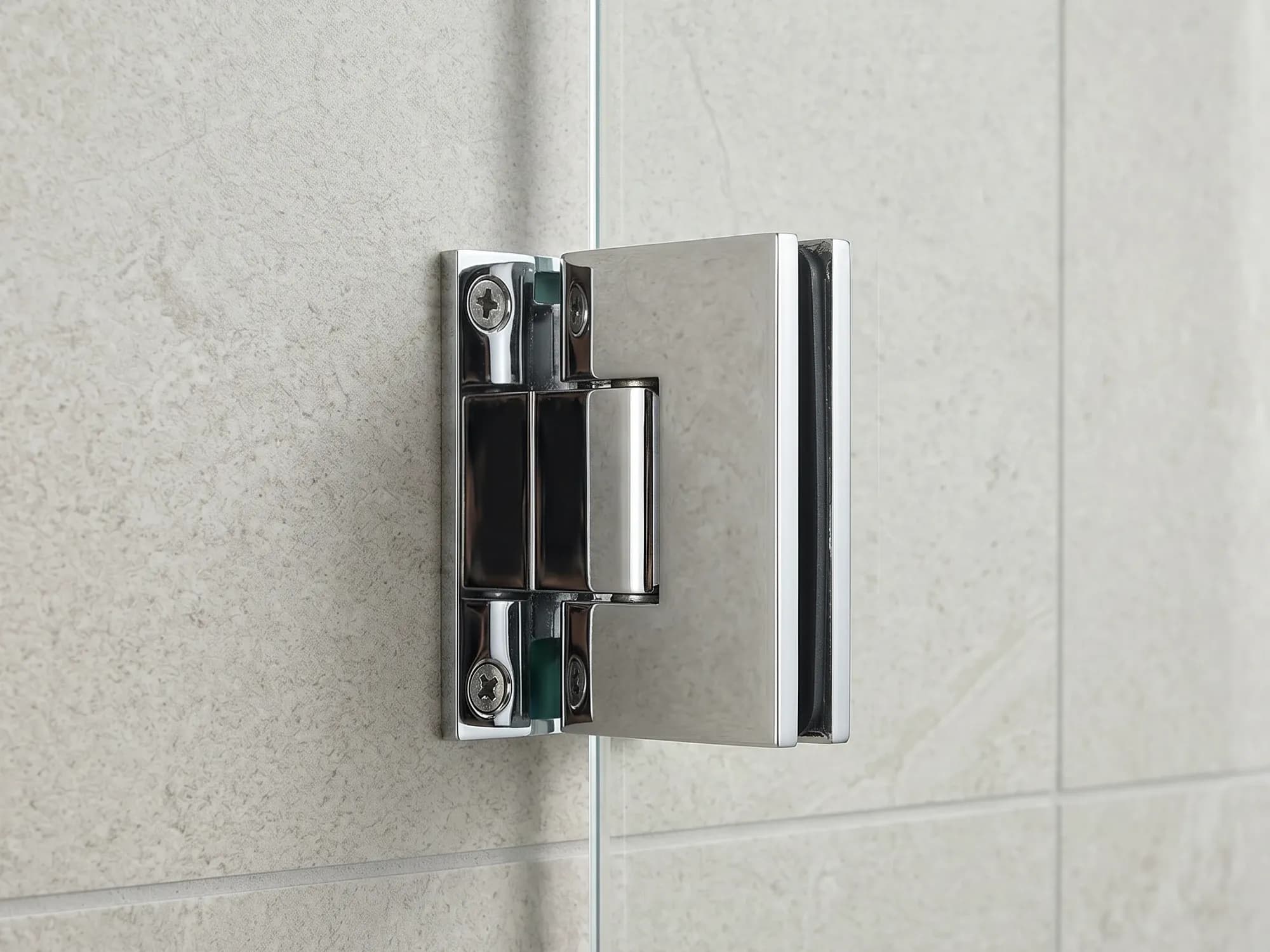
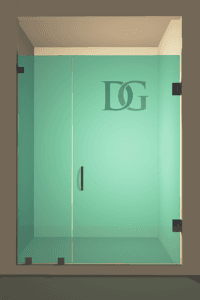
A framed door carries a full metal frame; a frameless hinged door relies on structural wall hinges instead.
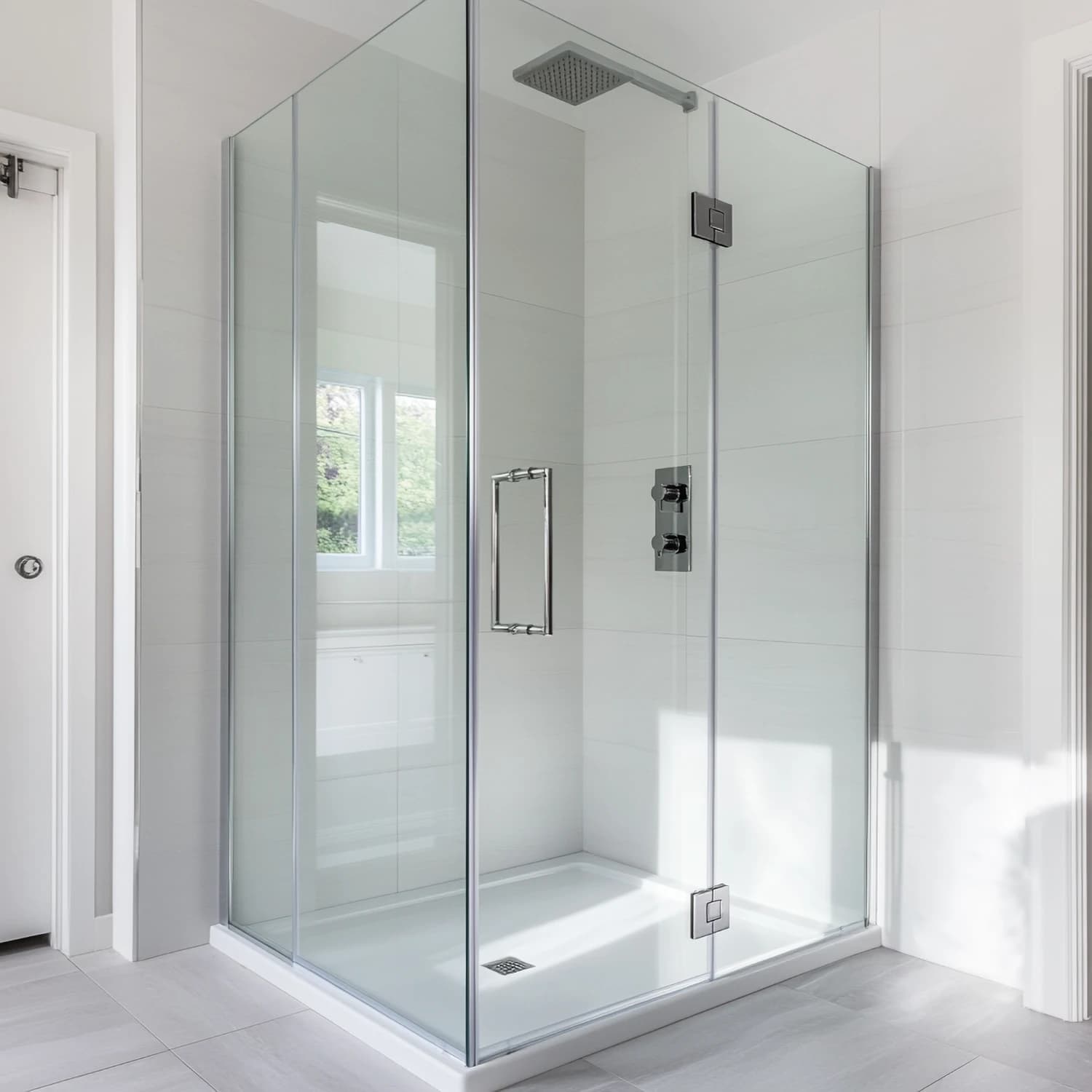
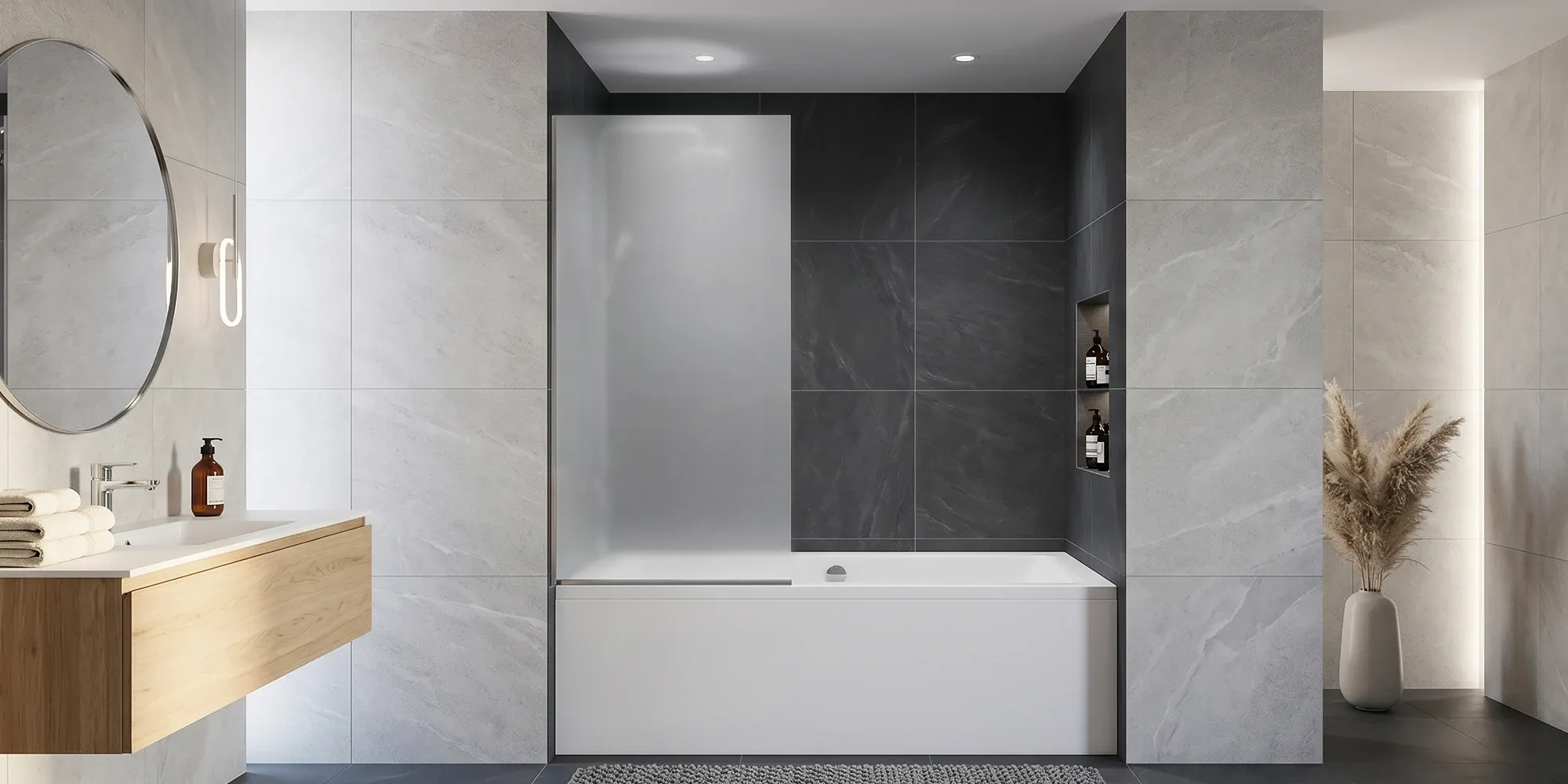
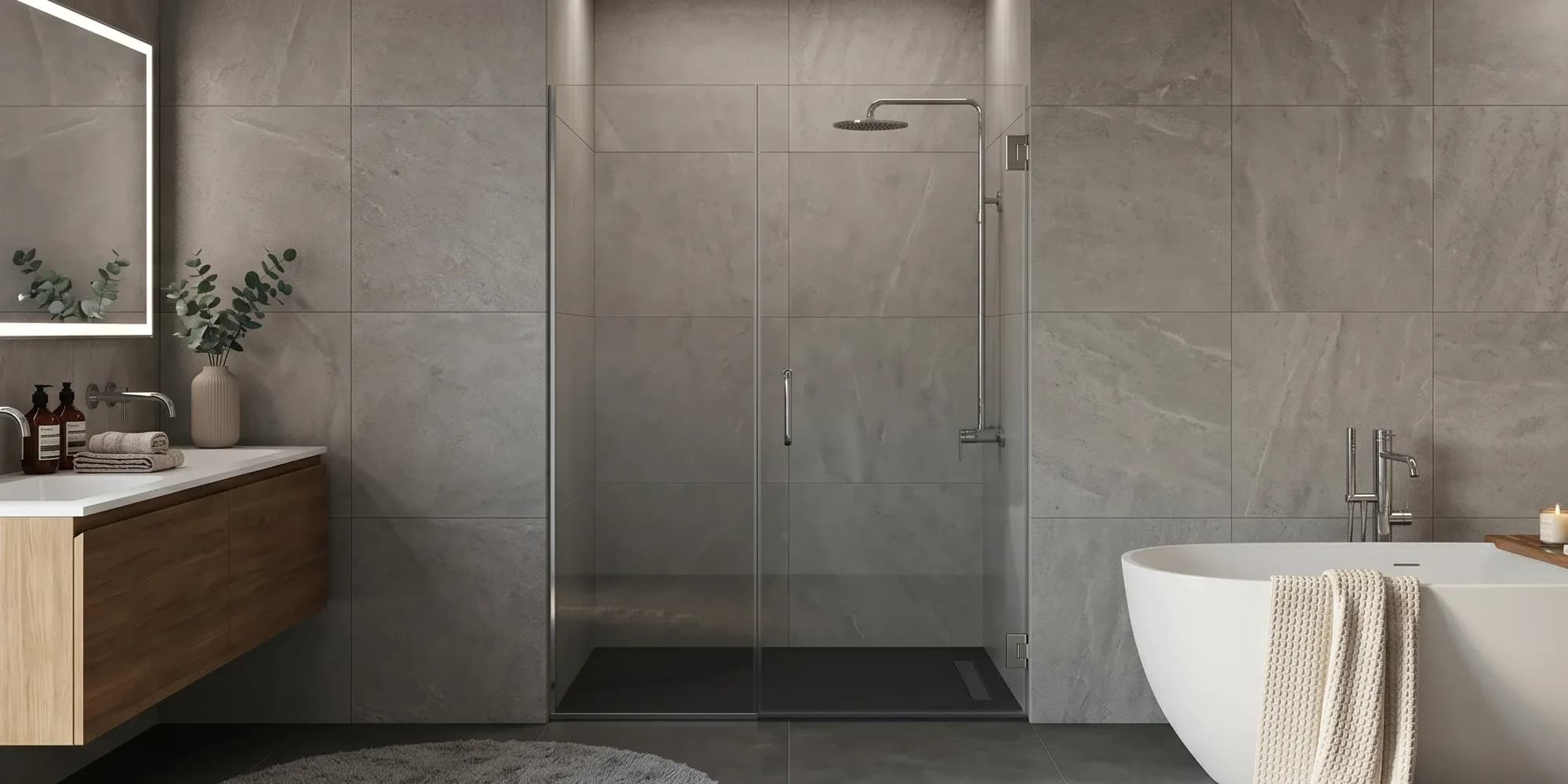
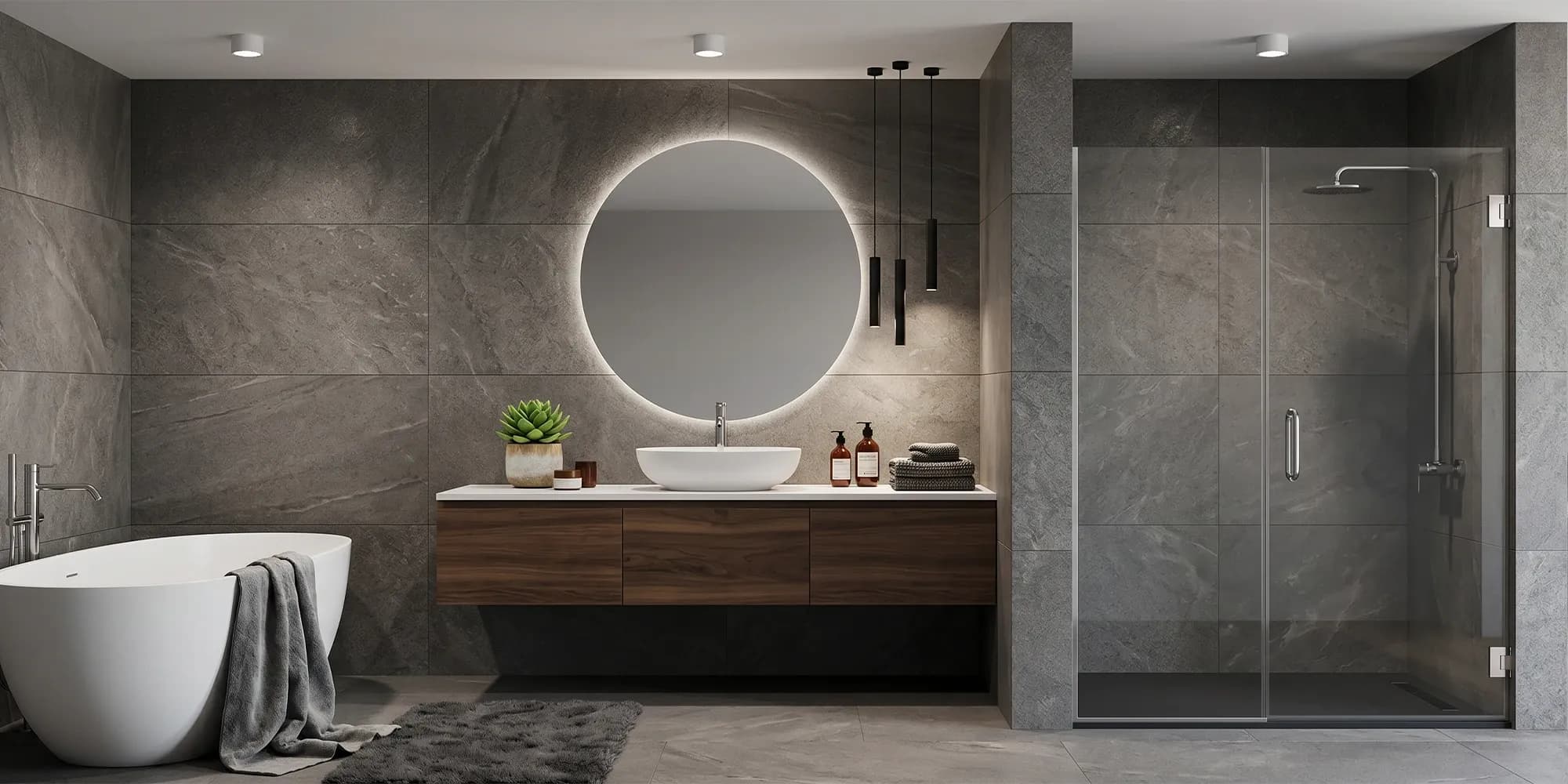
A frameless hinged door is a single panel of thick tempered glass (almost always 3/8" / 10mm) held by structural hinges that anchor directly to the wall. There's no metal channel at the top, bottom, or sides of the door — the glass itself is the structure.
This is different from:
- Framed doors — 1/4" or 5/32" tempered glass set inside a continuous metal frame (aluminum, usually) on all four sides. The frame holds the glass and provides the structural seal.
- Semi-framed doors — a hybrid. A metal channel at the top and bottom only, with no vertical frames. Glass is typically 1/4" or 5/16".
The visual cleanness of frameless is the obvious appeal. The structural reason it costs more is less obvious: removing the frame means the glass has to do everything the frame used to do — carry its own weight, hold its shape under heat and humidity, and resist any flex or impact that the frame previously absorbed. Thicker glass and heavier hardware are how frameless doors handle that.
What you're actually paying for
The glass (40-50% of the total)
Frameless hinged doors use 3/8" (10mm) tempered glass as the default. The thickness matters for two reasons: structural rigidity (it doesn't flex under its own weight at common sizes), and visual heft (the glass edge has visible substance). Compared to the 1/4" or 5/32" glass in framed doors, 3/8" is roughly twice the cost per square foot at the supplier level, plus higher shipping and handling costs because of the weight.
Tempering is mandatory by code in any shower glass — it's not an upgrade, it's a baseline. The premium for frameless is in the thickness, not the tempering.
The hardware (20-30% of the total)
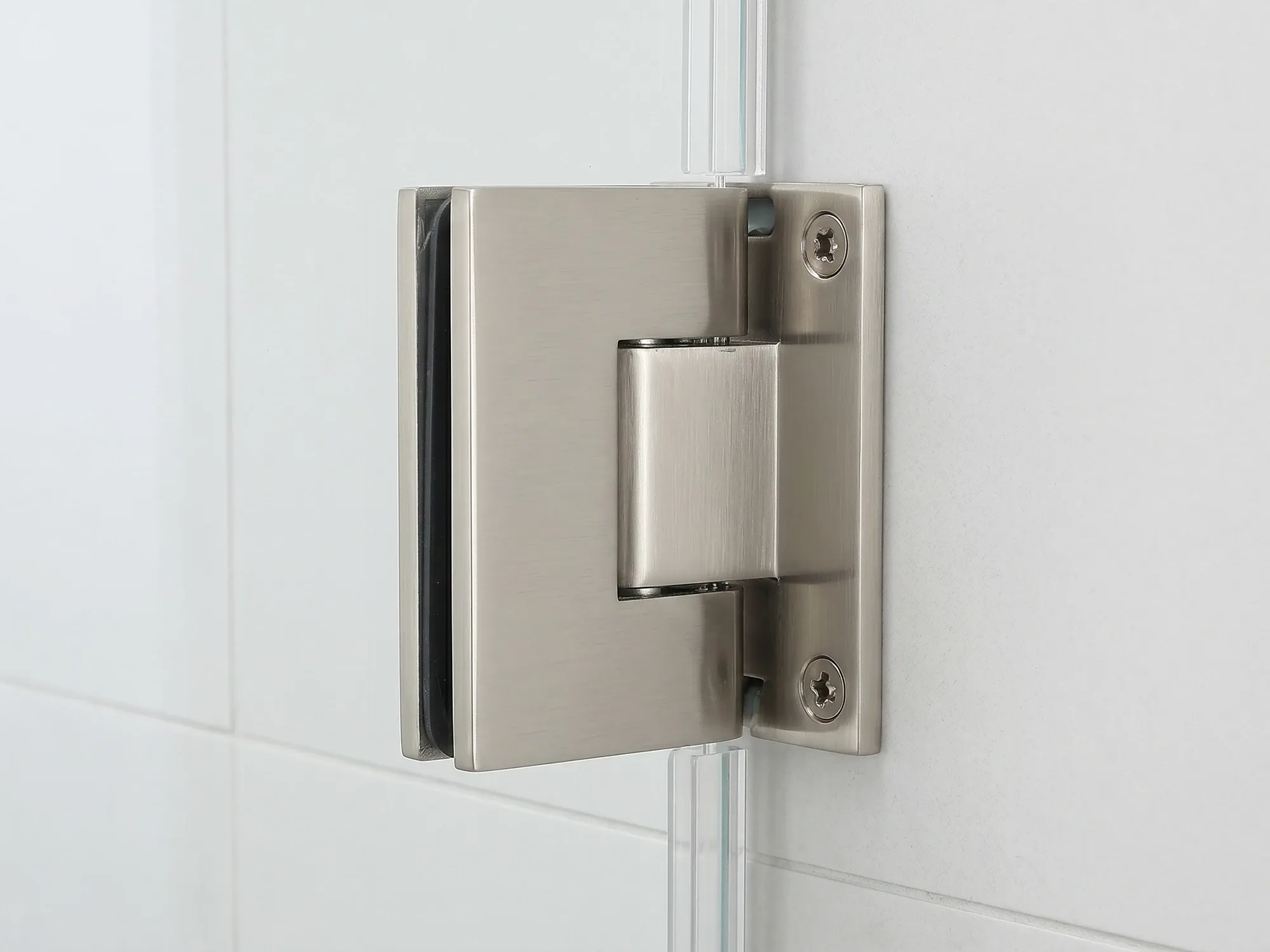
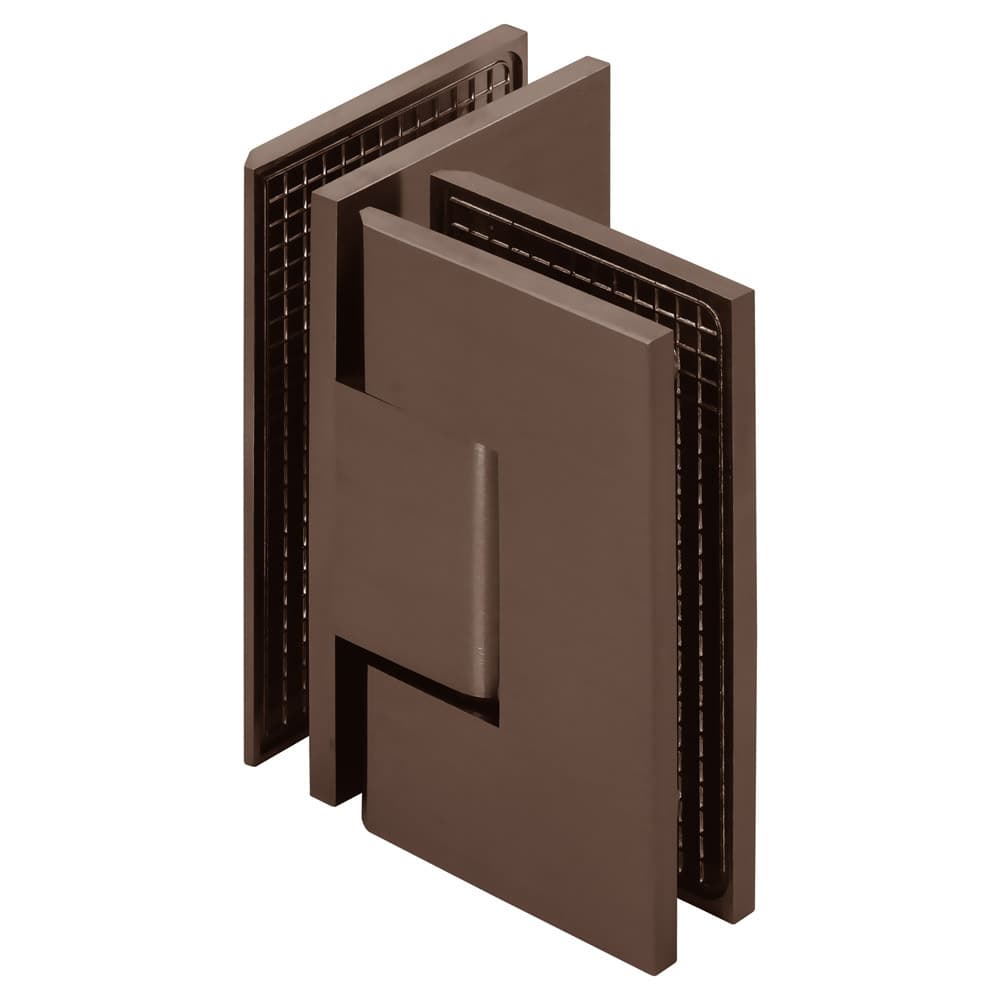
A solid-brass frameless hinge in a brushed nickel finish, clamped to 3/8-inch tempered glass.
Framed doors use lightweight aluminum or stamped-steel hardware that's primarily cosmetic — the metal frame carries the load. Frameless hardware is structural. Solid-brass or 316-stainless hinges rated to carry the full glass weight are the baseline; cheaper materials cause sag within a few years.
This is also where finish options expand. Frameless hardware comes in brushed nickel, polished chrome, matte black, satin brass, polished brass, oil-rubbed bronze, and more — because the hardware is large enough to be a visual element. Framed doors are usually limited to whatever finish the frame comes with.
The fabrication and tempering (10-15% of the total)
Tempered glass cannot be drilled or cut after tempering. Every hole for a hinge, handle, or magnetic strike has to be drilled in the annealed glass before tempering — which means the glass has to be measured, cut, drilled, polished, and then heat-treated as a finished panel. A single dimension error at the measurement stage means re-fabricating the entire panel.
The install (15-25% of the total)
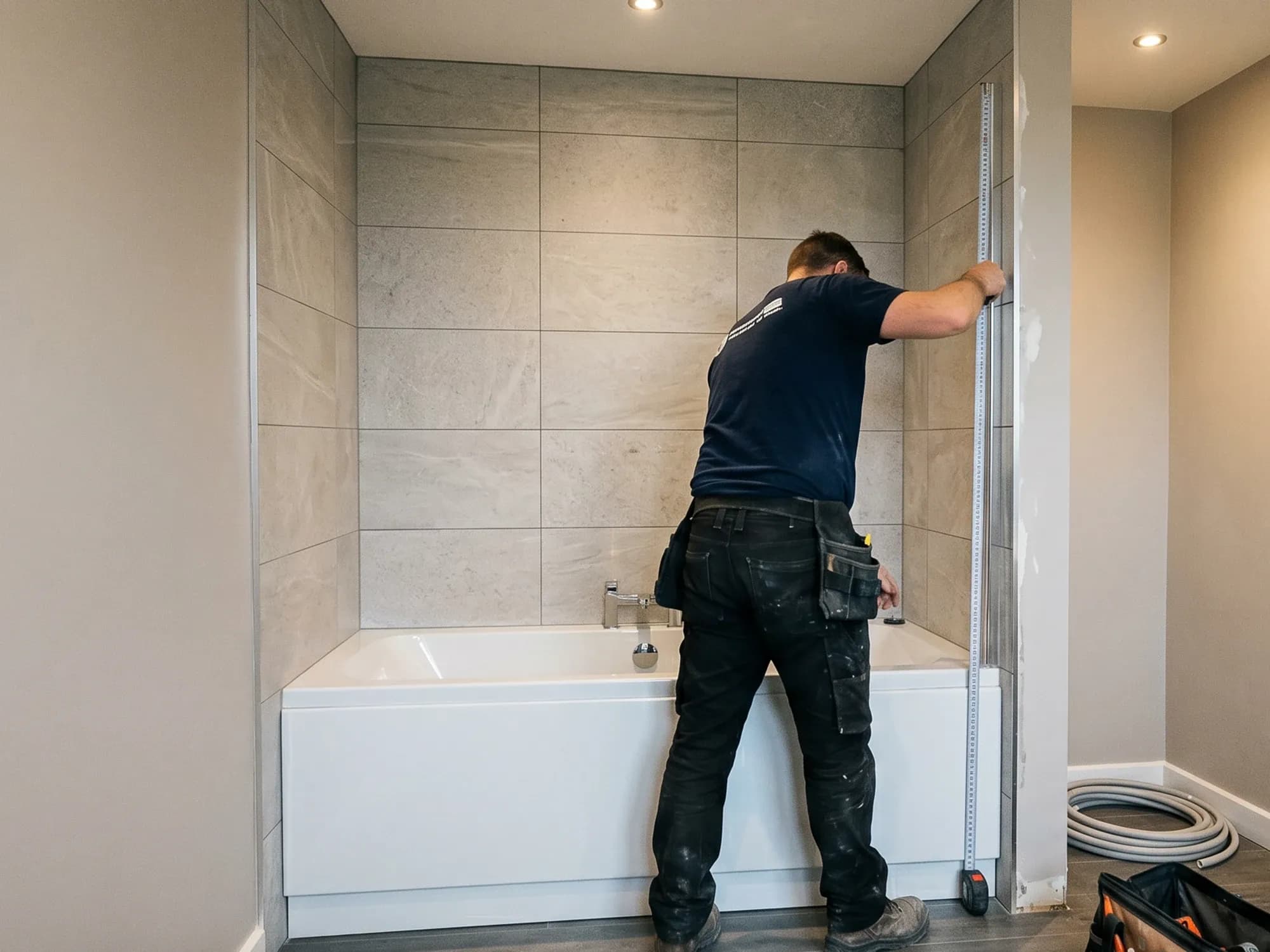
A custom frameless install requires precise wall blocking, careful sealing, and on-site adjustment for any plumb or square issues in the opening. Most installs are a two-person job and take 2-4 hours. The labor premium over a framed install is real — and it's where the DIY route saves the most money.
Three real-world price scenarios
Scenario 1: Standard Guest Bathroom
A 30-inch-wide opening about 72 inches tall — a typical secondary bathroom with a tub-shower combo or a stand-up shower in a standard alcove. Single panel, wall mount on one side, magnetic strike on the other.
- Framed glass door (installed): ~$500
- Semi-framed (installed): ~$900
- Frameless hinged, custom install: ~$1,700
- Frameless hinged DIY kit: ~$700-$900
Scenario 2: Primary Bathroom With Return Panel
A 36-inch inline door with a 24-inch return panel — a typical primary-bath configuration: a swinging door plus a fixed return panel meeting at a corner or wall. Includes a glass-to-glass hinge between the two panels.
- Semi-framed (custom only — framed rarely available): ~$1,400
- Frameless hinged, custom install: ~$2,400
- Frameless hinged DIY kit (Dulles Glass Prima): ~$1,100-$1,500
Scenario 3: Walk-In Shower With Fixed Panel
A 60-inch-plus opening — a larger walk-in with a single swinging door and a wider fixed glass panel. Often used in primary suites or master baths.
- Framed (rarely offered at this size): —
- Semi-framed slider alternative: ~$1,800
- Frameless hinged, custom install: ~$3,200
- Frameless hinged DIY (where opening fits a kit): ~$1,300-$1,800
Why DIY Frameless Shower Doors Cost Less
The DIY route uses the same grade of 3/8" tempered glass and solid-brass or stainless hardware as the custom install — the savings is the labor. For a homeowner with basic tool skills and a helper, a DIY Prima-style kit install is a 3-4 hour weekend job. For Dulles Glass, an installed job is a measurement appointment, a fabrication cycle, and an install appointment — labor that lands in the $400-$1,000 range depending on complexity.
DIY vs custom install: how to choose
| DIY Kit | Custom Install | |
|---|---|---|
| Glass quality | 3/8" tempered, custom-grade | 3/8" tempered |
| Hardware | Solid brass or stainless, custom-grade | Solid brass or stainless |
| Sizes available | Standard openings: ~22-36" inline, +24-48" returns | Any opening, including out-of-plumb walls |
| Wall condition | Needs reasonably plumb walls (within ~1/4" over 72") | Handles out-of-plumb, out-of-square openings |
| Lead time | Ships in days (in-stock) | 3-5 weeks measurement-to-install |
| Warranty | 1 year on Dulles Glass DIY kits | 3 years on Dulles Glass custom installs |
| Install time | 3-4 hours, two people | 2-4 hours by the install team |
| Total cost (typical) | $600-$1,800 | $1,500-$3,500 |
The rule we use on the phone: if the opening fits a standard DIY size and the walls are roughly plumb, DIY is the right answer. The savings is real, the quality is the same, and the install is genuinely doable for an intermediate DIYer with a helper.
Custom installs are worth the premium when:
- The opening doesn't match any standard DIY size
- The walls are visibly out of plumb (tile or wall surfaces lean more than ~1/4" over 72")
- The configuration includes unusual angles (45° corners, sloped ceilings, steam-tight enclosures)
- You want the 3-year warranty and turn-key install
- You're working with a contractor who's coordinating the whole bathroom remodel
When the frameless upgrade is worth it
Three scenarios where we tell customers without hesitation that frameless is the right call:
- You're staying in the home five years or longer. In our install team's experience, framed doors are more likely to be replaced because of frame corrosion, seal failure, and track mildew, while frameless systems often stay in place much longer with sweep and seal replacements. Over a long enough window, the cost-per-year often lands closer than the sticker prices suggest.
- You're remodeling for resale. Frameless shower doors are commonly included in bathroom remodel guidance because they create an immediate visual upgrade without changing the whole layout. The visual difference can be one of the more noticeable single-item upgrades in a bathroom.
- You hate cleaning the frame. The horizontal track at the bottom of a framed or semi-framed door collects soap scum and mildew. It's one of the most-complained-about cleaning tasks in a framed shower. Frameless eliminates it.
If you ask the person who cleans the bathroom which door they want, the answer is always frameless. The horizontal track at the bottom of a framed door is the worst place to clean in a house.
When frameless isn't worth it
Equally honest: sometimes the upgrade doesn't make sense.
Stick with framed or semi-framed if:
- The bathroom is in a rental property — a tenant may not value the upgrade enough to justify the premium
- The shower is in a low-use guest bath — the durability advantage of frameless matters less when the door is used twice a year
- The opening is in a non-standard configuration where semi-framed actually fits better (some unusual angles)
- Your budget is hard at <$1,000 installed and the DIY route isn't on the table
- You're prioritizing speed over longevity (a basic framed door is often faster to install and usually requires less custom fitting)
Frameless Shower Door Installation
Dulles Glass fabricates and installs custom frameless hinged shower doors from our own fabrication facility. The custom install process is built around an in-home measurement appointment so we can confirm the exact opening width, wall plumb, and hardware spec before fabrication starts — the on-site step is what makes a frameless door fit cleanly even when the walls aren't perfectly square.
If your opening fits a standard kit, our DIY Prima door-and-panel kits ship nationwide with the same grade of 3/8" tempered glass and solid-brass or stainless hardware as the custom installs. Request a quote or measurement appointment and our team will walk through the configuration before fabrication begins.
Explore our frameless shower doors, custom shower doors, shower door installation, and shower door hardware options — or contact our team if you'd like help comparing DIY and custom configurations for your bathroom.
Frequently Asked Questions
Is a frameless hinged shower door worth the cost?
For homeowners staying 5+ years, the longevity, easier cleaning routine, and resale-value lift usually justify the premium. For short-term rental properties or low-use baths, framed or semi-framed is often the more rational call.
What's the actual price difference between frameless, semi-framed, and framed?
Framed installed: roughly $400-$900. Semi-framed: $700-$1,400. Frameless hinged custom install: $1,500-$3,500. Frameless DIY kits cut the labor portion out: $600-$1,800 with the same grade of glass and hardware as a custom install.
Does a frameless shower door add resale value?
A frameless shower door creates an immediate visual upgrade without changing the bathroom layout, which is why it's commonly included in remodel guidance alongside a new vanity, quality tile, and updated lighting. The visual difference at a showing can be significant, especially in a primary bathroom remodel.
Can I get the same look with a DIY kit as a custom installed door?
For standard openings, yes. DIY kits use the same grade of 3/8" tempered glass and solid-brass or stainless hardware as a custom install. The difference is fit — custom handles out-of-plumb walls and unusual angles that no kit accommodates.
How long does a frameless hinged shower door last?
In our install team's experience, frameless hinged doors often stay in place much longer than framed doors with sweep and seal replacements every 3-5 years. Glass typically lasts indefinitely; hardware finishes hold up for many years depending on cleaning chemistry.
Is frameless harder to keep clean than framed?
The opposite. The hardest part of a framed shower to clean is the bottom horizontal track, which collects soap scum and mildew. Frameless has no track. A daily squeegee on the glass and a monthly seal inspection is the full routine.
Should I go DIY or hire an installer?
DIY if your opening fits a standard kit size and your walls are roughly plumb. Custom install if the opening is unusual, the walls are out of plumb, or you want the 3-year warranty and turn-key process. Both use the same glass and hardware grade.
Sources and Review Notes
- Internal Dulles Glass pricing data (January–April 2026), across DIY in-stock SKUs and custom installation quotes.
- ANSI Z97.1 and 16 CFR Part 1201 — architectural safety glazing standards.
- Remodeling Cost vs. Value Report — industry bathroom-remodel ROI benchmarks.
- Dulles Glass field-team service notes on framed vs frameless door longevity, 2018–2026.
Ready to compare options?
Browse the Dulles Glass DIY frameless hinged kits (ships nationwide), or book a measurement appointment for a custom-installed frameless shower.
Why choose Dulles Glass
54+
Years Glass expertise
10,000+
Projects Measured and installed Yearly
3-Year Warranty
On custom installations
4.9/5 Rating
Customer Reviewed
Ready to start your glass project?
Tell us what you are planning and our glass experts will help you find the right solution.