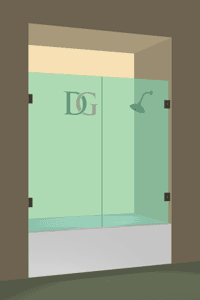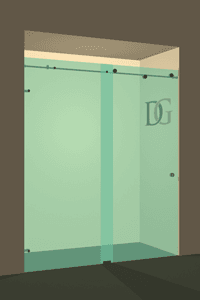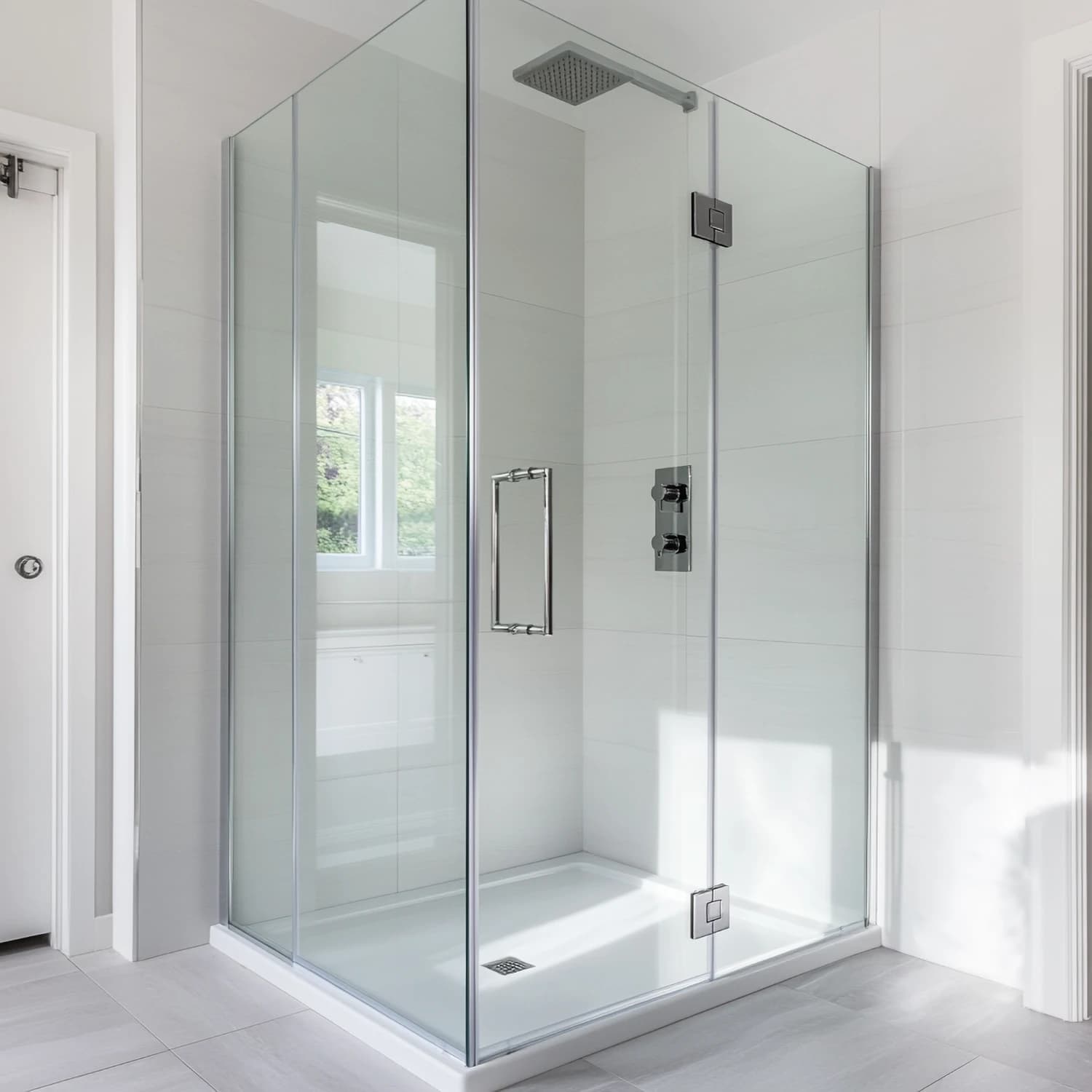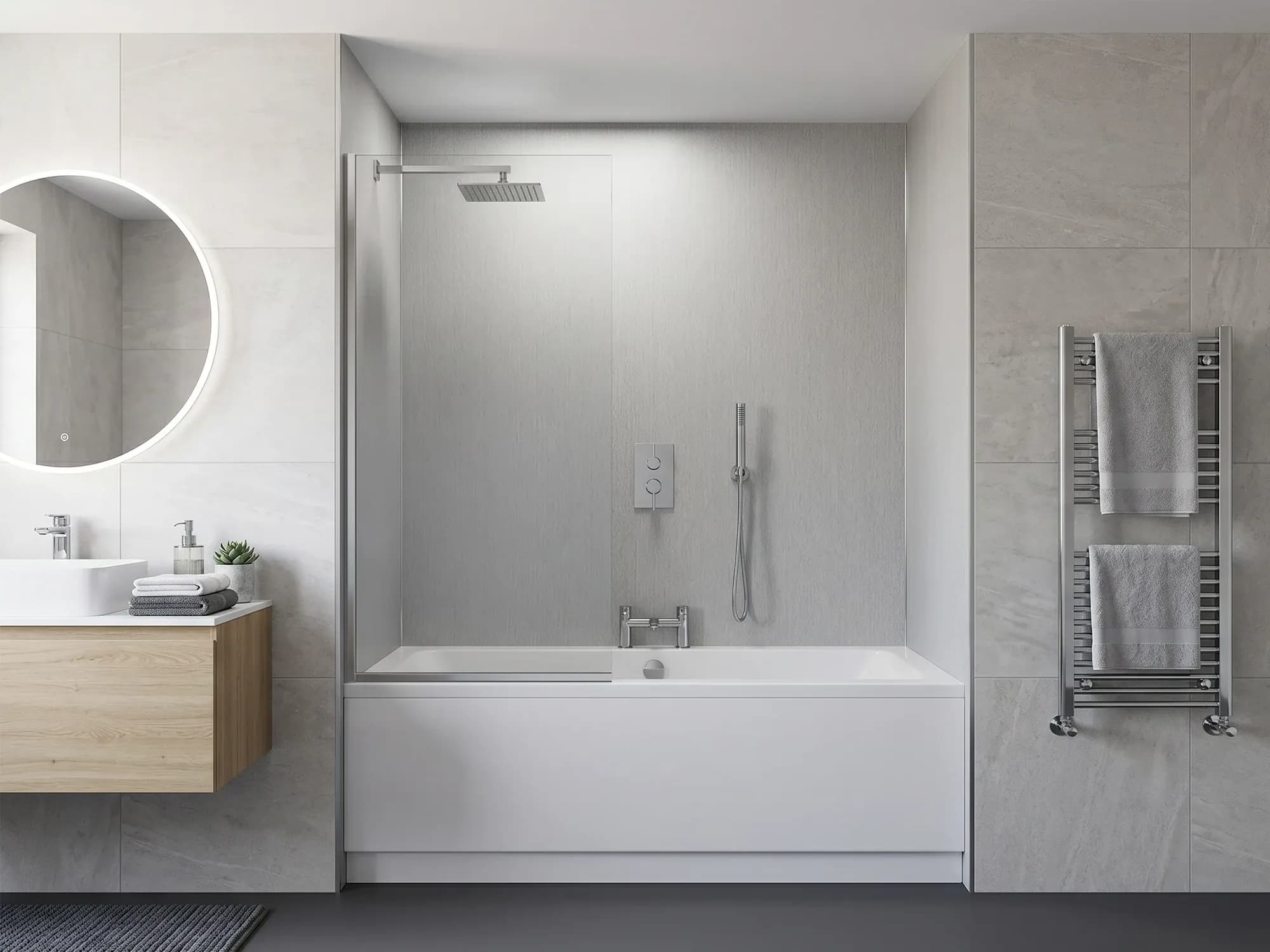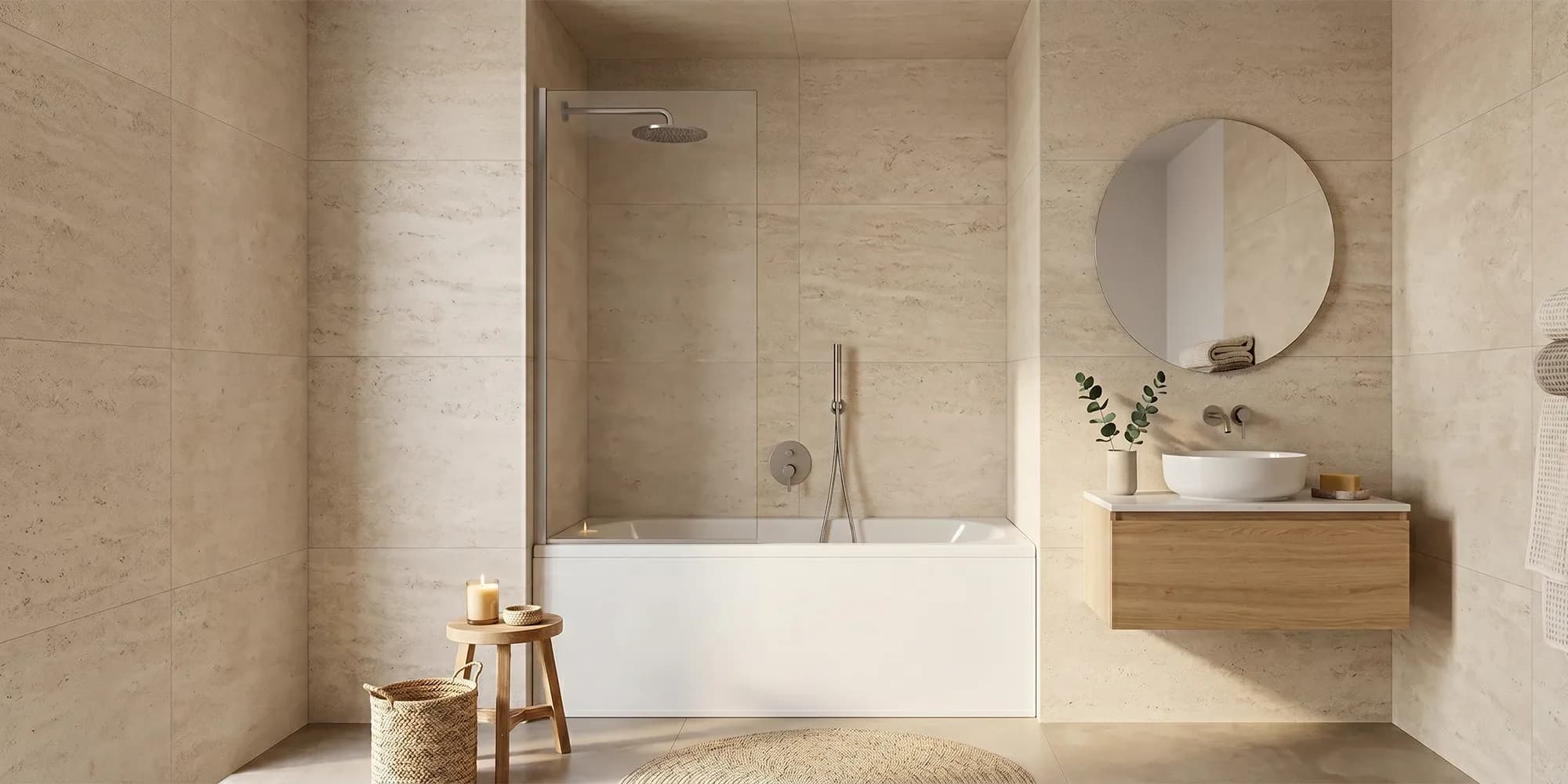
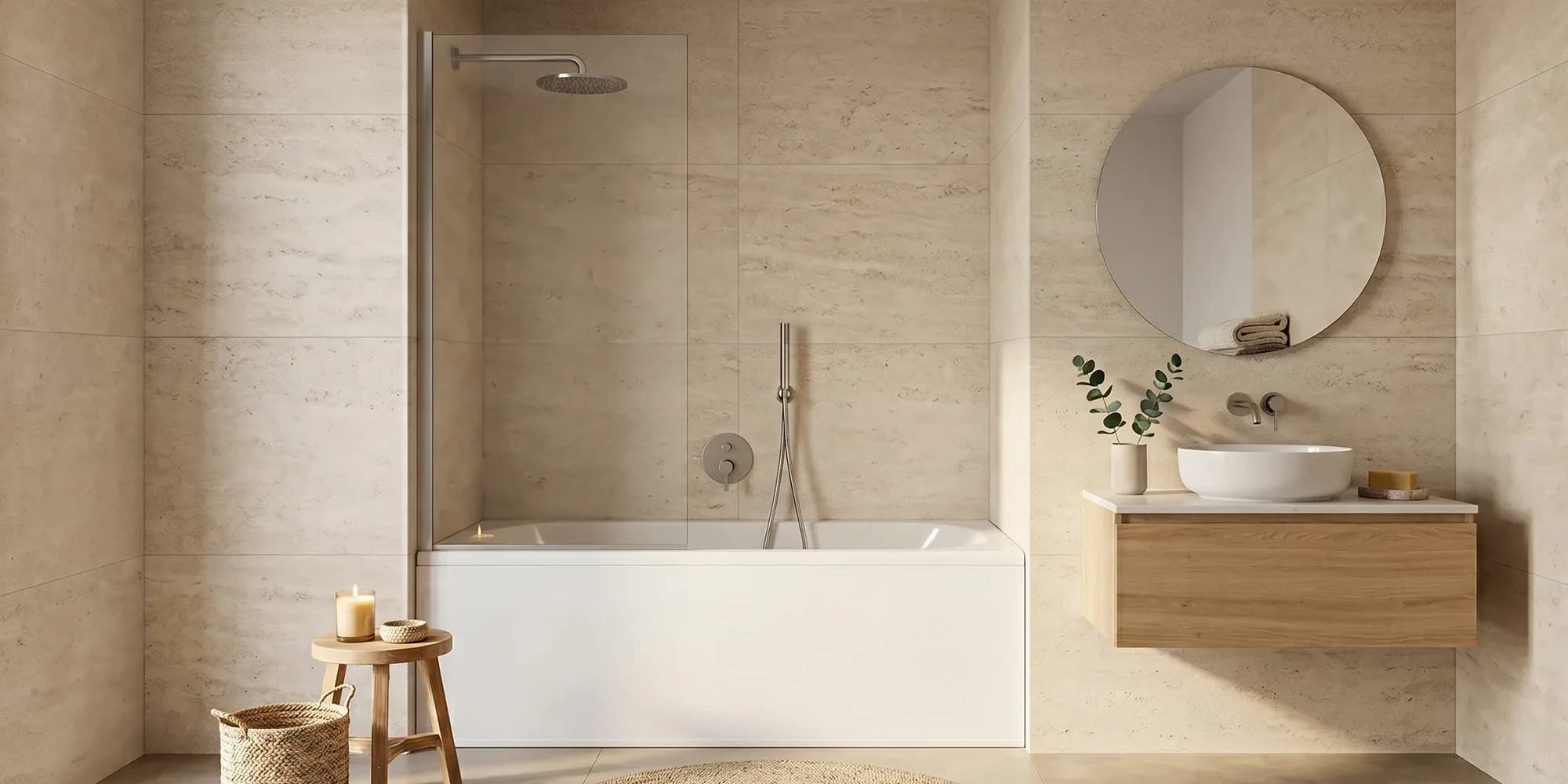
A frameless bathtub glass screen replaces the opaque curtain or framed slider that blocks half a small bathroom from view. The eye reads the full length of the room, and the space feels notably larger — without changing a single dimension.
Reviewed by John Flouhouse, Installation Team Lead at Dulles Glass
A frameless bathtub glass screen can make a small bathroom feel larger by replacing an opaque shower curtain or framed sliding tub door with clear glass. Instead of stopping at fabric, metal rails, or a framed slider, the eye can see the full tub, back wall, tile, and shower area. That makes the bathroom feel more open without moving a wall.
Key Takeaways
- Clear glass opens the visual length of a small bathroom by exposing the back wall and full tub.
- Frameless beats framed for the perception effect — no metal lines breaking the sight line.
- 3/8-inch low-iron tempered glass maximizes clarity. Standard clear is fine; low-iron is the visible upgrade.
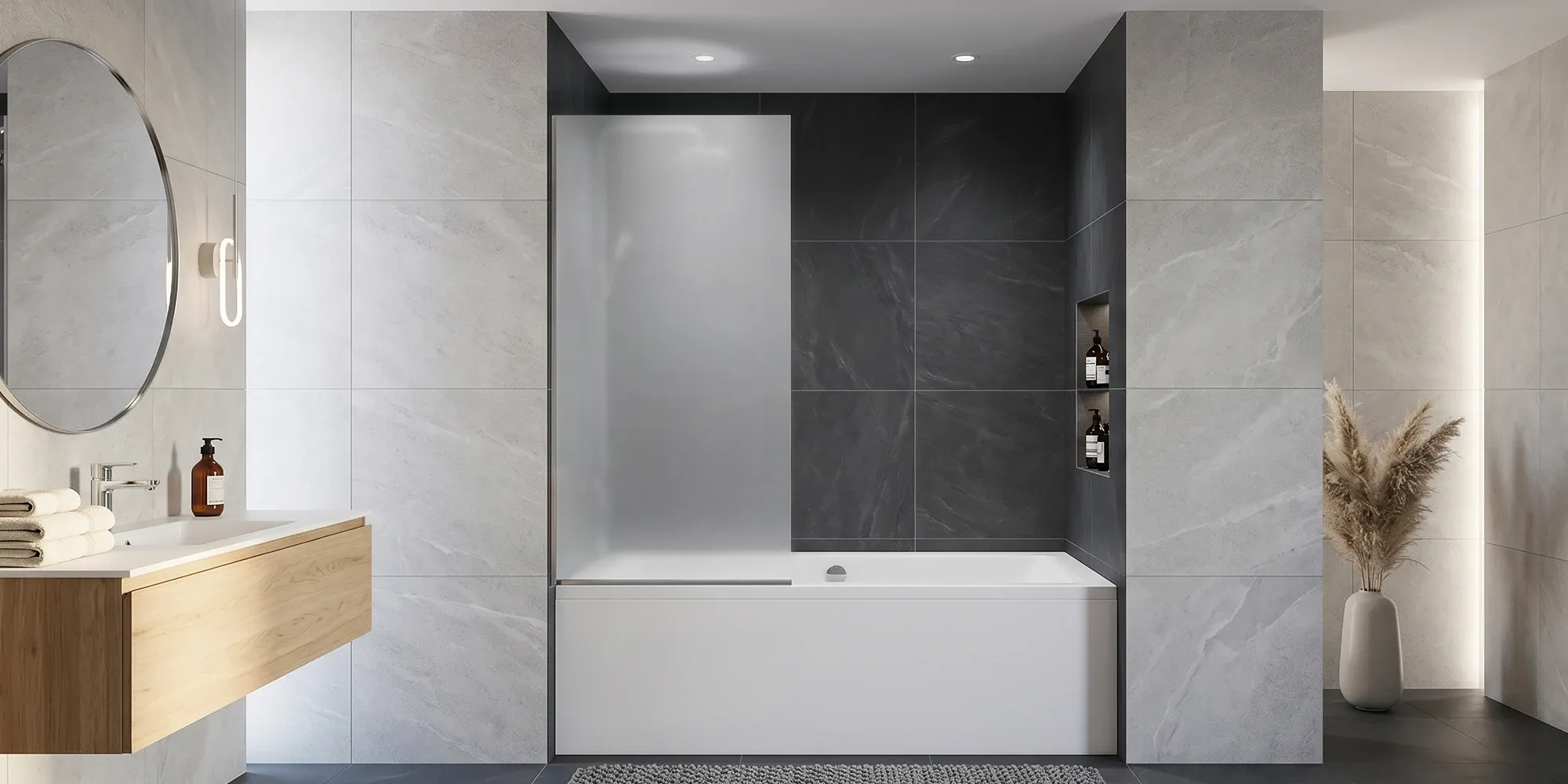
- Banded frosted preserves the open feel while adding mid-panel privacy.
- Usually easier to keep clean than a curtain or framed slider — a daily squeegee is the main routine.
Do Bathtub Glass Screens Make Small Bathrooms Look Bigger?
Yes. A clear frameless glass screen removes the visual barrier of a curtain or framed slider, so the eye reads straight through to the full tub, tile, and back wall. With nothing stopping the sight line, a small bathroom feels more open and larger — even though no dimension has actually changed.
How Glass Opens Up Sight Lines
The visual size of a room depends on how far the eye can travel before something stops it. In a small bathroom with a shower curtain, the eye stops at the curtain — the tub, the back wall, the window above the shower, all hidden. The effective room ends at the curtain rod.
A clear glass screen does the opposite. The eye reads:
- The back wall of the tub area, including any tile pattern or window
- The full length of the tub
- Any fixtures inside the shower
- The geometry of the space behind the panel
The room hasn't grown; the eye is just allowed to see further. In a typical 5x8 bathroom, that can make the room feel noticeably more open because the tub wall and back tile remain visible.
Glass Screen vs Shower Curtain vs Framed Sliding Tub Door
Each option creates a different visual feel in a small bathroom:
Shower curtain: blocks the sight line completely when closed. When open, hangs in a bunched mass at one end. The visual character is "soft furnishing" — not always a fit for a clean bathroom design.
Framed sliding tub door: traditional configuration on older tub-shower combos. Two panels of glass with metal frames at the top, bottom, and edges. The metal lines visually fragment the back wall and the eye reads them as separators. Worse for visual openness than clear glass.
Frameless glass screen: a single piece of glass with no metal frame. The eye sees through to the back wall with no visual interruption. Most modern of the three.
| Option | Visual openness | Privacy | Cleaning | Best for |
|---|---|---|---|---|
| Shower curtain | Low — blocks the sight line | Full when closed | Wash or replace regularly | Lowest-cost setups |
| Framed sliding tub door | Limited — metal frames fragment the view | Full when closed | Track collects soap scum | Budget enclosure |
| Frameless fixed glass screen | Highest — clear, uninterrupted | None on the open end | Easy — daily squeegee | Opening up a small bathroom |
| Hinged glass screen | High — clear glass, swings for access | None on the open end | Easy — daily squeegee | Narrow bathrooms needing tub access |
| Banded frosted glass screen | Moderate — clear top and bottom | Privacy across the mid band | Easy — daily squeegee | Shared bathrooms needing some privacy |
Best Glass Choice for a Small Bathroom
For maximizing the perceived size effect, the order is:
- Frameless 3/8-inch low-iron tempered glass — the clearest, most invisible option. No green tint at the edges.
- Frameless 3/8-inch clear tempered glass — the standard. Faint green tint at the edges is visible against white tile in a tight bathroom.
- 1/4-inch tempered glass in a semi-frameless or framed kit — less open than full frameless, but better than a curtain or traditional framed slider.
- Framed sliding tub door — budget option; visual openness compromised.
- Shower curtain — the least open option.
For small bathrooms where the glass screen is the visual focal point, low-iron HD glass is the upgrade worth considering — the green tint of standard 3/8" clear glass is most visible at the edge and against pure-white tile, both common in small bathrooms. The same glass and hardware choices carry over to our custom shower doors if your project pairs a tub screen with a separate stall.
Frosted Glass in a Small Bathroom
Frosted glass adds privacy but reduces the visual openness that makes a clear glass screen feel larger. For a small shared bathroom where privacy matters, two compromises:
Banded frosted glass
Only the middle band of the panel is frosted; the top and bottom are clear. This preserves privacy at standing height while keeping the sight line open at the top (which reads as ceiling space) and bottom (which reads as floor space). The eye still gets enough open glass to interpret the room as larger.
Lightly etched or rain-pattern glass
Lightly etched patterns let some light through but blur silhouettes. Less open than clear, more open than fully frosted.
If privacy matters more than openness
A small bathroom with a fully frosted glass screen still beats a shower curtain on cleanliness, maintenance, and modern look — even if it doesn't deliver the "feels larger" effect. Frosted glass is a fine choice if it solves a real privacy problem; just understand it doesn't open the room.
Best Configurations for Small Bathrooms
The configurations that work best in compact bathrooms:
- Single panel fixed screen on a standard alcove tub. No moving parts, easiest install, opens the sight line completely.
- Hinged or pivoting panel when the bathroom is narrow enough that a fixed panel blocks reach to the back of the tub for cleaning.
- Sliding bypass with frameless rollers if full enclosure is needed. Less open than a fixed panel but cleaner than a framed slider.
Avoid: framed bypass sliders (visual fragmentation), partial-height splash guards (look unfinished), and fully frosted panels unless privacy is the priority.
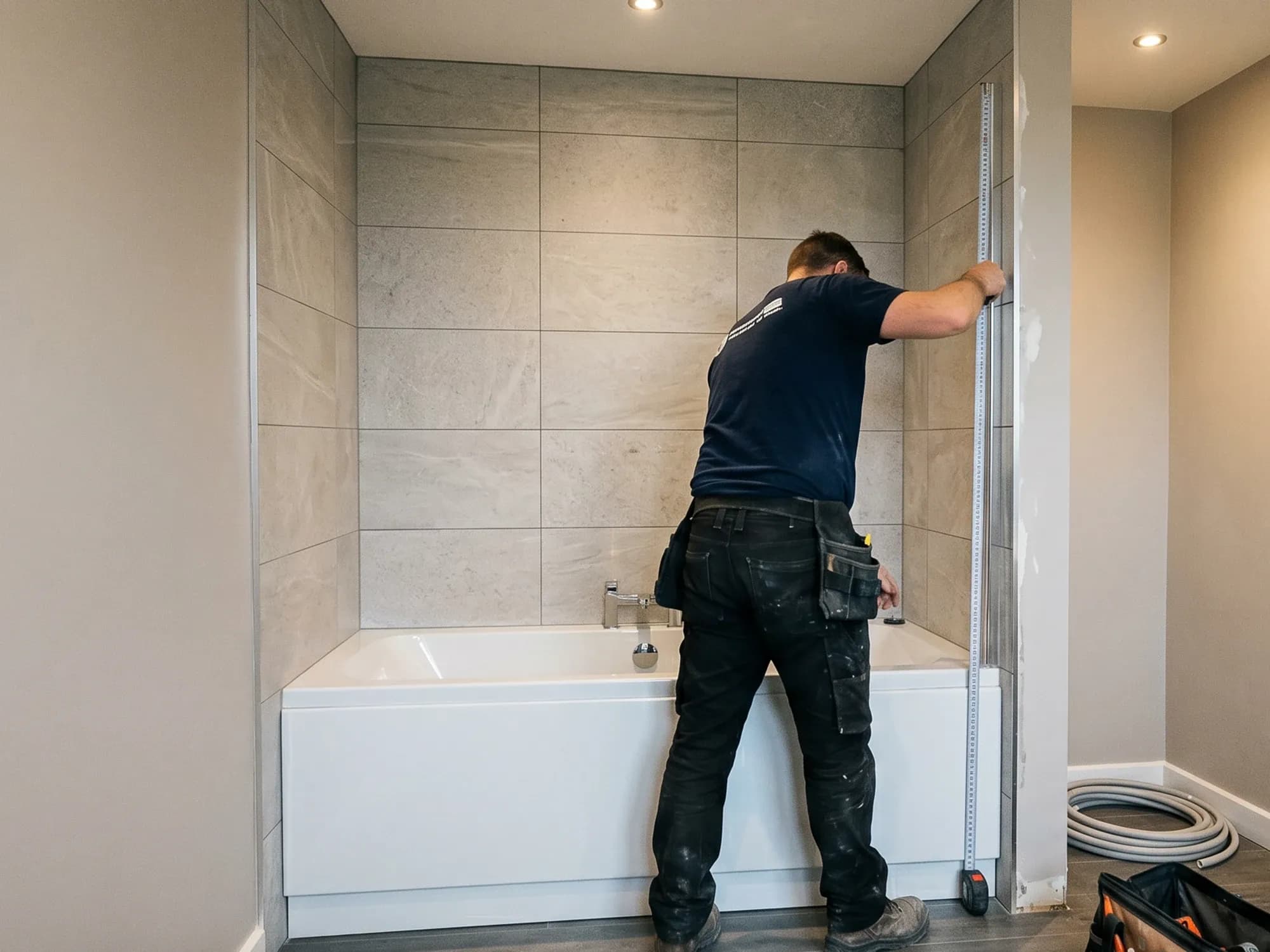
Dulles Glass fabricates bathtub glass screens and sizes each panel during an in-home measurement. Custom options include widths for 54-inch, 60-inch, and nonstandard tubs; clear or low-iron glass; and chrome, brushed nickel, or matte black hardware. Professional installation is available. During the measurement, the install team confirms the bathroom layout and recommends a fixed or hinged panel for the tub. Final panel size depends on shower head placement, tub ledge width, wall plumb, and splash-control needs.
Daily Care in a Small Bathroom
A glass screen in a small bathroom shows water spots more visibly than a larger bathroom would — the panel is at eye level the moment you walk. The maintenance routine:
- Daily squeegee after every shower — 15 seconds, three strokes top-to-bottom.
- Weekly pH-neutral wipe on the glass and the panel anchor.
- Monthly check on the silicone bead at the wall and threshold.
If the bathroom has hard water, consider ClearShield coating during the order — it makes water bead off rather than soak, which is more noticeable on a panel viewed at close range.
In a small bathroom, the glass screen is the visual focal point the moment you walk. Choose the configuration that opens the sight line most without compromising the privacy or splash control you actually need.
Need Help Choosing a Bathtub Glass Screen for a Small Bathroom?
The right configuration depends on tub layout, shower head position, ceiling height, and the bathroom's overall design. Dulles Glass fabricates and installs custom bathtub glass screens. We confirm the layout during the in-home measurement and recommend the configuration that opens the room most.
Explore our bathtub enclosures, doors, and screens, custom shower doors, and professional installation — or request a quote with your bathroom dimensions.
Frequently Asked Questions
Do glass bathtub screens make a small bathroom look larger?
Yes. Replacing an opaque shower curtain or framed sliding door with a clear glass bathtub screen opens up the sight line across the bathroom. The eye reads the full length of the room instead of stopping at the curtain, which makes the space feel larger.
What kind of bathtub glass works best in a small bathroom?
Frameless 3/8-inch tempered glass works best in most small bathrooms. Standard clear glass is a strong option; low-iron HD glass is the clearest upgrade because it reduces the green tint visible at the glass edge.
Should I choose frosted glass for a small bathroom?
Frosted glass adds privacy but blocks the visual openness that makes a clear glass screen feel larger. For privacy in a small shared bathroom, banded frosted (frost only across the middle band) keeps the sight line at eye level open while preserving privacy where it matters.
Are bathtub glass screens easy to clean in a small bathroom?
Yes. A 15-second squeegee after each shower keeps the glass clear. Without a curtain or track, there's nothing to wash separately. The single panel is the easiest configuration to maintain.
What size bathtub glass screen fits a standard small bathroom?
Standard alcove tubs are 60 inches long; a single panel screen for these is typically 28-36 inches wide and 56-60 inches tall. For very small bathrooms with a 54-inch tub, a 24-inch panel maintains the open-end accessibility.
How much does a bathtub glass screen cost?
The cost of a bathtub glass screen depends on the panel size, glass type (standard clear or low-iron), hardware finish, the tub layout, and any installation requirements such as wall reinforcement. The most accurate number comes from a quote after an in-home measurement.
Want to open up your small bathroom with a glass screen?
Dulles Glass fabricates and installs custom bathtub glass screens. Request a quote or schedule an in-home measurement to find the right panel size, glass type, and configuration for your bathroom.
Why choose Dulles Glass
54+
Years Glass expertise
10,000+
Projects Measured and installed Yearly
3-Year Warranty
On custom installations
4.9/5 Rating
Customer Reviewed
Ready to start your glass project?
Tell us what you are planning and our glass experts will help you find the right solution.