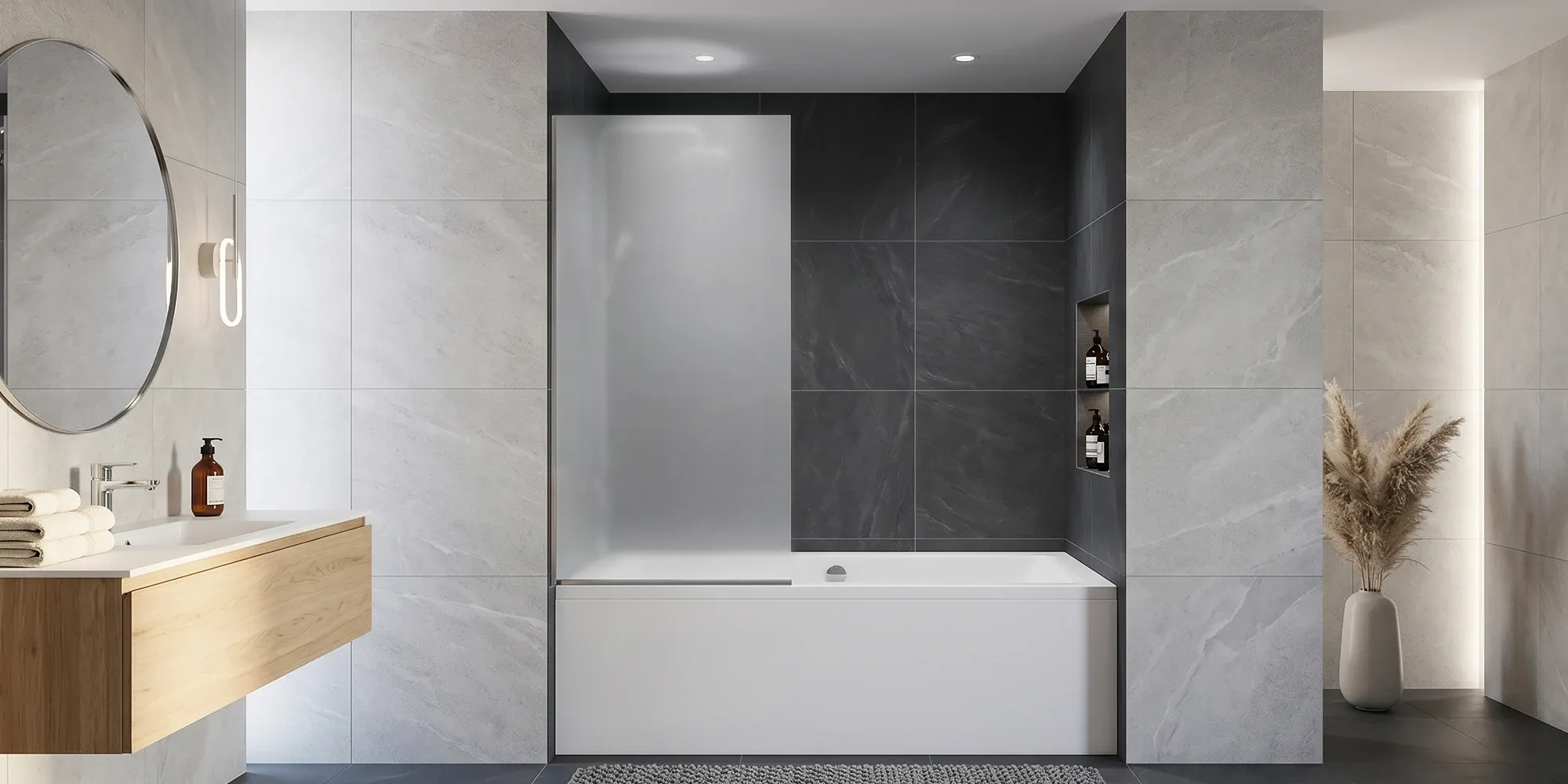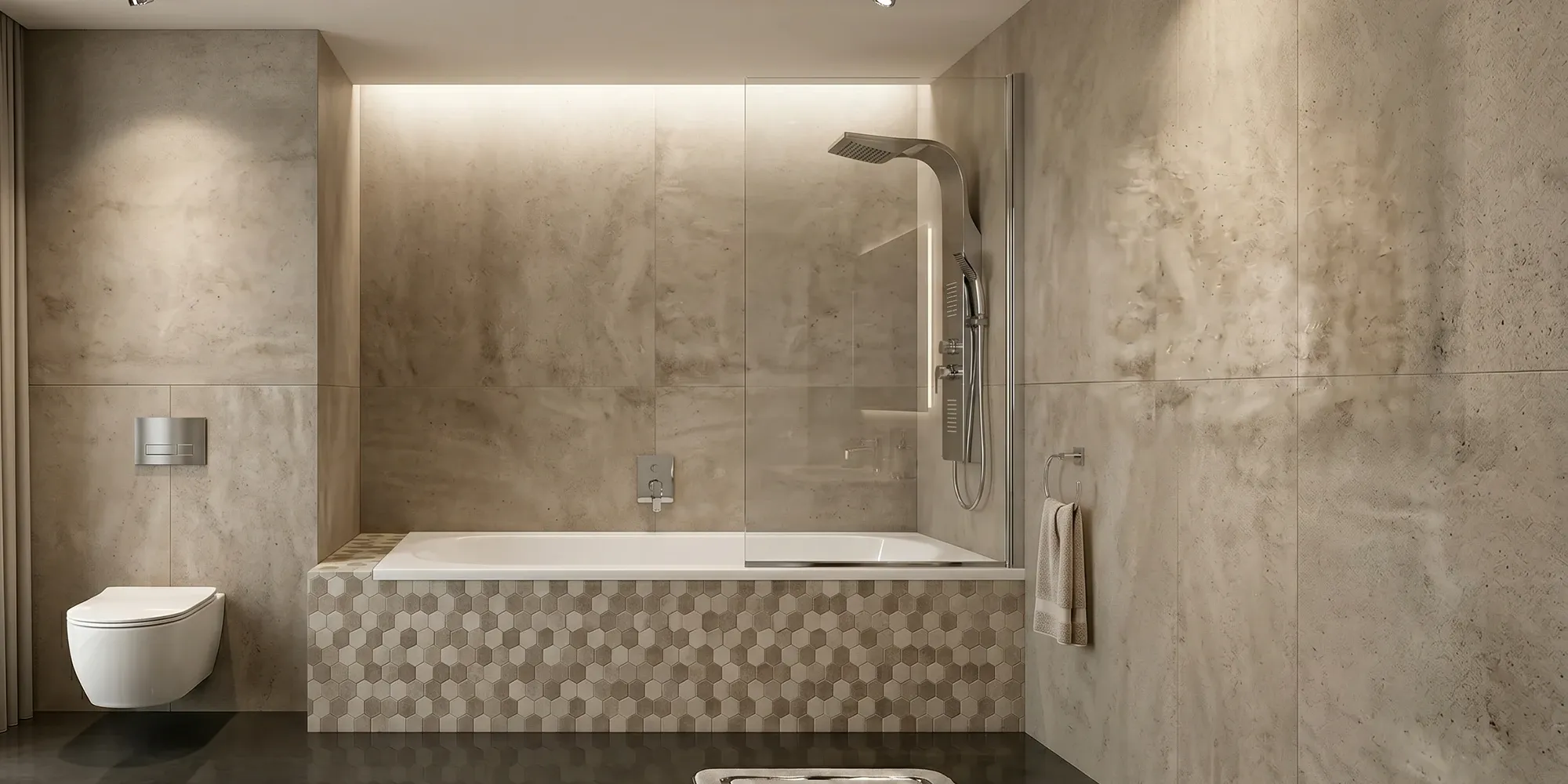
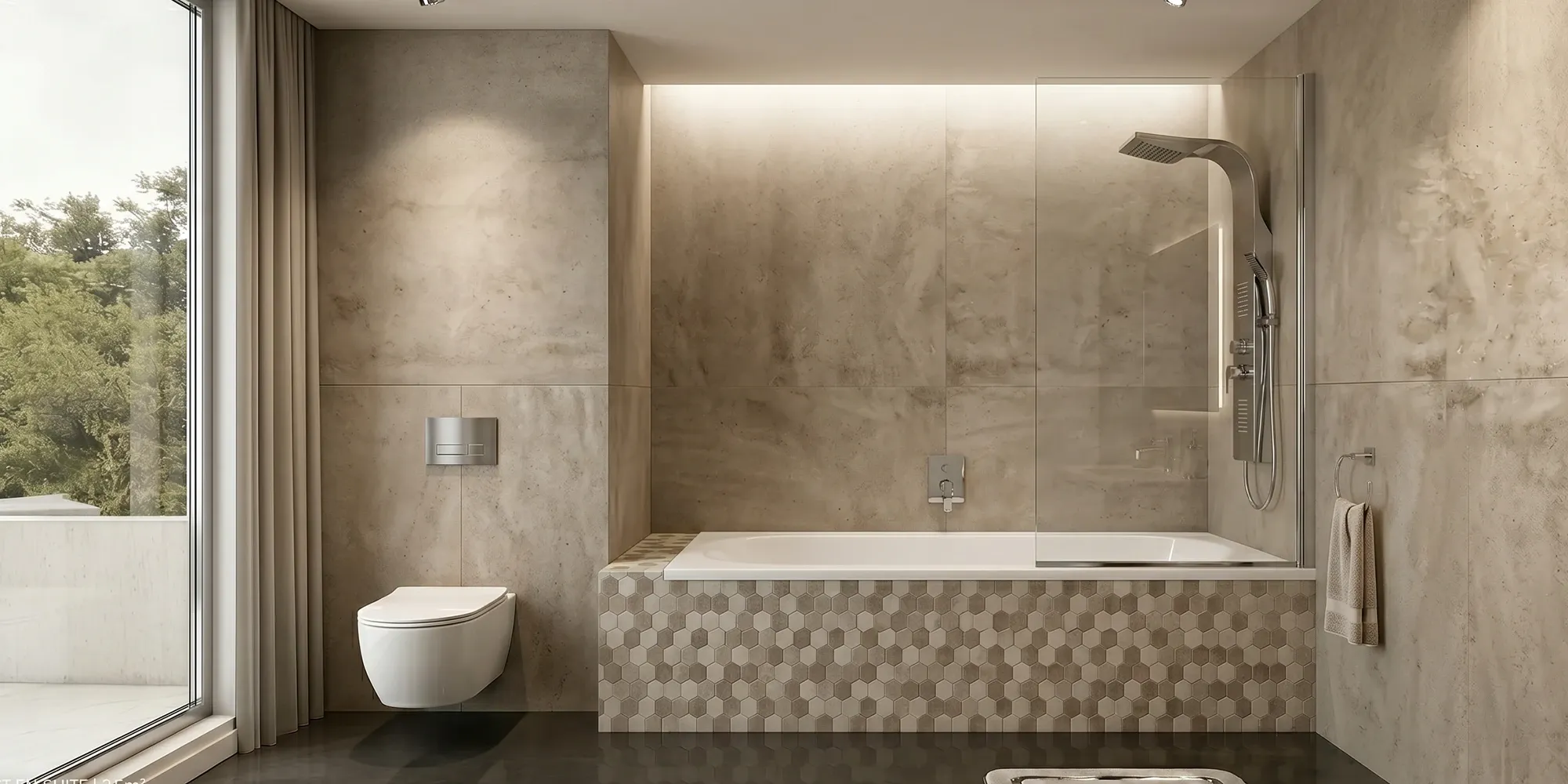
A bathtub glass shower screen costs more upfront than a shower curtain, but lasts decades, looks cleaner, and controls splash more reliably. Here's the full comparison: cost, lifespan, cleaning, splash, and visual feel.
Reviewed by John Flouhouse, Installation Team Lead at Dulles Glass
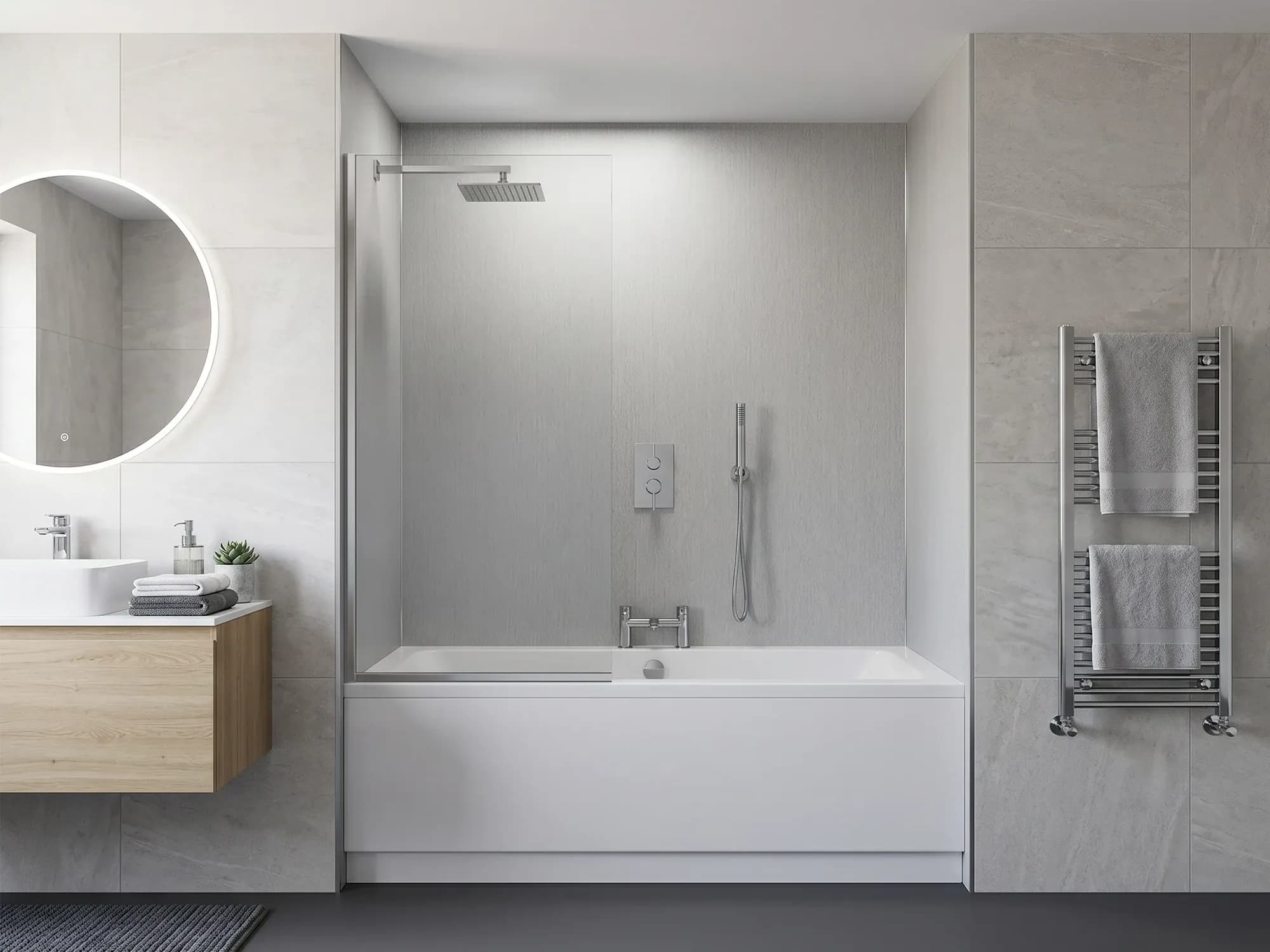
Still using a shower curtain on your tub-shower combo? It works, but it can make the bathroom feel temporary, collect mildew at the hem, and let water escape when the curtain shifts. A bathtub glass shower screen costs more upfront, but it gives the space a cleaner look, better splash control, and a more permanent upgrade.
If you're comparing a bathtub glass shower screen vs shower curtain, the right choice depends on budget, privacy, cleaning, splash control, and how permanent you want the bathroom upgrade to feel.
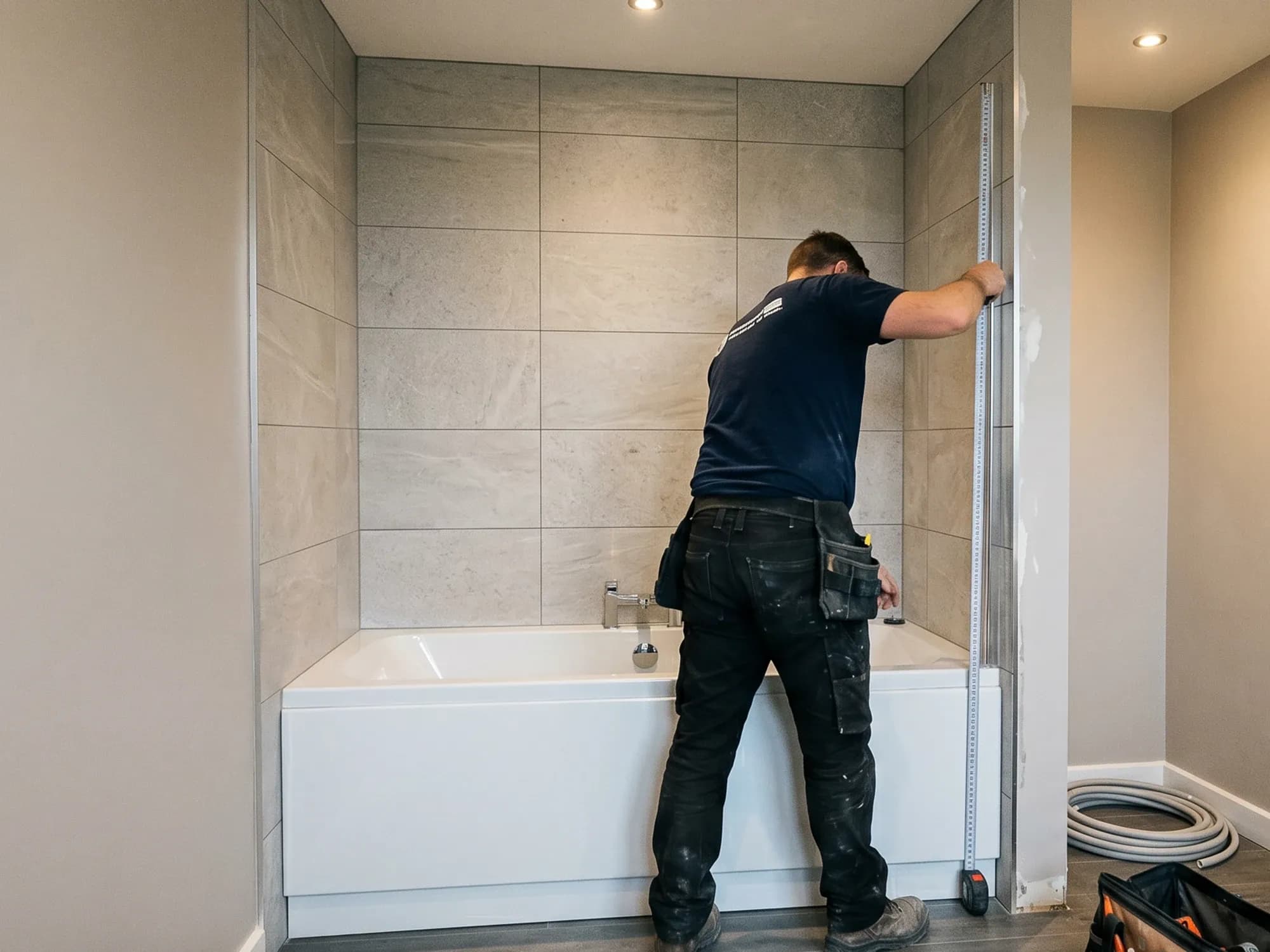
For homeowners, a custom glass screen can usually be measured and installed without changing the tub or plumbing — Dulles Glass handles professional measurement, fabrication, and installation.
Key Takeaways
- Glass screen wins on: appearance, lifespan, splash control, ease of cleaning, resale value.
- Curtain wins on: upfront cost, easy replacement, full privacy when closed.
- Lifespan: glass lasts decades; curtains need replacement every 1-3 years.
- Cost: a curtain costs far less upfront; a glass screen costs more initially but is built as a long-term fixture.
- Resale presentation often favors glass in modern bathroom listings.
Quick Answer: Glass Screen or Shower Curtain?
Choose a glass shower screen if you want a modern look, easier cleaning, better splash control, or higher resale value. Choose a shower curtain if upfront cost is the priority, the bathroom is a temporary rental, or you want easy full-enclosure privacy.
Side-by-Side Comparison
| Factor | Glass shower screen | Shower curtain |
|---|---|---|
| Visual look | Modern, clean, minimal | Casual; depends on fabric choice |
| Lifespan | Hardware 15+ years; tempered glass lasts decades with proper care | 1-3 years before replacement |
| Splash control | Reliable; rigid panel doesn't shift | Variable; can billow or shift inward |
| Cleaning | Daily squeegee + weekly wipe | Machine wash periodically; replace when stained |
| Privacy | Partial (open one end) | Full when closed |
| Maintenance | Minimal — no moving parts | Rod loosens; rings break; mildew on hem |
| Resale presentation | Often positive in listing photos | Usually neutral |
| Cost (upfront) | Higher | Lower |
| Cost (10-year) | Higher upfront; fewer replacements | 3-10 replacements add up |
Where a Glass Screen Wins
Cleaner visual feel
A glass screen reads as a permanent design element; a curtain reads as a temporary fix. In any bathroom where appearance matters — primary bath, listing photos, guest-bath upgrade — glass usually creates a more finished, permanent impression.
Reliable splash control
A rigid glass panel stays in one position. A curtain can billow inward from the shower spray (the cling effect), shift sideways during use, or get tucked outside the tub edge by accident. Each of those creates a splash escape route a glass panel doesn't.
Longer life, lower long-term cost
Shower curtains need replacement every 1-3 years, usually because of mildew at the bottom hem, vinyl yellowing, or fabric wear. Hooks can break and rods can loosen, while a glass screen is built as a longer-term fixture.
Better resale signal
Real estate listing photos of bathrooms with glass shower screens read as upgraded. Bathrooms with curtains read as ordinary. For homes being prepared for sale, the glass screen is one of the visible upgrades that registers in photos.
Where the Curtain Still Wins
Low upfront cost
A curtain plus rod runs a small fraction of a custom glass screen. For rental units, short-term housing, or budget-constrained remodels, the curtain is the rational pick.
Full privacy when closed
A curtain encloses the whole tub when fully drawn. A single panel glass screen leaves one end open. For shared bathrooms where someone might walk in mid-shower, the curtain offers more privacy.
Easy to replace if damaged
Damage to a curtain means buying a new one. Damage to a glass panel means a service call and replacement hardware.
Color and pattern variety
Curtains come in unlimited fabric, color, and pattern options. A glass panel is glass — clear, frosted, or tinted. For homeowners who like changing the bathroom look seasonally, the curtain is more flexible.
Cost Over a 10-Year Window
A glass screen is a one-time cost. A shower curtain is an ongoing replacement cycle.
Over 10 years:
- Glass screen: one upfront cost. Maintenance is daily squeegee plus periodic silicone-bead refresh.
- Shower curtain: the curtain, rod, and rings; roughly 3-5 curtain replacements (every 1-3 years); occasional rod replacement.
A basic curtain setup costs far less upfront, while a custom glass screen is a larger one-time investment. Over 10 years, replacement curtains, liners, rings, and rods can reduce the upfront savings, though a glass screen usually remains the larger investment. The trade-offs sit elsewhere: appearance, splash control, and resale impact.
When to Switch From Curtain to Glass
Three situations where the switch is clearly worth it:
- Bathroom upgrade for resale. The glass screen is one of the visible upgrades that registers in listing photos.
- Tired of cleaning the curtain. Replacing the curtain because of mildew or yellowing every year is exactly what the glass screen eliminates.
- You hate the look of a curtain. Glass reads as modern; curtains read as casual. For many modern bathroom designs, glass is the better fit.
Three situations where the curtain is fine:
- Rental property. Tenant turnover and uncertain bathroom usage favor the lower upfront cost.
- Short-term housing. You're moving in less than 2-3 years.
- You want full privacy in a shared bathroom. A single-panel glass screen leaves one end open.
Who Should Choose What?
| Choose a glass screen if… | Choose a shower curtain if… |
|---|---|
| You own the home | You rent |
| You want a modern bathroom look | You need the lowest upfront cost |
| You want easier daily cleaning | You want full-enclosure privacy |
| You care about listing photos | You change bathroom decor often |
The glass screen wins on appearance, lifespan, and splash control. The curtain wins on upfront cost and full-enclosure privacy. For most homeowners staying in the home, glass is the upgrade worth making.
Need Help Switching From a Curtain to a Glass Screen?
Most tub-shower combos accept a single panel glass screen without changing the tub or plumbing. During measurement, installers check wall plumb, available anchoring, shower-head direction, and the tub ledge before confirming panel size. Dulles Glass fabricates and installs custom bathtub glass screens, bathtub enclosures, custom shower doors, and shower door hardware. Request a quote with your tub dimensions to get started.
Frequently Asked Questions
Is a bathtub shower screen better than a shower curtain?
For most homeowners, yes. A glass bathtub screen looks cleaner, controls splash better, lasts decades versus a curtain that needs replacement every 1-3 years, and modernizes the bathroom. The trade-off is higher upfront cost.
How much more does a glass screen cost than a shower curtain?
A custom bathtub glass screen typically costs more upfront than a shower curtain plus rod, but lasts for decades with proper care. Over 10 years, replacement curtains, liners, rings, and rods can reduce the upfront savings, though a glass screen usually remains the larger investment.
Do shower curtains let more water on the bathroom floor?
Often yes. Curtains can billow inward from the shower spray or shift sideways during use, letting spray escape at the bottom or the open end. A rigid glass screen stays in place and controls spray more reliably.
Are bathtub shower screens harder to clean than shower curtains?
No. A glass screen is easier to clean with a daily squeegee plus a weekly pH-neutral wipe. Shower curtains collect soap scum and mildew at the bottom, require periodic machine washing, and eventually need full replacement.
Can I install a bathtub shower screen on the same tub as a curtain rod?
Yes, in most cases. Most standard alcove bathtubs can accept a single panel glass screen, but the installer must confirm wall plumb and secure anchoring before installation. A glass screen typically calls for stronger wall anchoring than a curtain rod, so the installer removes the rod, verifies the wall and stud locations, and mounts the panel into solid blocking.
What size glass screen do I need for a bathtub?
Standard alcove tubs are 60 inches long; a single panel glass screen is typically 28 to 36 inches wide and 56 to 60 inches tall, covering the shower-head end. The exact width is confirmed during the in-home measurement.
Does a bathtub glass screen stop all water from escaping?
Not completely. A single panel glass screen covers the shower-head end and controls most direct spray, but the open end is not fully enclosed. Splash control depends on panel size and shower head placement.
Can a glass shower screen be installed without drilling into the tub?
Yes. A single panel glass screen anchors to the wall, not the tub itself. The installer mounts it to wall studs or solid blocking, so the tub and its surface are not drilled.
Ready to replace the curtain with a cleaner glass look?
Thinking about replacing a shower curtain with a glass screen? Dulles Glass measures, fabricates, and installs custom bathtub glass screens. Request a quote with your tub dimensions to get started.
Why choose Dulles Glass
54+
Years Glass expertise
10,000+
Projects Measured and installed Yearly
3-Year Warranty
On custom installations
4.9/5 Rating
Customer Reviewed
Ready to start your glass project?
Tell us what you are planning and our glass experts will help you find the right solution.