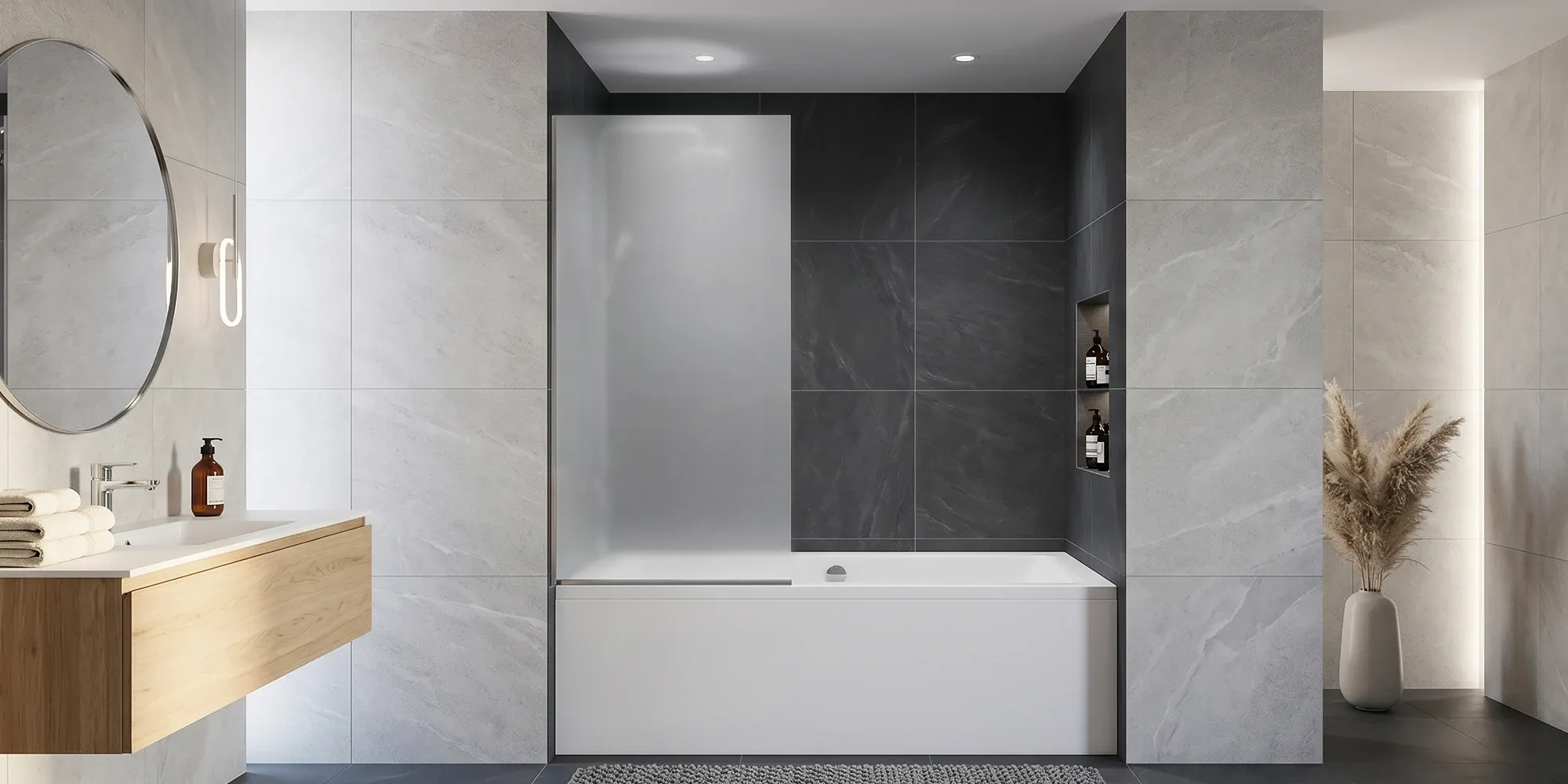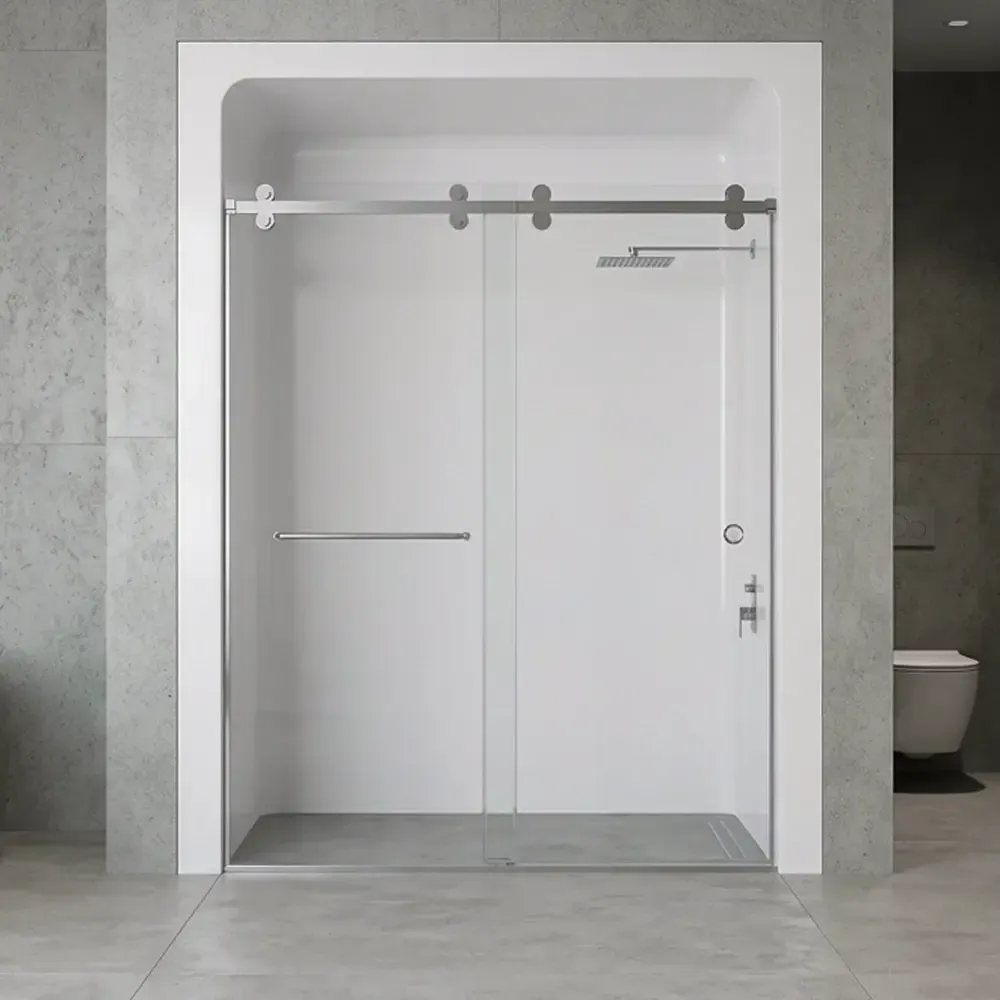
Yes, you can install a frameless shower door on acrylic or fiberglass walls, but the hardware and glass thickness matter. Acrylic and fiberglass surrounds are more flexible than tile, so the installer needs anchors and reinforcement methods designed for hollow or thin wall systems. Here's what works, what doesn't, and what to ask before you commit to a quote.
Reviewed by John Flouhouse, Installation Team Lead at Dulles Glass
Quick Answer
Frameless shower doors can be installed on acrylic or fiberglass walls if the wall is stable, the glass is not too heavy, and the installer uses hollow-wall-rated anchors or backing reinforcement. For most acrylic surrounds, 3/8-inch tempered glass is preferred over 1/2-inch because it reduces load on the wall.
About one in four shower-door inquiries we field starts with a version of the same sentence: "I have an acrylic (or fiberglass) surround and I want a frameless door. Can you do that?"
The short answer is yes. It's done every week. But it can't be done the same way a door is installed on tile — and when a crew treats acrylic like tile, the wall can develop visible damage within the first few years.
The Bottom Line
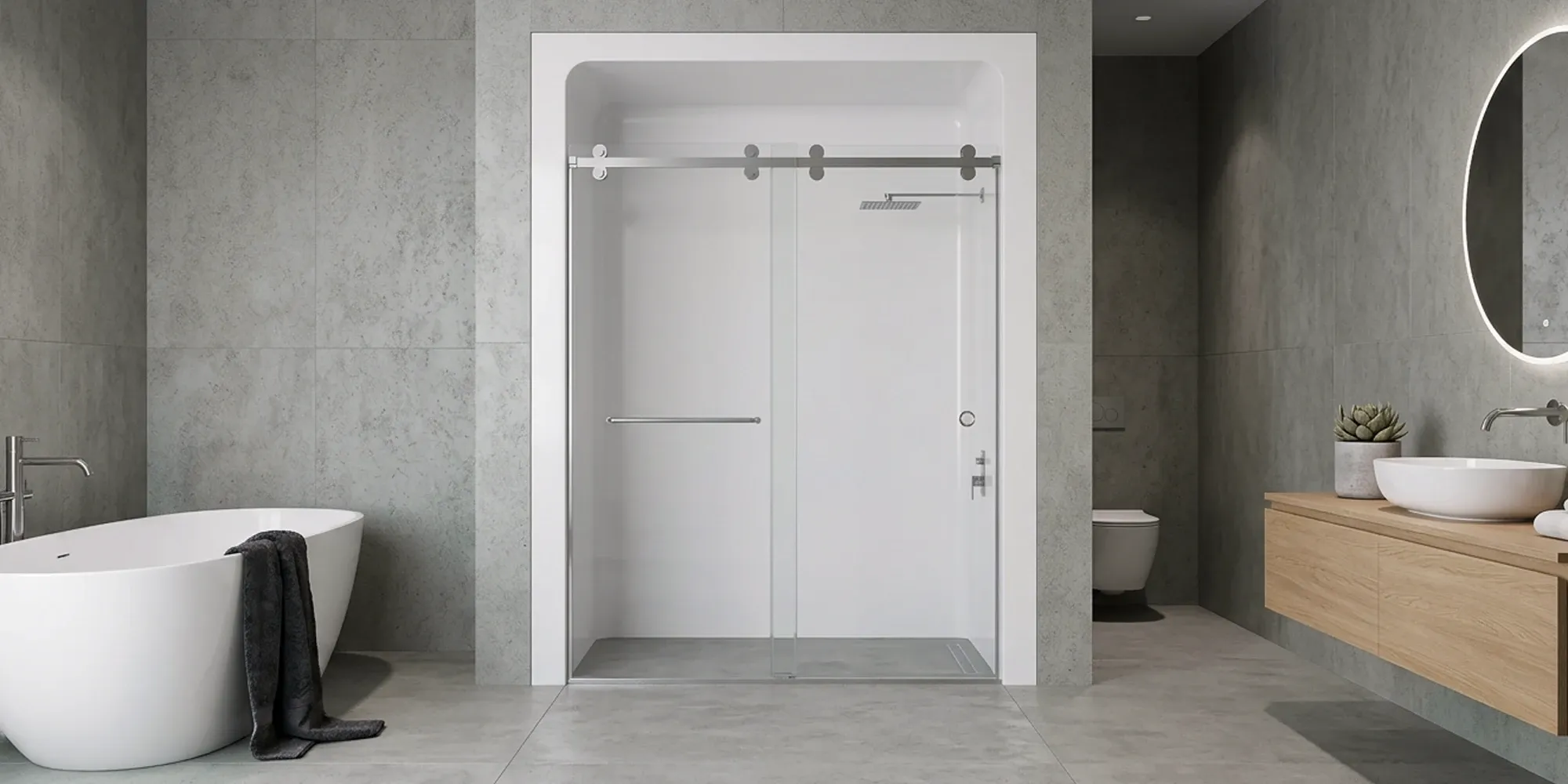
- Frameless shower doors can work on acrylic or fiberglass walls when the wall is stable and the correct anchors are used.
- 3/8-inch tempered glass is usually safer than 1/2-inch because it reduces hinge load on a flexible substrate.
- Installed pricing is usually similar to tile-wall installs, with reinforcement adding cost only when needed.
- Ask whether the quote includes acrylic- or fiberglass-rated anchoring before comparing prices.
Real Call Evidence — Acrylic Wall Discussion
"Yeah, so, on acrylic base is usually like a fiberglass or plastic material. It's like a premade shower structure... We don't recommend half-inch on acrylic or fiberglass walls."
Specialist explaining acrylic wall considerations — from 150 acrylic-related questions
Real Call Evidence — Heavy-Duty Anchors
"You might have a good stud system behind the acrylic walls. We can use what we call heavy-duty anchors, which we usually always recommend when it's an acrylic base."
Sales specialist recommending heavy-duty anchors for acrylic — from recorded call transcript
Can Frameless Shower Doors Go on Acrylic Walls?
Three types of bathrooms almost always have an acrylic or fiberglass surround:
- Condos and apartments. Developers choose acrylic because it installs quickly and arrives as a finished water-resistant wall system.
- Tub-shower combos. A bathtub with an integrated 3-piece or 5-piece acrylic wall kit is the default in guest bathrooms from the 1990s forward.
- Prefab shower stalls. One-piece fiberglass units, common in basements and accessible bathrooms.
Why Acrylic and Fiberglass Need Different Hardware
A frameless shower door installed on an acrylic surround requires hardware selected for the wall type.
Tile on cement backer board is a rigid substrate. Acrylic is different. It's a thermoplastic sheet — flexible, relatively thin (often 1/8" to 3/16"), bonded to a foam or fiberglass backer. When a point load is applied, four things can happen over time:
- Compression — the plastic yields under sustained pressure from the anchor.
- Partial load transfer — the backer absorbs some of the force, but not all.
- Cyclic stress — each door swing sends vibration through the hinge.
- Fatigue fractures — over months, micro-cracks can develop around anchor points.
The noise some homeowners describe when an acrylic-wall door swings — a creak or a faint pop — can be a warning sign, especially when paired with visible flex at the hinge.
Best Glass Thickness for Acrylic Shower Walls
For most acrylic and fiberglass surrounds, we recommend 3/8-inch tempered glass over 1/2-inch. The lighter panel reduces the cantilevered load on the hinges and the load transferred into the wall. 1/2-inch glass is the preferred choice on tile or solid masonry walls where the substrate can carry the additional weight; on acrylic or fiberglass surrounds, the structural margin is smaller and 3/8-inch is the safer default.
For very wide openings or steam-shower enclosures, we sometimes specify 3/8-inch glass with reinforcement behind the wall rather than stepping up to 1/2-inch. That gets the rigidity without the weight penalty.
Anchors That Work on Acrylic or Fiberglass
Three things separate a ten-year install from a two-year install: anchor choice, load distribution, and torque control.
1. Anchors suited to the wall
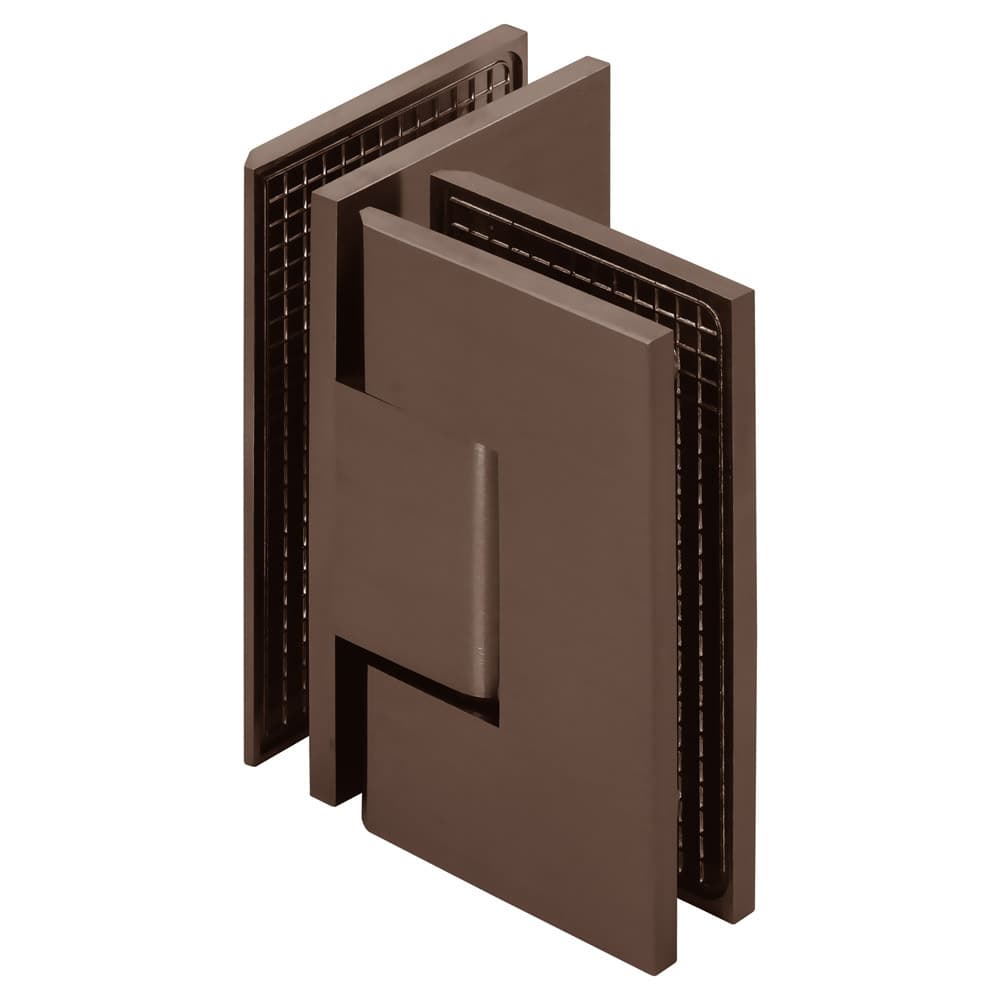
- Toggle-style anchors (e.g., Toggler SNAPTOGGLE) — a spring-loaded crossbar spreads the load behind the panel.
- Molly-style anchors with an oversized flange — used when cavity depth is too shallow for a toggle.
- Through-bolts with a backed stainless washer — the gold standard when the back of the wall is accessible.
2. Load distribution
A frameless panel in 3/8" tempered glass weighs roughly 45–85 pounds depending on panel width. On acrylic we prefer three hinges, and we frequently add a continuous U-channel top rail to convert the wall load into a distributed line rather than three points.
The Half-Inch Glass Trap
Standard 3/8" tempered glass weighs about 4.9 pounds per square foot. Half-inch tempered is about 6.5 pounds — roughly 30% heavier. On a rigid tile wall the extra weight is a non-issue. On acrylic, that extra load amplifies everything flexible about the substrate. Unless the wall is specifically reinforced, most acrylic installs are safer with 3/8" glass.
3. Torque control
Good installers use a torque-limiting driver at the manufacturer spec for the specific anchor. This single step prevents most of the anchor-related damage we see on inherited failed installs.
When We Recommend Reinforcement
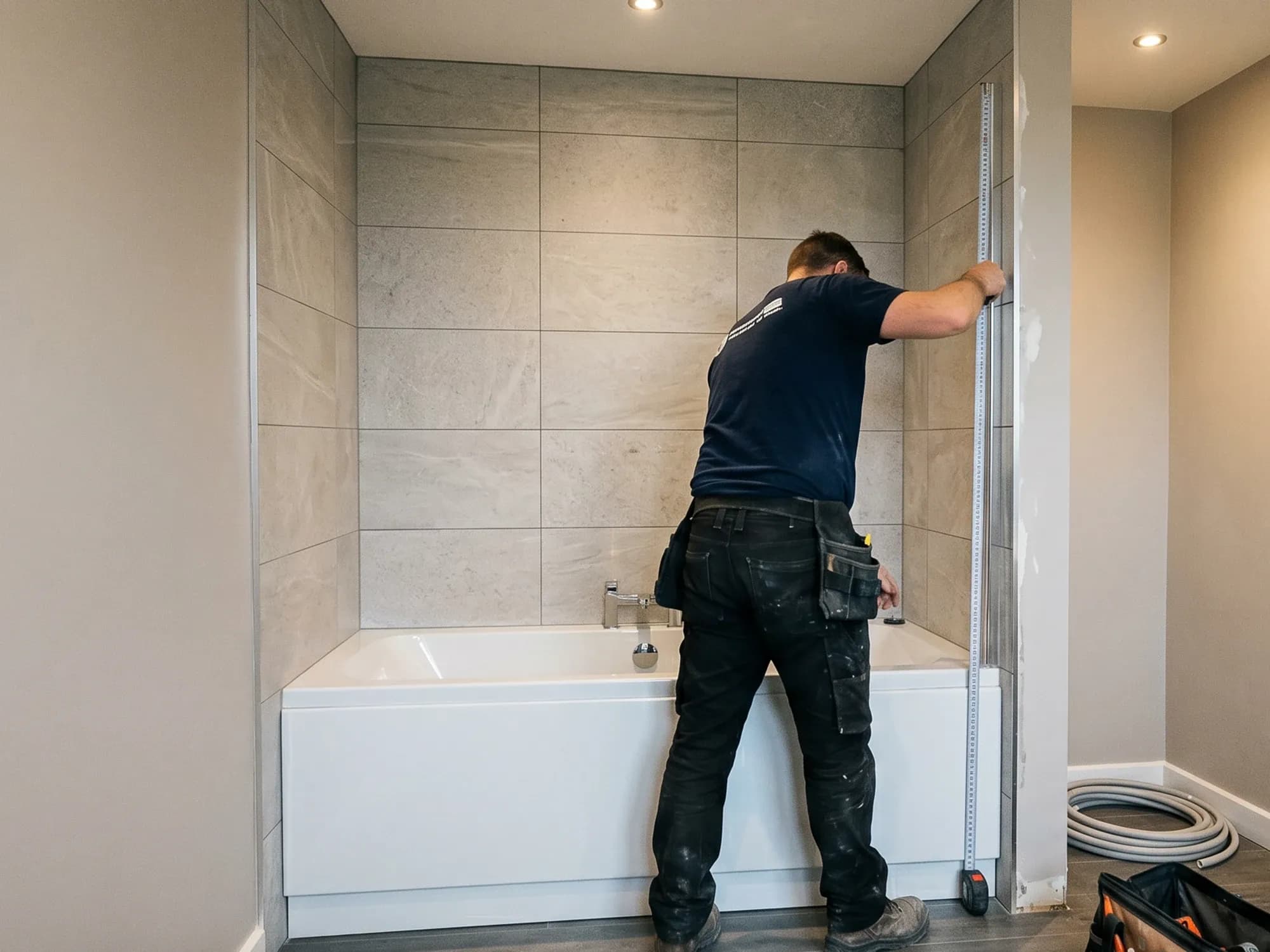
During the in-home measurement, we check five things before recommending a frameless door on acrylic or fiberglass:
- Wall material. Tap test, visual inspection, check for hollow sound of acrylic versus solid sound of tile.
- Backer type. Fiberglass backer, foam backer, or direct to studs.
- Stud spacing behind the surround.
- Existing penetrations. Old curtain rod holes, grab-bar holes, previous door anchors.
- Flex test. If it deflects more than about 1/8", the wall needs reinforcement or a different configuration.
When Frameless Is Not the Right Choice
Consider a different configuration if...
- The wall panel flexes more than 1/8" under firm hand pressure and the back isn't accessible for reinforcement.
- The surround is visibly aged — yellowing, stress cracks, or soft spots.
- The swing panel would exceed about 65 pounds — our typical cap for acrylic installs.
- The shower base and walls are a one-piece molded unit with no separate backer.
Forensic look: rebuilding a 66" x 60" condo install
A condo owner called us about his acrylic-walled shower. He had an existing frameless hinged door installed by another company and was hearing a creak on every swing.
| Component | Before (previous install) | After (our rebuild) |
|---|---|---|
| Hinge anchors | Light-duty drywall anchors | Toggle-style anchors rated for hollow substrates |
| Hinge count per side | 2 hinges | 3 hinges — load distributed across longer vertical line |
| Glass thickness | Customer asked about 1/2" | 3/8" retained — advised against 1/2" on this substrate |
| Fixed panel top rail | Clamp-only (3 contact points) | Continuous U-channel — distributed load line |
Total time on site: one day. The rebuilt enclosure is silent on swing, covered by our 3-year parts-and-workmanship warranty.
Cost to Install a Frameless Door on Acrylic Walls
A custom frameless shower door on an acrylic wall costs roughly the same as one on tile — $2,600 to $3,900 installed. The only reliable upcharge is wall reinforcement when the panel flexes more than we're comfortable with, which runs about $150 to $400.
How to Compare Lower Quotes on Acrylic Wall Installs
Lower quotes may not include substrate-specific anchors, reinforcement, or additional wall checks. On acrylic and fiberglass surrounds, those details matter because the wall is more flexible than tile, and small hardware differences can show up later as wobble, creak, or cracking around anchor points.
Our approach: we confirm the wall type during the measurement visit and specify the exact hardware before fabrication starts. The hardware choice is documented on the work order so there's no improvising on install day.
Warranty, Safety, and Code Compliance
Every Dulles Glass custom shower door ships with a 3-year warranty covering both parts and installation workmanship. Tempered glass is roughly four times stronger than ordinary float glass, and if it does break it crumbles into small blunt pebbles. U.S. safety standards — ANSI Z97.1 and 16 CFR Part 1201 — require tempered glass in every shower door.
Have an acrylic or fiberglass surround?
Schedule an in-home measurement in the Mid-Atlantic and we'll confirm whether your wall can carry a frameless door before fabrication begins.
Explore our frameless shower doors, custom shower doors, and shower door installation options, or request a quote.
Questions to Ask Before You Put Down a Deposit
When comparing quotes from multiple installers for a frameless shower door on acrylic or fiberglass walls, ask each one the following:
- What hardware are you using for the wall anchors? (Look for hollow-wall-rated toggles, backed plates, or substrate-specific anchors — not just standard tile drywall anchors.)
- What glass thickness are you specifying, and why? (3/8-inch is typically the right answer on acrylic surrounds; 1/2-inch needs reinforcement.)
- Will you check for studs or blocking behind the surround during the in-home measurement?
- What's the load rating on the proposed hinges?
- Does the quote include any reinforcement work if the wall doesn't meet the load requirements?
- What warranty covers both the glass and the hardware on a surround install?
A reputable installer should be able to answer these without hesitation. Hesitation on any of them is a sign to keep shopping.
Frequently asked questions
Can I install a frameless shower door on fiberglass walls myself?
Technically yes, but the failure rate for DIY installs on fiberglass tends to be higher than on tile because the tolerances are tighter. At minimum invest in a torque-limiting driver and hardware specifically designed for thin substrates.
How long does a frameless shower door last on acrylic walls?
With proper hardware and installation, a frameless shower door on acrylic is engineered for long-term durability — comparable to one on tile. Longevity depends far more on install quality than on substrate type.
Do you ever refuse to install on a particular wall?
Occasionally, yes. If the surround flexes too much or shows visible aging, we recommend a different configuration or replacing the surround first.
Is there a weight limit for frameless doors on acrylic?
We typically cap the swinging panel weight around 65 pounds on acrylic installs, which translates to a maximum panel size of about 30" x 76" in 3/8" tempered glass.
Can you retrofit without removing the existing door?
Usually not. The old anchor holes are almost always in the wrong positions for new hardware, and they become weak points.
Sources & Standards Referenced
- ANSI Z97.1 — American National Standard for Safety Glazing Materials Used in Buildings
- 16 CFR Part 1201 — U.S. CPSC Safety Standard for Architectural Glazing Materials
- Industry-standard weight: 3/8" tempered glass = 4.9 lb/sq ft; 1/2" tempered = 6.5 lb/sq ft
- First-party data: 3,405 sales calls across nine Dulles Glass specialists, March–April 2026
In-Home Measurement
We'll inspect the wall, test for flex, identify the right hardware, and give you a firm price — with no pressure to book the job on the spot.
Why choose Dulles Glass
54+
Years Glass expertise
10,000+
Projects Measured and installed Yearly
3-Year Warranty
On custom installations
4.9/5 Rating
Customer Reviewed
Ready to start your glass project?
Tell us what you are planning and our glass experts will help you find the right solution.