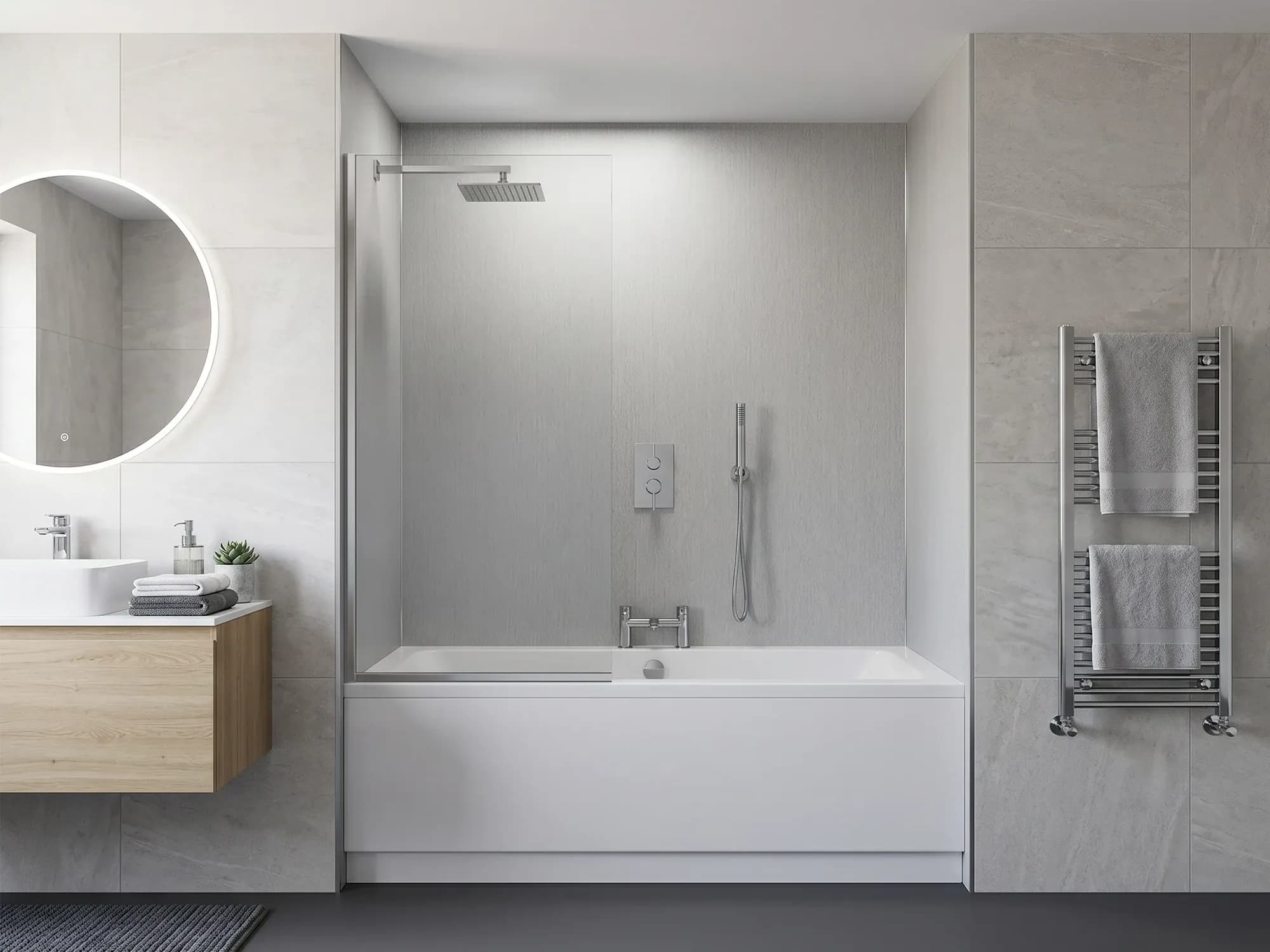
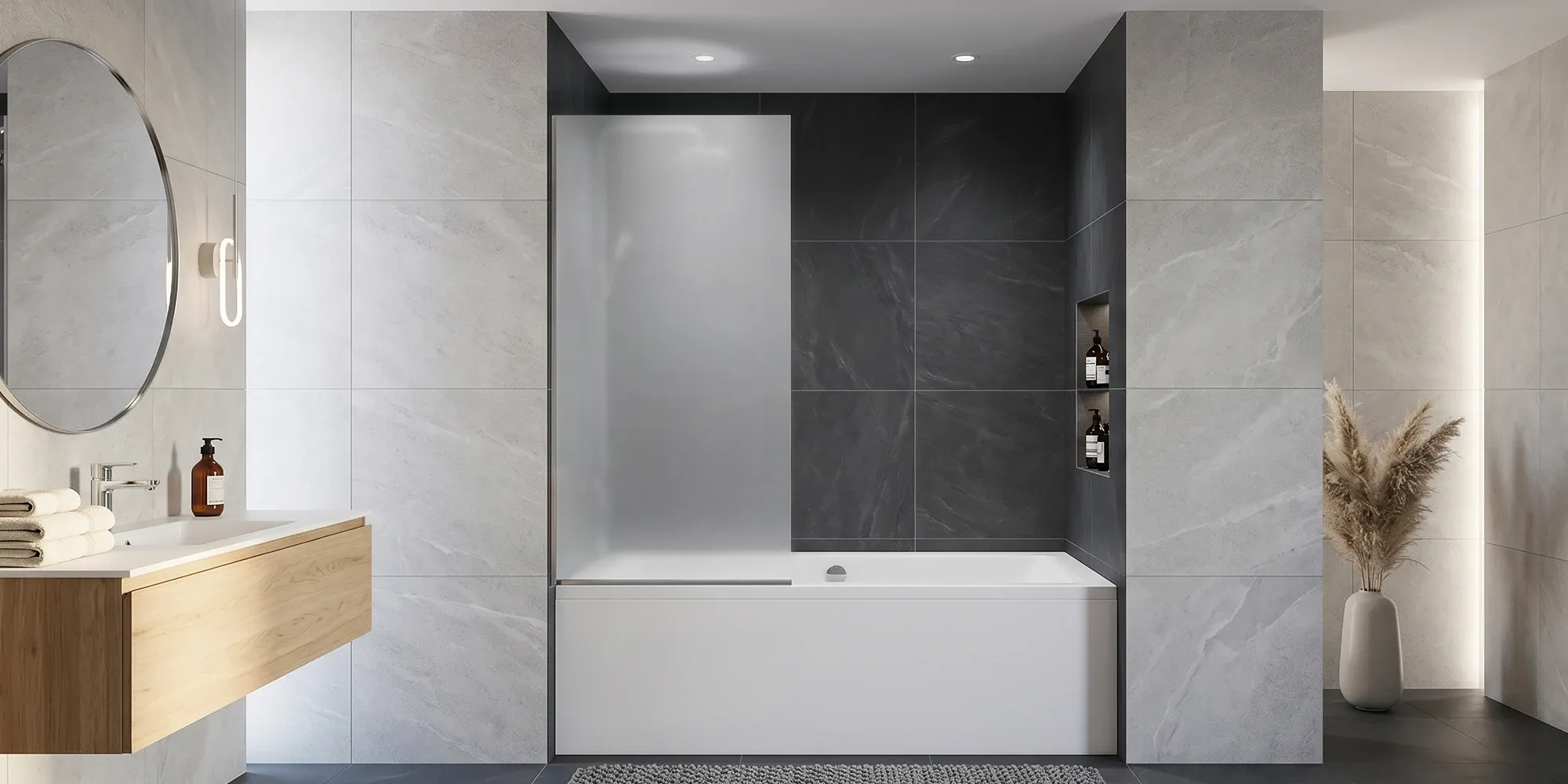
A fixed bathtub screen is a stationary glass panel. A hinged tub screen pivots outward for full tub access. Here's the full comparison: splash control, bath access, cleaning, cost, and which configuration fits your bathroom.
Reviewed by John Flouhouse, Installation Team Lead at Dulles Glass
Choosing between a fixed and hinged glass tub screen comes down to how you use the bathtub, how much access you need, and how much clearance your bathroom layout allows. Fixed screens are simpler and more affordable, while hinged screens are easier to move, clean, and use for bathing.
A fixed tub screen is the simplest option: one stationary tempered glass panel with no moving parts. A hinged tub screen adds a pivoting panel that can swing outward for easier cleaning, bathing, and full tub access.
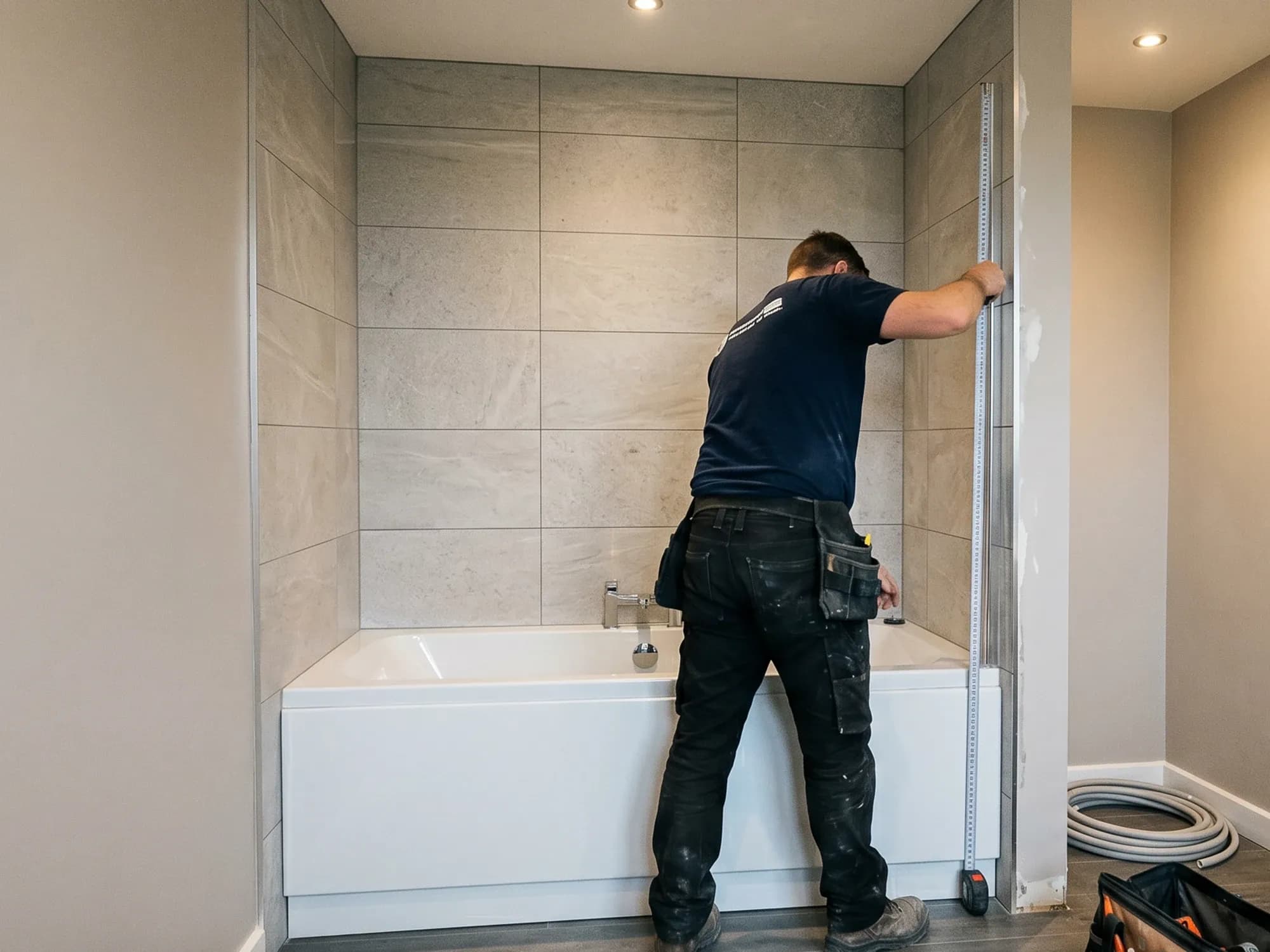
At Dulles Glass, fixed and hinged tub screens are fabricated from tempered glass and measured during a professional in-home measurement to fit the bathtub layout, shower head position, and wall conditions — whether you choose a fixed, hinged, or frameless tub screen.
Key Takeaways
- Fixed tub screens are stationary glass panels. Simplest configuration; lowest cost; easiest to install.
- Hinged tub screens pivot outward 90–180 degrees for full tub access.
- Choose fixed if you mostly shower in the tub and rarely take baths.
- Choose hinged if you also take baths and want easier tub access, or if cleaning behind the panel matters.
- Both can control splash well when sized and positioned correctly — shower head angle, panel width, and tub layout matter.
Quick Answer: Fixed or Hinged Tub Screen?
Choose a fixed tub screen if you mostly shower in the tub and want the simplest, lowest-cost option. Choose a hinged tub screen if you also take baths, need easier tub access, or want to fold the panel out of the way for cleaning.
Fixed Tub Screens
A fixed tub screen — also called a fixed glass bath screen — is one piece of tempered glass clamped to the wall above the tub. It doesn't move. The panel covers one end of the tub (typically the shower head end) and the opposite end stays open for tub access.
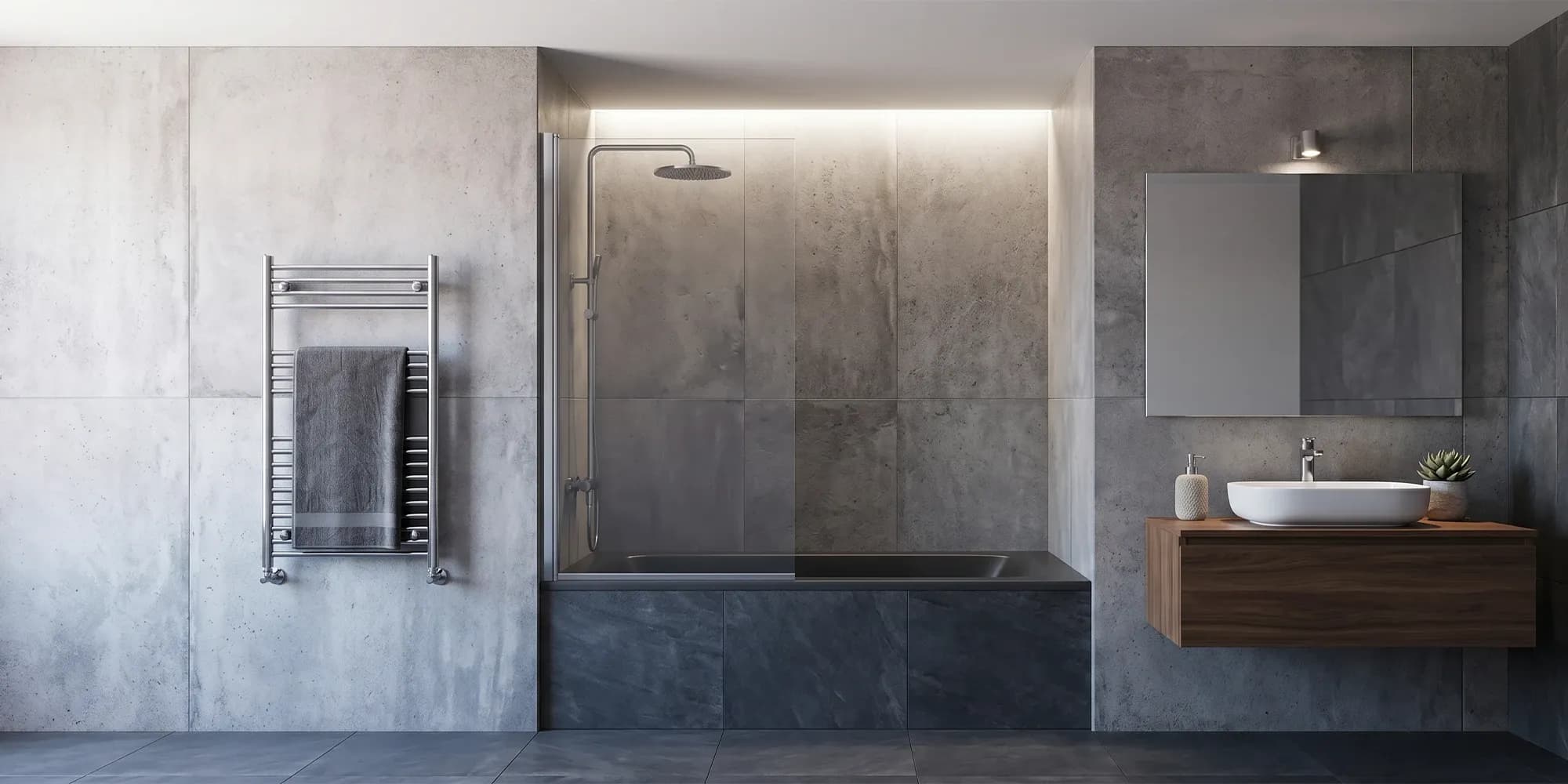
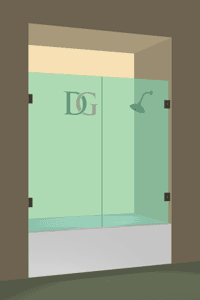
A fixed frameless glass tub screen on a standard alcove tub — one stationary panel, no moving parts.
Strengths:
- Simplest configuration — no moving parts to fail
- Lowest cost for a glass tub screen
- Quick install — many installations can be completed in a few hours, depending on wall conditions, hardware, and final measurements
- Most accessible price-to-look ratio
- No hinge to maintain — just clean the glass
Limitations:
- Can't fold out of the way for cleaning the back of the glass or the inside of the tub
- Limited tub access from the panel end (entry from the open end only)
- Permanent placement — can't shift for awkward bathing situations
Hinged Tub Screens
A hinged bathtub screen — sometimes called a hinged glass bath screen — is a glass panel attached to the wall by one or two hinges that allow the panel to pivot outward. Depending on the hinge hardware and layout, a hinged tub screen may rotate 90–180 degrees so it can fold flat against the wall.
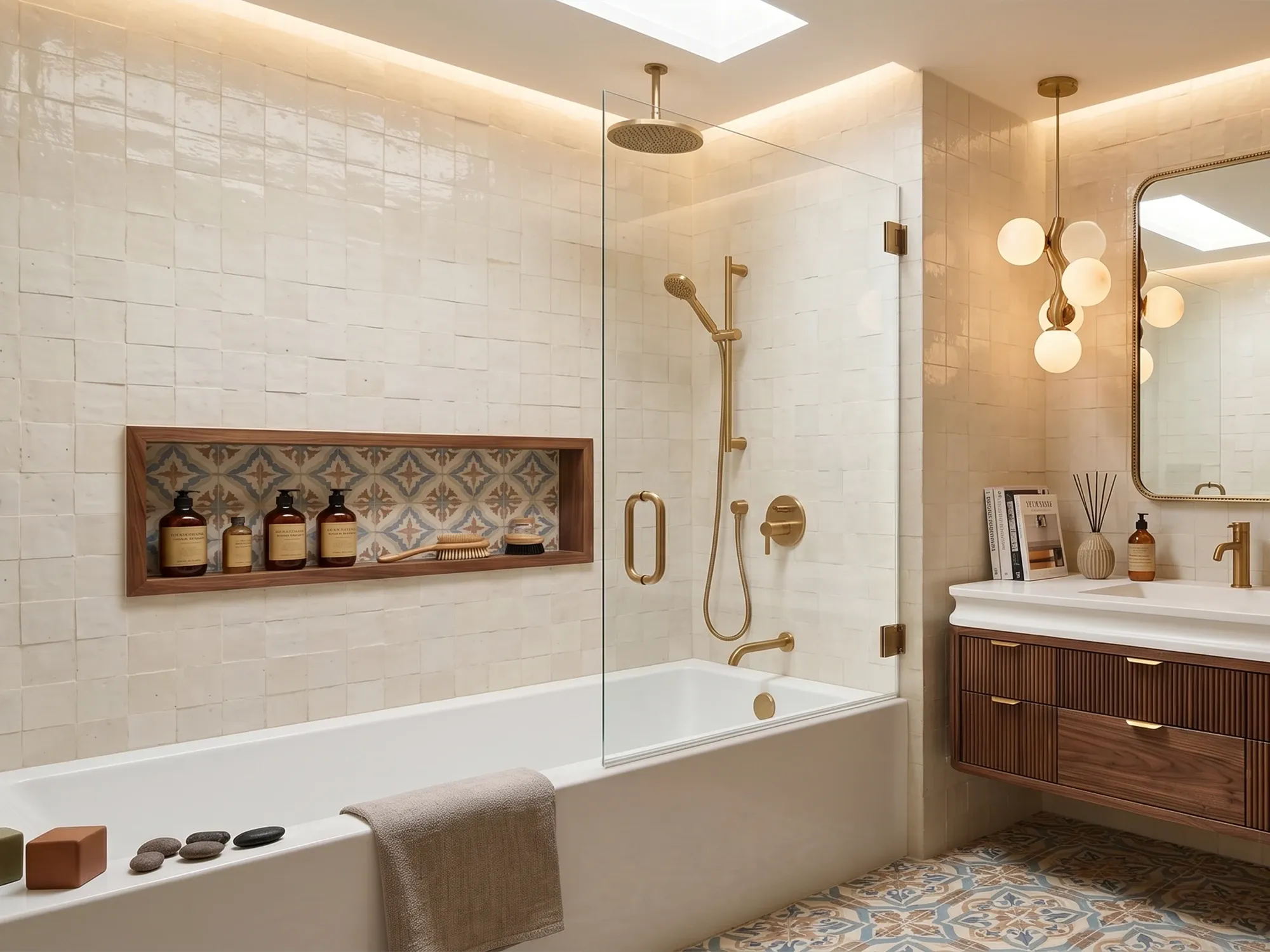
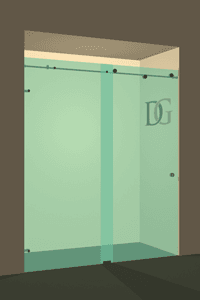
A hinged glass tub screen pivots outward, folding clear of the tub for cleaning and bath access.
Check the swing path
A hinged screen needs clear space to swing outward. If a vanity, toilet, bathroom door, or towel bar blocks the swing path, a fixed panel may be the better choice.
Strengths:
- Full tub access when the panel is folded
- Easier cleaning — you can reach the back of the glass and the inside of the tub
- Works well when the swing path is clear and you need the panel out of the way
- Useful for bathing children or pets — fold the panel back, then reset for showering
- Helpful for cleaning around the faucet end
Limitations:
- Higher cost than fixed
- Hinge needs occasional maintenance — wipe clean, check for sag every 1-2 years
- Slightly longer install — hardware is more involved
- Hinge can sag over many years on lower-grade hardware
Fixed vs. Hinged Tub Screen Comparison
| Factor | Fixed | Hinged |
|---|---|---|
| Cost | Lower | Higher (hinge hardware) |
| Movement | None | Pivots 90–180 degrees |
| Tub access | Open end only | Full when panel is folded |
| Splash control (closed) | Good when sized and positioned correctly | Good when sized and positioned correctly |
| Cleaning behind panel | Harder — can't fold out | Easier — folds out |
| Maintenance | None beyond cleaning glass | Hinge needs occasional check |
| Best for | People who mostly shower | People who also take baths |
Which Tub Screen Is Better for Taking Baths?
The fixed-vs-hinged decision is most consequential for households that use the tub for baths, not just showers.
With a fixed panel, the tub is accessed from the open end (typically the faucet end). For most adults this is fine — you step, sit down, fill the tub. But:
- Bathing children — the fixed panel can block reach when leaning over to wash a child.
- Bathing pets — same problem; access matters.
- Reaching the faucet — if the faucet is on the panel end, the fixed panel can block easy reach.
A hinged panel folds out of the way for these situations. After the bath, the panel goes back to its normal position for showering.
When to Choose a Fixed Tub Screen
A fixed bathtub screen is usually the right choice when simplicity and budget matter most. Choose a fixed tub screen if:
- The tub is used primarily for showering
- Budget is the priority
- The bathroom is small and a swinging panel would interfere with the bathroom door or vanity
- You want the cleanest visual look (no hinge hardware visible)
When to Choose a Hinged Tub Screen
A hinged bathtub screen is usually worth the added cost when access and cleaning flexibility matter. Choose a hinged tub screen if:
- You take baths regularly
- You bathe children or pets in the tub
- You want easier access for cleaning the inside of the tub or the back of the panel
- The faucet is on the same end as the panel and you need access during baths
Fixed if you only shower. Hinged if you bathe. That's the simplest version of the decision.
Do Fixed or Hinged Tub Screens Prevent Water Splash Better?
Both can work well when the panel is wide enough and placed near the shower head. The biggest factors are shower head angle, tub shape, panel width, and whether the hinged screen is kept in the closed position while showering.
Like most partial bathtub screens, fixed and hinged panels are designed to reduce splash, not seal the tub opening completely like a full sliding or bypass door.
Why Professional Measurement Matters
Tub screens need accurate measurements for panel width, wall conditions, tub slope, and shower head position. During the in-home measurement, Dulles Glass confirms whether a fixed or hinged panel will provide the right access and splash coverage for your bathroom layout.
Need Help Choosing Between Fixed and Hinged?
The right configuration depends on tub use patterns, bathroom layout, and shower head position. Dulles Glass fabricates and installs both fixed and hinged bathtub screens. If you are still weighing your options, our full range of bathtub enclosures, doors, and screens shows the configurations available for a standard alcove tub.
For a wider remodel, our custom shower doors cover walk-in showers and full enclosures, and every glass panel is sized to your space with professional installation. When you are ready to move forward, the team can schedule an in-home measurement and confirm whether a fixed or hinged bath screen fits your bathroom.
Frequently Asked Questions
What is the difference between a fixed and hinged bathtub screen?
A fixed bathtub screen is a stationary glass panel that doesn't move. A hinged bathtub screen pivots outward on a wall-mounted hinge, allowing the panel to fold flat against the wall for easier tub access. Fixed is simpler; hinged is more flexible.
Which is better, a fixed or hinged tub screen?
Fixed tub screens are better when you mostly use the tub for showering and want the simplest, lowest-cost option. Hinged tub screens are better when you also take baths and need easier access to the inside of the tub, or when the bathroom is tight and the panel needs to fold out of the way.
Do hinged tub screens cost more than fixed?
Yes. Hinged tub screens add hinge hardware and require precision installation, which raises both material and labor cost. Fixed screens are the simplest configuration and typically cost less at the same panel size.
Are hinged bath screens harder to clean than fixed?
Slightly. The hinge itself collects water and needs occasional wiping. The advantage: a hinged bath screen folds out of the way for cleaning the back of the glass and the inside of the tub, which a fixed panel doesn't allow.
Can you take a bath with a fixed tub screen?
Yes, but tub access is limited to the open end of the tub. For users who fill the tub from the faucet end, the fixed panel can block easy reach. A hinged screen folds out of the way for full tub access during a bath.
How wide should a fixed bathtub screen be?
Many fixed bathtub screens cover roughly half the tub opening, but the right width depends on the specific tub, the shower head location, and how much splash coverage you want. On a standard 60-inch tub, a fixed bathtub shower screen typically covers the shower-head end of the tub; the exact width is confirmed during the in-home measurement.
Need help choosing fixed or hinged?
Dulles Glass measures, fabricates, and installs custom glass bathtub screens. During your in-home measurement, our team can confirm whether a fixed or hinged configuration fits your tub layout, shower head position, and available swing clearance.
Why choose Dulles Glass
54+
Years Glass expertise
10,000+
Projects Measured and installed Yearly
3-Year Warranty
On custom installations
4.9/5 Rating
Customer Reviewed
Ready to start your glass project?
Tell us what you are planning and our glass experts will help you find the right solution.