A frameless fixed shower panel is one panel of tempered glass — no hinges, no track, no swinging door. Here's where the fixed-panel configuration wins, where it falls short, what drives the cost, and how to decide whether it's the right choice for your bathroom.
Reviewed by John Flouhouse, Installation Team Lead at Dulles Glass
A frameless fixed shower panel is a single piece of tempered shower glass installed without hinges, tracks, or a swinging door. It creates an open walk-in shower look with less hardware and easier cleaning, but it does not contain water, heat, or steam as fully as a closed enclosure.
At Dulles Glass, fixed shower panels are custom fabricated and professionally installed. Here's the full pros-and-cons breakdown — including the cost factors and when to choose a fixed panel over a hinged door — from the team that measures, fabricates, and installs these systems.
Not sure if a fixed panel will contain splash in your layout? Request an in-home measurement and we'll confirm the right configuration before fabrication.
Key Takeaways
- One panel of tempered glass — usually 3/8-inch, with 1/2-inch glass used for wider or taller panels — anchored to the wall and threshold. No door, no hinges, no track.
- Minimal hardware look — the most open of any glass configuration.
- Easier to clean and maintain than hinged or sliding doors. No hardware to fail.
- Less splash control than a full enclosure. Best for walk-in showers with a back-wall shower head.
- Typically less expensive than a hinged enclosure of the same width because there's no door or hinge hardware, assuming similar glass size, thickness, and site conditions.
What Is a Frameless Fixed Shower Panel?
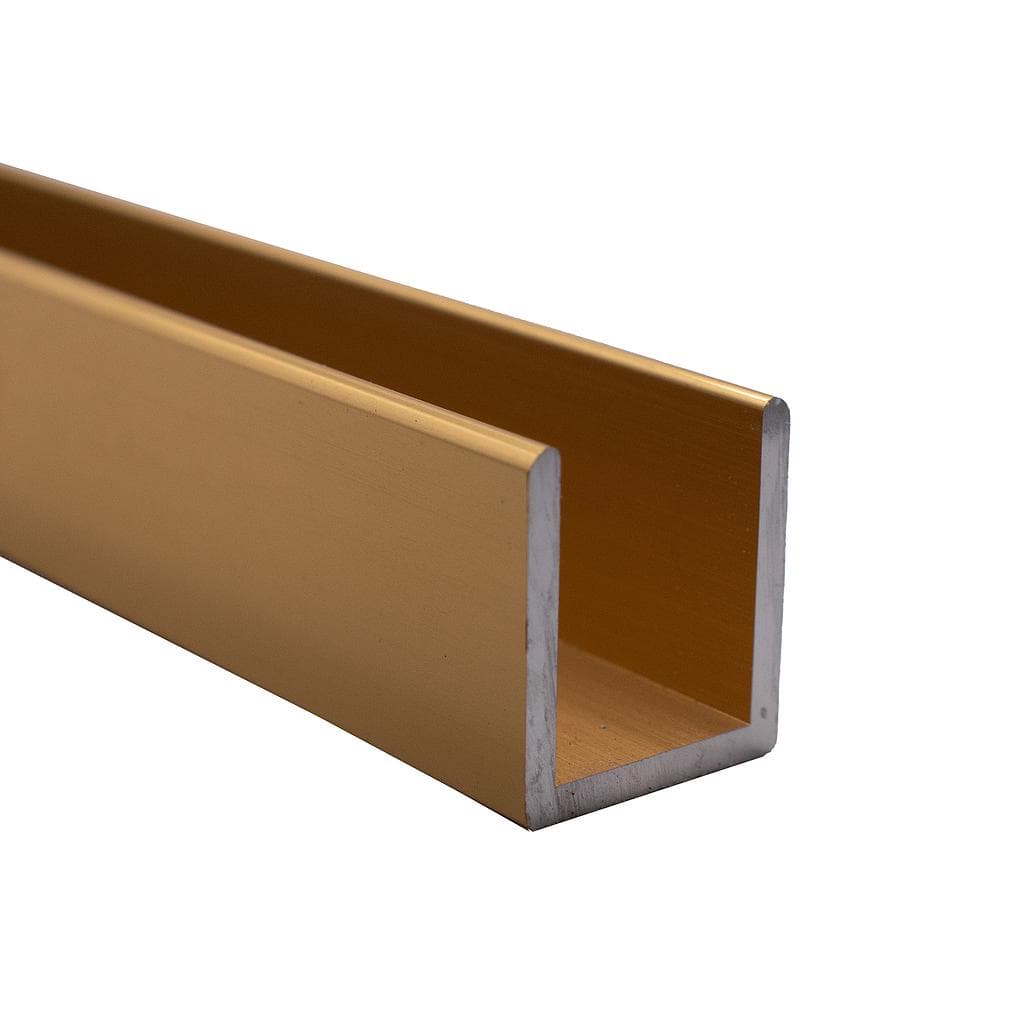
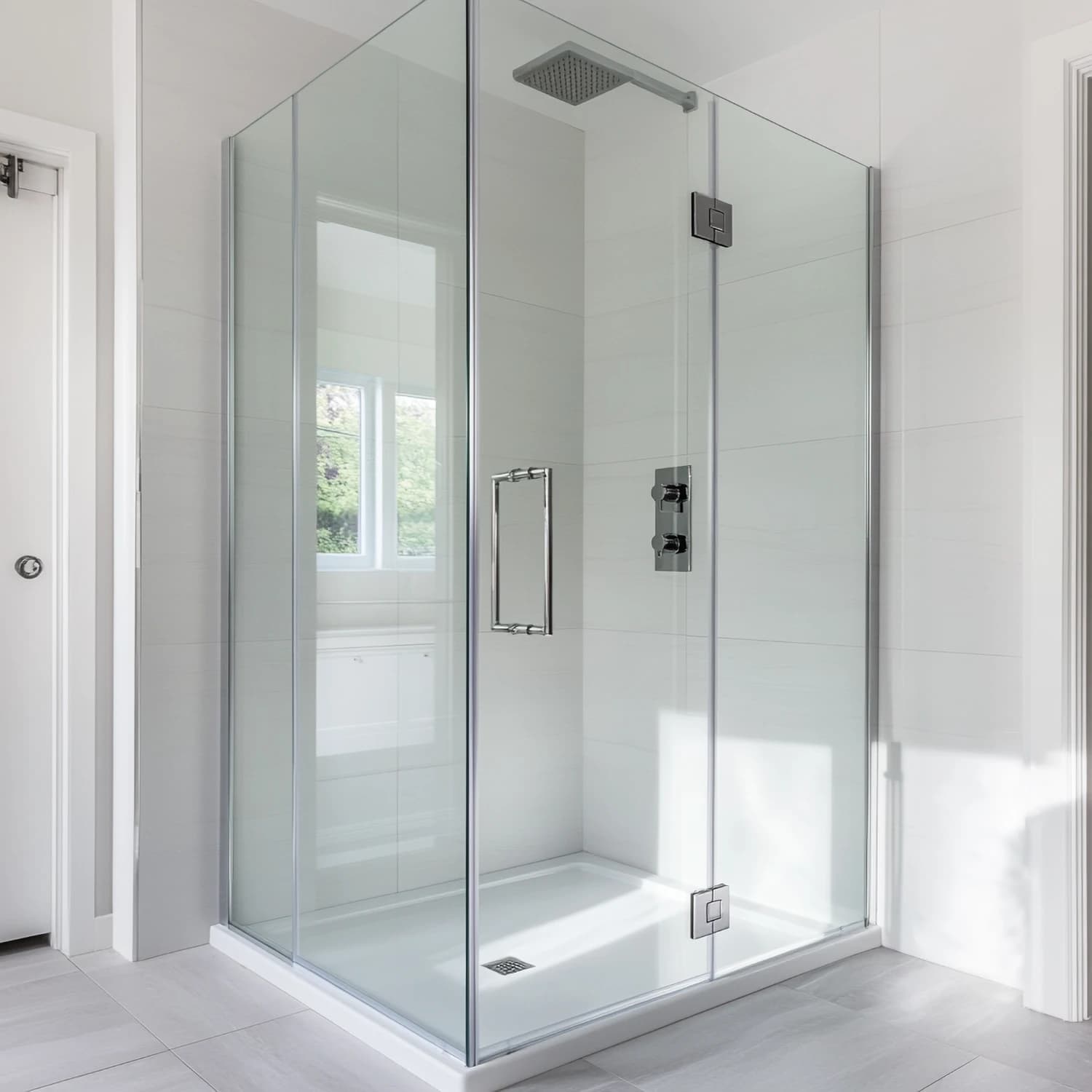
A frameless fixed shower panel is a single sheet of tempered safety glass — usually 3/8-inch, with 1/2-inch glass used for wider or taller panels — anchored to the wall and threshold, typically with clamps, U-channel, or a header depending on the layout. The vertical edge of the panel is bare polished glass — no metal frame, no hinges, no door.
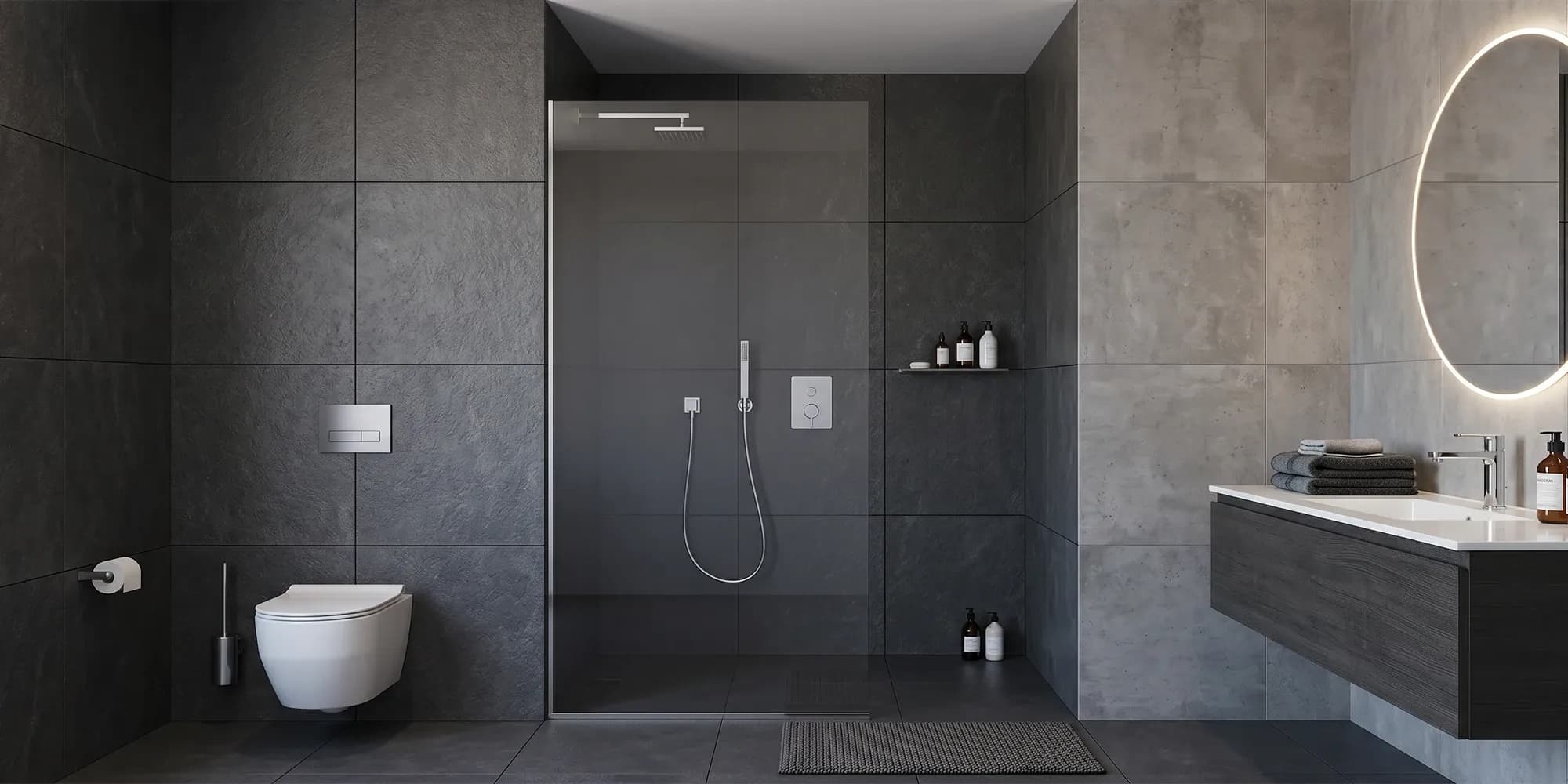
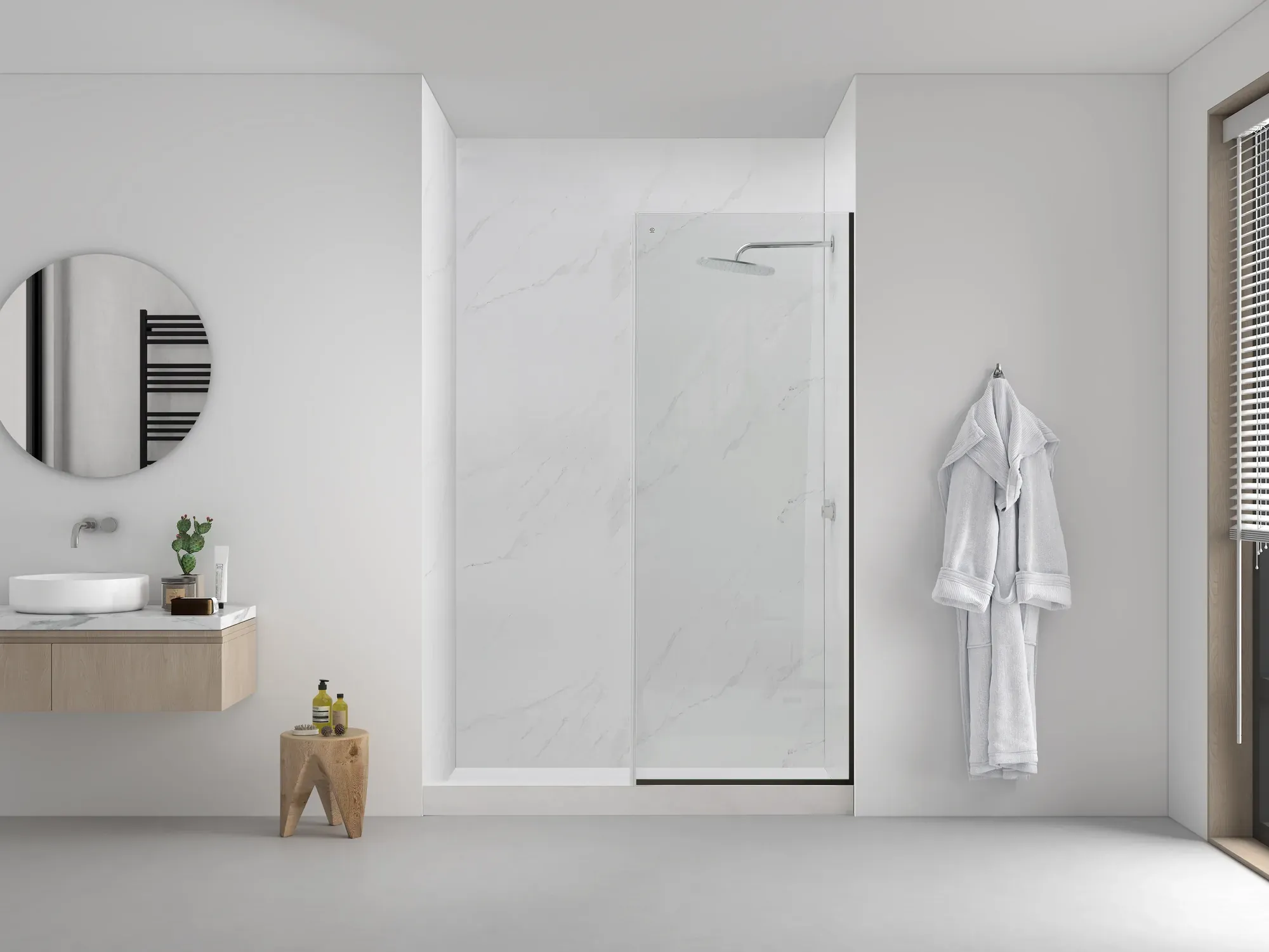
Single frameless fixed shower panel anchored to the wall and threshold, defining a walk-in shower without a door.
The panel is typically mounted on one side of the shower opening, covering roughly two-thirds of the entry. The remaining one-third stays open for walk-in access. Variations include:
- Single fixed panel — the standard configuration.
- Fixed panel with short return — a 90-degree glass piece at the open end for extra splash control.
- Two facing fixed panels — one on each side of a walk-in, with a wider center entry.
Typical Fixed Panel Sizes
Fixed panels are made to the exact opening, so there is no fixed catalog size. That said, most walk-in installs land in a predictable range, and a few sizing rules tend to hold:
- Common panel widths — single fixed panels typically run about 28 to 40 inches wide, often covering roughly two-thirds of the shower opening.
- Entry clearance — the open side usually keeps around 22 to 26 inches of walk-in clearance, which is generally comfortable for everyday use and accessibility.
- Panel height — panels are commonly cut to around 72 to 78 inches, though taller panels are used where the layout calls for it.
- 3/8-inch vs 1/2-inch glass — 3/8-inch tempered glass handles most standard fixed panels; 1/2-inch is typically specified for wider or taller panels, or where extra rigidity is wanted with minimal bracing.
- When a return panel helps — a short 90-degree return becomes useful when the opening is wide, the shower head sits closer to the entry, or the layout needs more splash control than a single panel provides.
Because openings are rarely perfectly square, the final dimensions are confirmed during the in-home measurement before the glass is cut.
Pros of Frameless Fixed Shower Panels
Pros
- Most open visual look in the bathroom
- No door arc to plan around
- No hardware to fail or replace
- Easier to clean than hinged or sliding shower doors
- More accessible walk-in entry — good for aging in place
- Typically lower cost than a hinged enclosure
- Simpler installation than many hinged configurations
- Works well in modern, minimalist bathroom designs
Cons
- Less splash control than a full enclosure
- No privacy on the open side
- Doesn't trap heat or steam
- Layout dependent — shower head must be positioned carefully
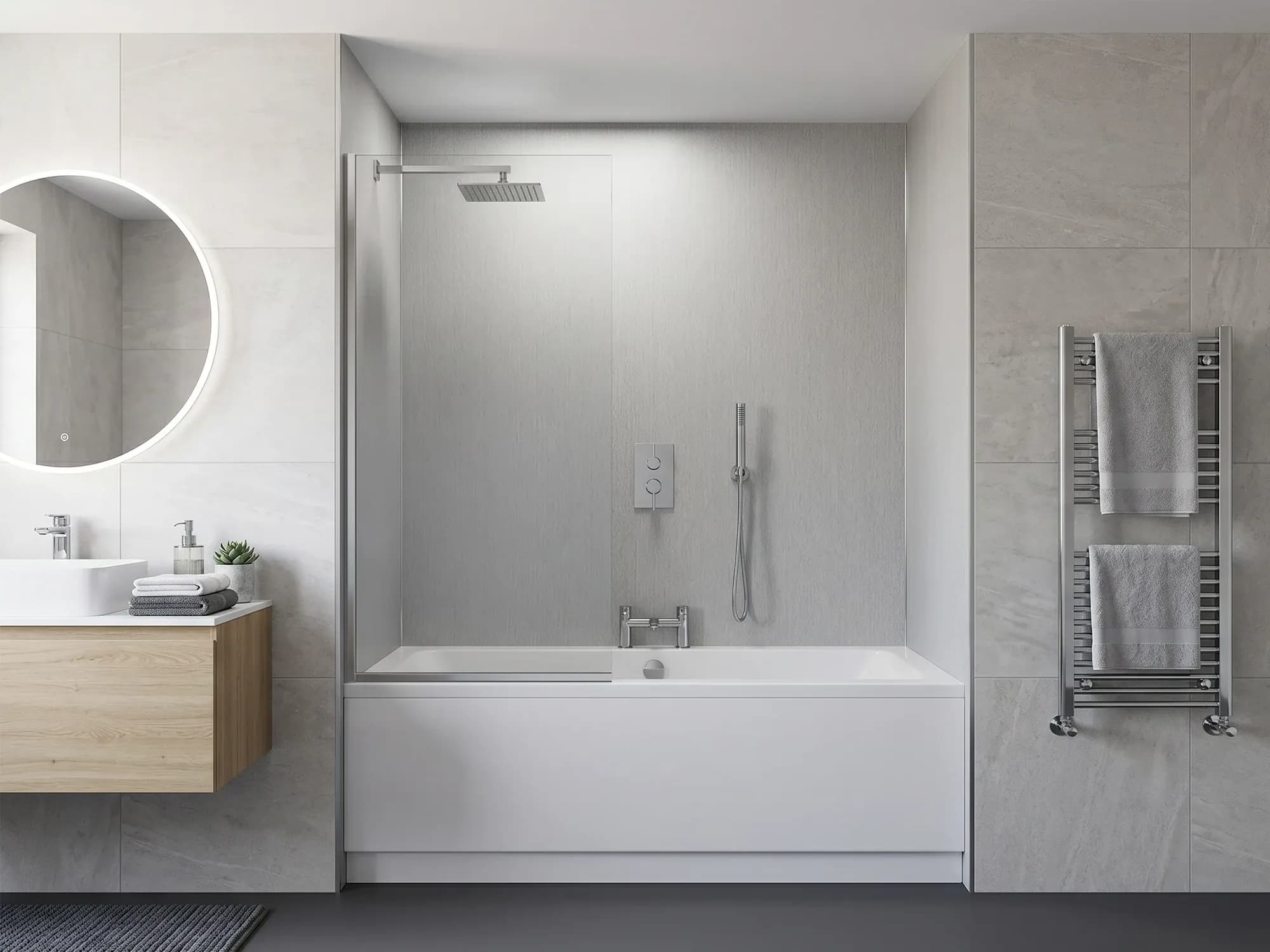
- Not suitable for tub-shower combos
- Cold air can flow into the open side in winter
- Requires a properly sloped shower pan
The open, minimal look
The biggest pro is the look. A single piece of glass with no metal frame and no swinging door reads as modern and minimalist. It's a configuration that's become popular in modern bathroom remodels.
No hardware to maintain
With no hinges, no swing mechanism, and no bottom track, there's no hardware to wear out, sag, or fail. The only maintenance is glass cleaning, the threshold silicone bead every few years, and the wall-mount silicone bead behind the anchor clamps.
Better accessibility
No door means a wider, clearer entry. The open one-third of the opening is fully accessible — useful for aging-in-place planning, for mobility considerations, or just for the visual openness of a walk-in.
Cons of Frameless Fixed Shower Panels
Less splash control
The open one-third of the entry means some spray will exit the shower if the shower head isn't positioned correctly. In most properly designed walk-in showers, this is minimal — but in layouts with a vanity close to the entry or with multiple shower heads, a fixed panel alone may not be enough.
No privacy
Frameless fixed panels are clear glass. Anyone in the bathroom can see into the shower from the open side. For shared bathrooms or layouts where privacy matters, a hinged or sliding configuration with frosted glass is usually a better fit.
Heat and steam loss
A fixed panel doesn't enclose the shower, so warm steam escapes into the bathroom. In small bathrooms this can fog up mirrors or wallpaper. In large primary bathrooms it's usually a non-issue.
Fixed Shower Panel vs Hinged Shower Door
| Factor | Frameless fixed panel | Frameless hinged door |
|---|---|---|
| Visual look | Most open, most minimalist | Clean, but with hinge hardware visible |
| Splash control | Partial — depends on layout | Full when door is closed |
| Cost | Lower — no door hardware | Higher — hinges + door panel |
| Cleaning | Easiest — no hinges to clean around | Hinges and seals need monthly attention |
| Accessibility | Open walk-in entry | Door must open before entry |
| Privacy | None on the open side | Full when closed; clear or frosted glass options |
| Best for | Walk-in showers with back-wall shower head | Standard alcove showers, tight bathrooms |
If you want a quick way to decide, this side-by-side covers the situations that usually point to one configuration over the other:
| Choose a fixed panel if... | Choose a hinged door if... |
|---|---|
| You have a walk-in shower with the shower head on the back wall | You have a standard alcove shower or a tub-shower combo |
| You want the most open, minimalist look with the least hardware | You need full splash containment when the shower is in use |
| Accessibility or a curbless, low-threshold entry is a priority | A vanity or toilet sits within a couple of feet of the entry |
| Easier cleaning with no hinges or track matters to you | You want to trap heat and steam for a warmer shower |
| The bathroom is large enough that some steam escaping is fine | Privacy on every side of the shower is important |
What Affects the Cost of a Frameless Fixed Shower Panel?
A custom fixed panel usually costs less than a hinged enclosure of the same width — there's no door, hinges, or strike hardware to add. Within the fixed-panel category, these are the factors that move the price:
- Opening width and glass size — a larger panel uses more glass and is heavier to handle and set.
- Glass thickness — 1/2-inch tempered glass costs more than 3/8-inch and is used for wider or taller panels.
- Mounting method — wall clamps versus a continuous U-channel changes both the hardware and the labor.
- Return panel — adding a 90-degree return for extra splash control is a second piece of glass and more anchoring.
- Low-iron glass — ultra-clear low-iron glass removes the slight green tint of standard glass and adds to the cost.
- Installation complexity — tall ceilings, curbless pans, and second-floor bathrooms add labor.
- Wall and threshold conditions — uneven tile, soft framing, or a non-level curb may need extra prep before the panel can be anchored.
Because every panel is fabricated to the exact opening, the most reliable way to price a project is a measurement and quote rather than a per-square-foot estimate.
When to Choose a Frameless Fixed Panel
The configurations where a frameless fixed shower panel is clearly the right call:
- Walk-in shower in a primary bathroom with the shower head mounted on the back wall.
- Bathroom remodel prioritizing modern, minimalist look over full splash containment.
- Curbless or low-threshold walk-in for accessibility.
- Wet rooms where the entire bathroom is designed to handle some water.
- Certain smaller walk-in openings where the panel can cover most of the splash zone while still leaving comfortable entry clearance.
When the layout is right for it, a frameless fixed panel is one of the cleanest-looking shower glass options. When the layout isn't right, a hinged or full enclosure is usually a better fit.
When Not to Choose a Frameless Fixed Panel
A fixed panel isn't the right call in every bathroom. Lean toward a hinged door or a full enclosure when:
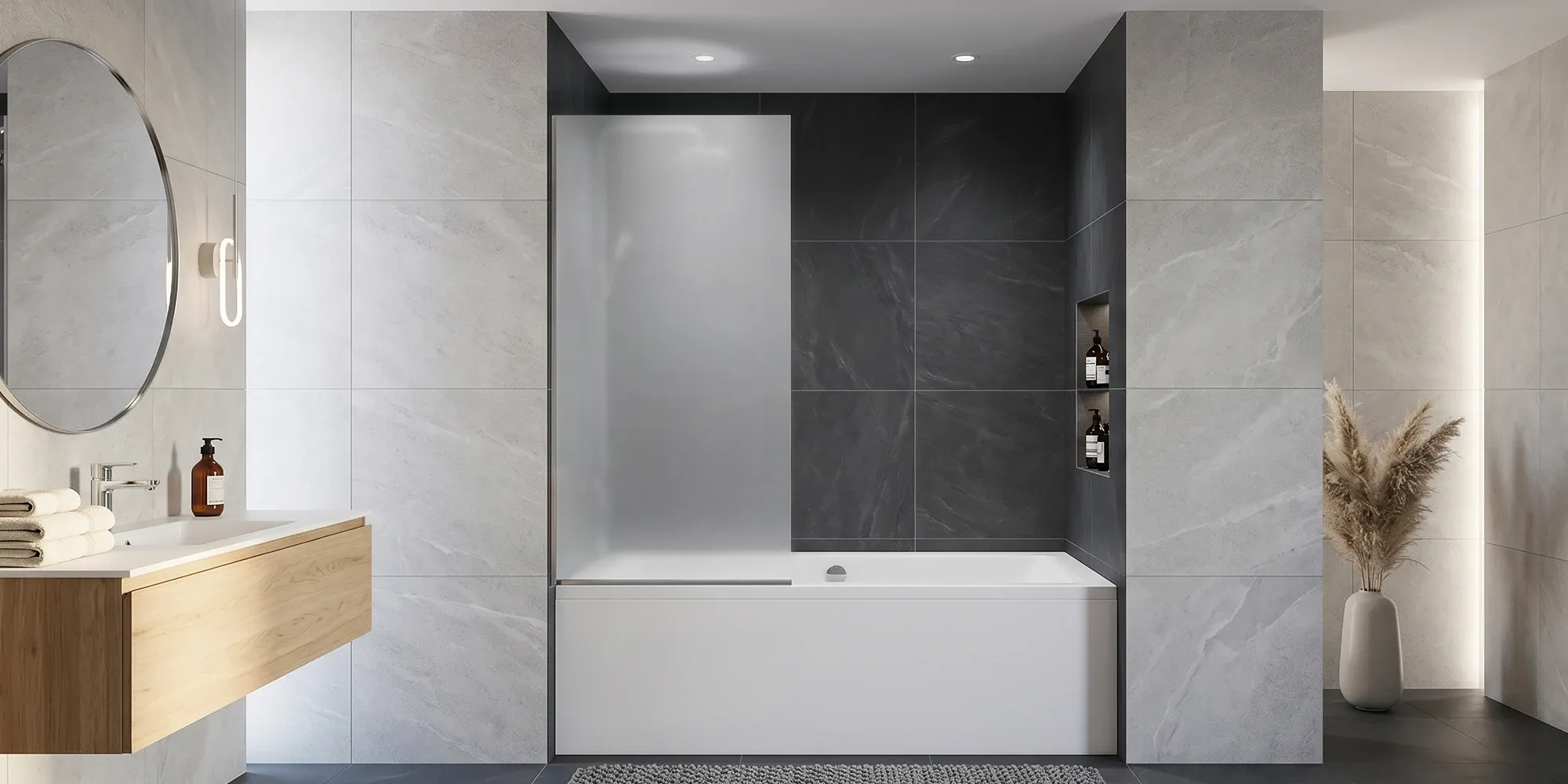
- It's a tub-shower combo — fixed panels are built for walk-in showers, not for glass over a bathtub.
- A vanity or toilet sits within about 2 feet of the shower entry — stray spray off the open side will reach it.
- The shower has a rain head or body sprays — water falls and bounces in directions a single panel can't deflect.
- Privacy matters — frosted glass can obscure the panel itself, but the open entry side still leaves the shower less enclosed than a door.
- Someone in the household prefers a warm, fully enclosed shower — a fixed panel lets heat and steam escape into the bathroom.
Need Help Choosing Between a Fixed Panel and a Hinged Door?
Walk-in shower configurations vary widely. The right call depends on opening width, shower head position, pan slope, and how the rest of the bathroom is laid out. Dulles Glass fabricates and installs custom frameless fixed shower panels, hinged enclosures, and return-panel configurations. We confirm the layout during the in-home measurement, then specify the right configuration for your bathroom.
Explore our Tela shower screens, frameless shower doors, custom shower doors, and professional installation — or request a quote and our team will help you compare configurations.
Frequently Asked Questions
What is a frameless fixed shower panel?
A frameless fixed shower panel is a single piece of tempered glass anchored to the wall and threshold with no swinging door. It defines a walk-in shower opening while keeping the visual feel of an open bathroom.
What are the pros of frameless fixed shower panels?
Frameless fixed shower panels offer an open, minimal-hardware look in a bathroom, no door arc to plan around, easier cleaning (no track or hinge to maintain), and a more accessible walk-in entry. They also tend to cost less than a full hinged enclosure of the same width.
What are the cons of frameless fixed shower panels?
Fixed panels don't fully enclose the shower, so they offer less splash control than a hinged door. They also offer no privacy on the open side and don't trap heat or steam the way a closed enclosure does. They're best for walk-in showers, not for layouts that need full water containment.
How much does a frameless fixed shower panel cost?
Custom-installed frameless fixed shower panels typically cost less than a hinged enclosure at the same width because there's no door, hinges, or strike hardware. Exact pricing depends on glass thickness, finish, and any return panel or wall reinforcement needed.
Are frameless fixed shower panels easier to clean than hinged doors?
Yes. With no hinges, no swinging door, and no bottom track, a frameless fixed panel is the easiest shower glass configuration to clean. A daily squeegee and a weekly pH-neutral wipe is the full routine.
Do frameless fixed shower panels leak?
They do not leak the way a framed enclosure can, but because one side stays open, some splash can escape if the shower head, pan slope, or panel width is not right. A properly measured fixed panel with correct shower-head placement and slope usually keeps splash minimal.
Considering a frameless fixed shower panel?
Dulles Glass fabricates and installs custom fixed shower panels. Send us your opening dimensions and we'll recommend the right configuration before fabrication starts.
Why choose Dulles Glass
54+
Years Glass expertise
10,000+
Projects Measured and installed Yearly
3-Year Warranty
On custom installations
4.9/5 Rating
Customer Reviewed
Ready to start your glass project?
Tell us what you are planning and our glass experts will help you find the right solution.