The hinge is the most-loaded component on a frameless shower door — and the one most homeowners ignore until it starts to sag. Here's a walkthrough of the three hinge configurations, what they're made of, the finishes you'll actually see in person, and how to tell when it's time to replace.
Reviewed by John Flouhouse, Installation Team Lead at Dulles Glass, based on field measurements and installations.
A frameless shower door looks simple because the hardware stays quiet. But behind that clean look, two or three pieces of metal are carrying the full weight of the glass every day. The glass weighs 60 to 110 pounds; the hinges carry every ounce of it, plus the thousands of open-and-close cycles over the door's life. The hardware matters more than most people think.
If you're shopping for a DIY hinged shower door kit, picking a replacement hinge, or trying to figure out why your old door has started to drift, this is the guide. We'll cover the three main hinge configurations, what they're made of, the finishes you'll actually live with, and the failure signs that mean it's time to swap them out.
Key Takeaways
- Three frameless shower door hinge configurations: wall-mount (clamp), glass-to-glass, and pivot. Most DIY hinged kits ship with wall-mount clamps.
- Best materials for shower door hinges: solid brass and 316 stainless steel typically last 15–25 years; lower-grade zinc-alloy hinges can fail sooner.
- Sag is the most common failure pattern. If the door no longer closes cleanly against the strike jamb or hangs visibly off-square, worn hinges are usually the cause.
- Shower door hinge replacement is DIY-doable when the new hinge matches the existing hole pattern and the same glass thickness — usually a 30–45 minute job for two people.
- When comparing hinges, look for the details that matter: glass thickness, finish, and weight rating. If a product simply says "stainless steel" without a rating or material spec, it may be a plated zinc-alloy hinge rather than true stainless hardware.
Types of Shower Door Hinges
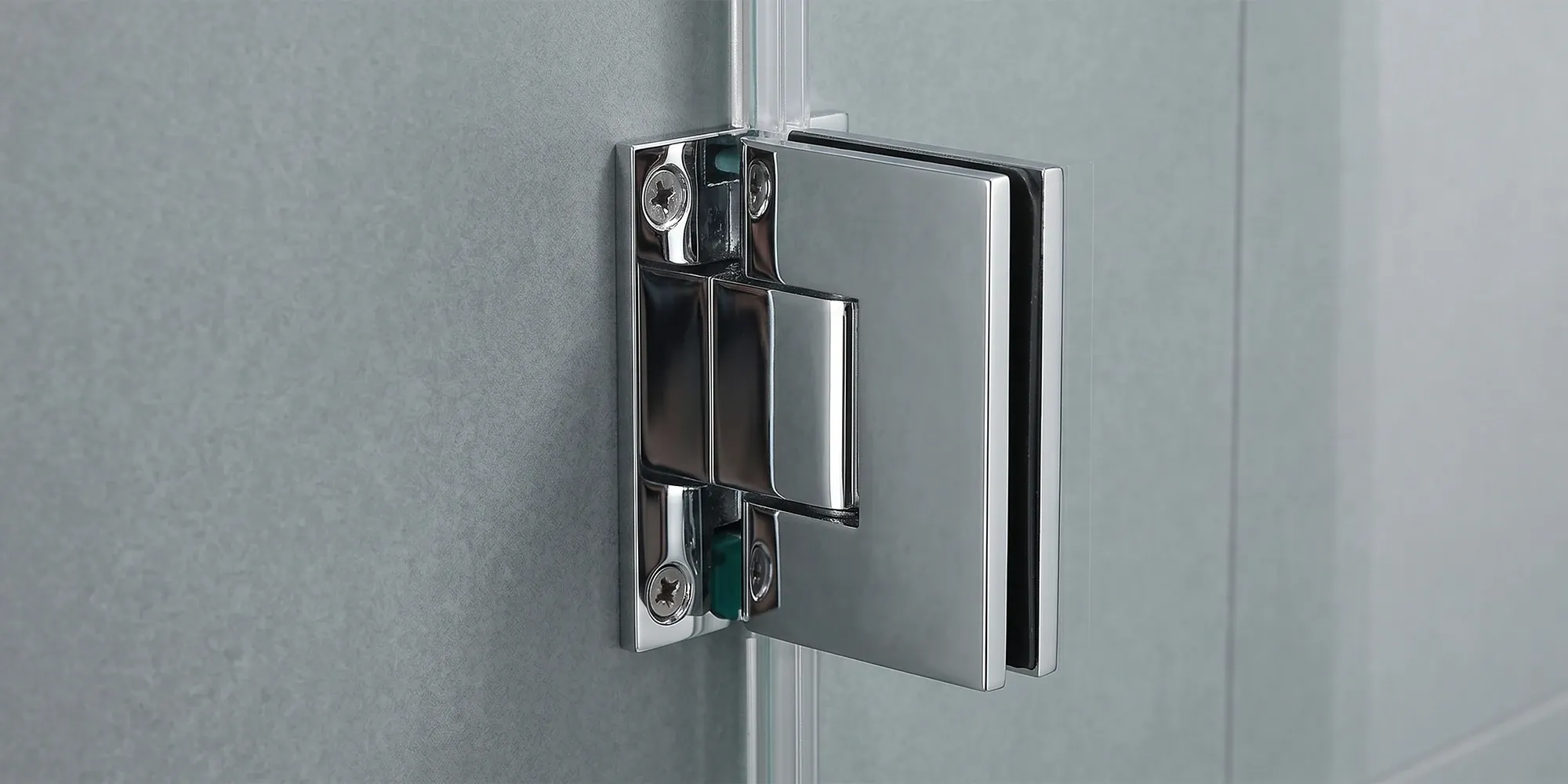
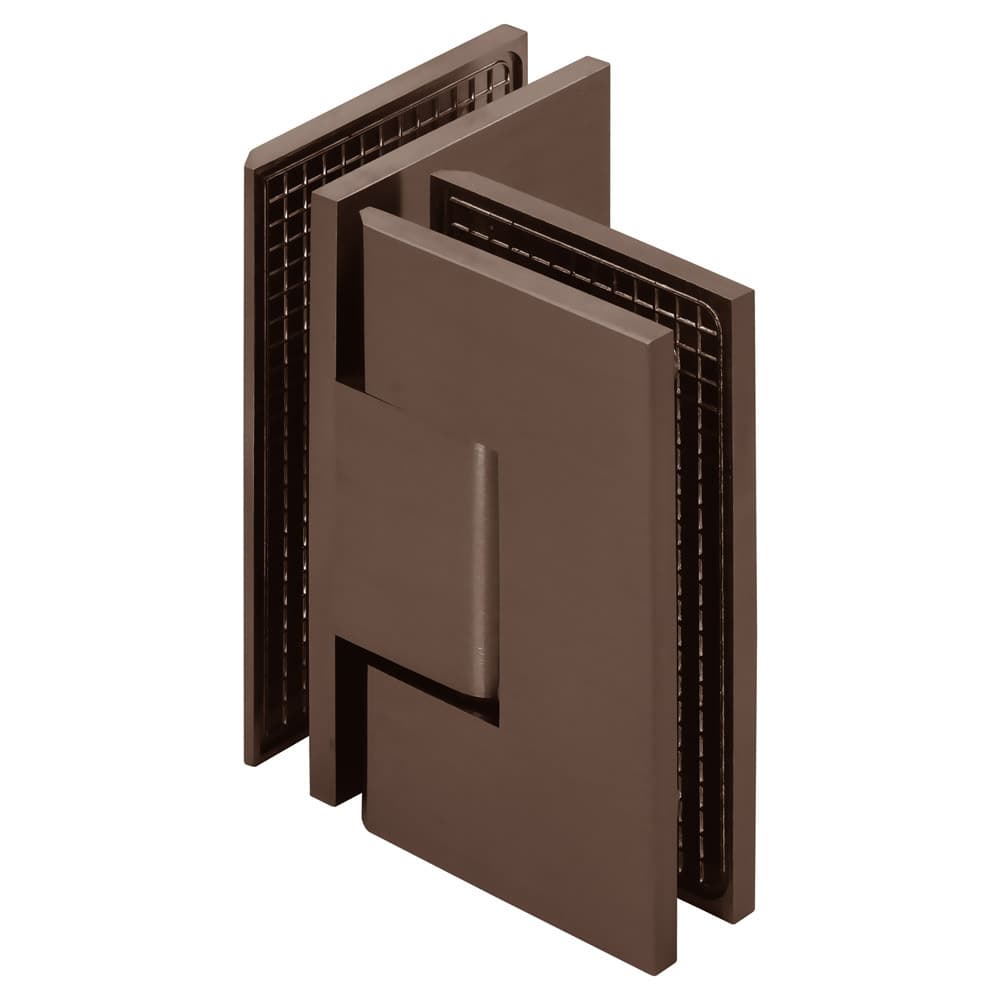
Wall-mount clamp hinges are the most common choice for frameless hinged shower doors.
Type 1: Wall-Mount (Clamp) Hinges
The most common configuration on frameless hinged doors. The hinge clamps onto the vertical edge of the glass panel and is anchored into a stud or solid blocking in the wall.
You'll see this on: standard frameless single-panel doors (like the Dulles Glass Solo and Prima inline DIY kits), most replacement scenarios.
Pros
- Strongest mounting — load goes straight into the framing
- Easy to replace with the same hole pattern
- Works for 1/4" and 3/8" glass with the right gasket
Cons
- Requires solid wall backing (stud or 2x blocking)
- Sealing around the hinge mount is critical
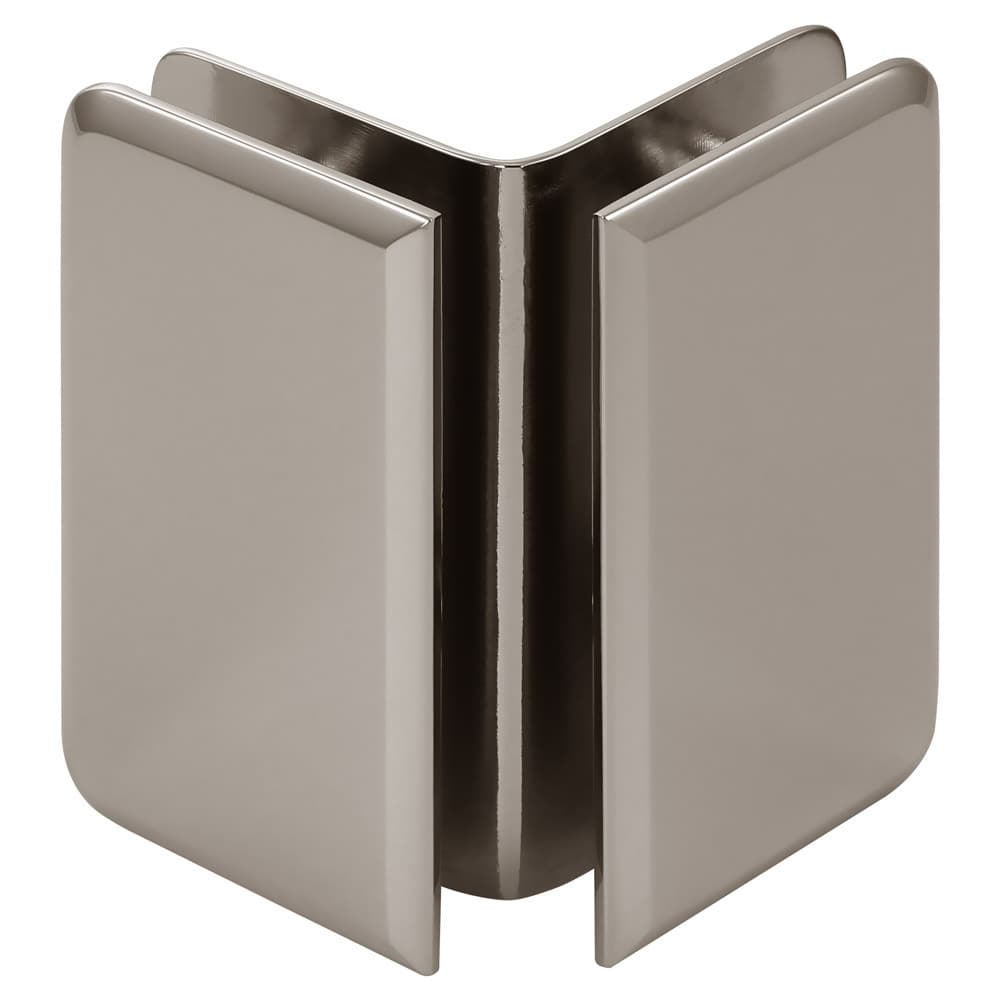
Type 2: Glass-to-Glass Hinges
Connect two glass panels — typically a fixed return panel and a swinging door panel. The hinge clamps onto both pieces of glass at a 90°, 135°, or 180° angle.
You'll see this on: doors with a return panel (a fixed glass section meeting the swinging door at a corner), some inline configurations like the Dulles Glass Prima inline door + return.
Pros
- Clean look — no metal touching the wall
- Distributes load through two pieces of glass
- Allows wider opening configurations
Cons
- Both glass panels must be pre-drilled to match the hinge
- Replacement requires matching the hole pattern exactly
- Higher cost than wall-mount equivalents
Type 3: Pivot Hinges
A separate top pin and bottom socket allow the glass to rotate on a vertical axis. Pivot hinges are different from a "pivot door" — the term refers to the hinge style, not the full configuration. Some wall-mount hinges use a pivoting motion within the hinge body.
You'll see this on: custom-installed pivot doors (not typically a DIY product — the precision required usually puts these in the install-only category at Dulles Glass).
Pros
- Allows the door to swing both inward and outward
- No visible side hardware on the open edge
Cons
- Requires precise floor and header alignment
- Almost always installed by a professional
- Replacement parts can be harder to source
A quick clarification
"Pivot hinge" and "pivot door" are two different things. A pivot hinge is a style of hardware. A pivot door is a full door configuration where the entire panel rotates on a top-and-bottom axis without traditional hinges. Pivot doors are a custom-install product at Dulles Glass, not part of the DIY hinged-door lineup.
Best Materials for Shower Door Hinges
Solid brass (top tier)
Brass is denser than steel and machines to tight tolerances, which is why high-end shower door hardware has used it for over a century. A quality solid brass hinge can last for decades when sized correctly and maintained properly. It accepts every common finish — chrome, brushed nickel, satin brass, polished brass, matte black, oil-rubbed bronze — and the finish tends to stay bonded to brass far longer than on plated alternatives.
Brass develops a natural patina over decades of use. Some homeowners specifically choose unlacquered or "living finish" brass to encourage it. On a lacquered finish, the patina is suppressed and the hardware reads consistent for 15–20 years before any change appears.
316 stainless steel (top tier, marine-grade)
The 316 grade — sometimes called "marine grade" — resists chloride corrosion better than the more common 304 stainless. For most residential bathrooms, 304 is fine; 316 becomes worth the upgrade in homes with hard well water, coastal humidity, or aggressive cleaning chemistries.
Stainless doesn't take finishes the way brass does — most stainless hinges show as brushed or polished steel. If a "stainless" hinge is available in matte black or satin brass, double-check the spec — it's likely a coating over a non-stainless core.
Zinc alloy (budget tier)
Zinc-alloy hinges are common on imported and big-box shower doors. They're cast cheaply, plated to mimic chrome or brushed nickel, and structurally adequate when new. The problem is fatigue: the zinc loses its grain integrity under repeated thermal cycling and humidity, and the plating tends to lift at the corners after a few years.
Five to ten years is a realistic lifespan. We see them most commonly on $300–$600 premade shower doors. If your door is older than five years and starting to sag, there's a good chance the hinges are zinc.
Popular Shower Door Hinge Finishes
| Finish | Best paired with | Notes |
|---|---|---|
| Brushed Nickel | Most fixtures, beige/gray palettes | The default request. Forgiving — hides water spots and fingerprints. |
| Polished Chrome | Chrome faucets, white tile | Bright, traditional. Shows water spots more than brushed. |
| Matte Black | Modern bathrooms, dark fixtures | Strong visual statement. Coating quality varies widely by manufacturer. |
| Satin Brass | Warm-toned bathrooms, brass fixtures | Solid brass core, satin lacquer. Holds finish longer than gold-plated alternatives. |
| Oil-Rubbed Bronze | Traditional, farmhouse styles | Dark brown with hints of copper underneath. Best on solid brass — coatings can flake. |
The single best predictor of finish longevity isn't the color — it's whether the underlying metal is solid brass or stainless steel. A quality finish usually lasts longer when it is bonded to solid brass or stainless steel rather than plated over a lower-grade core.
When to Replace Shower Door Hinges
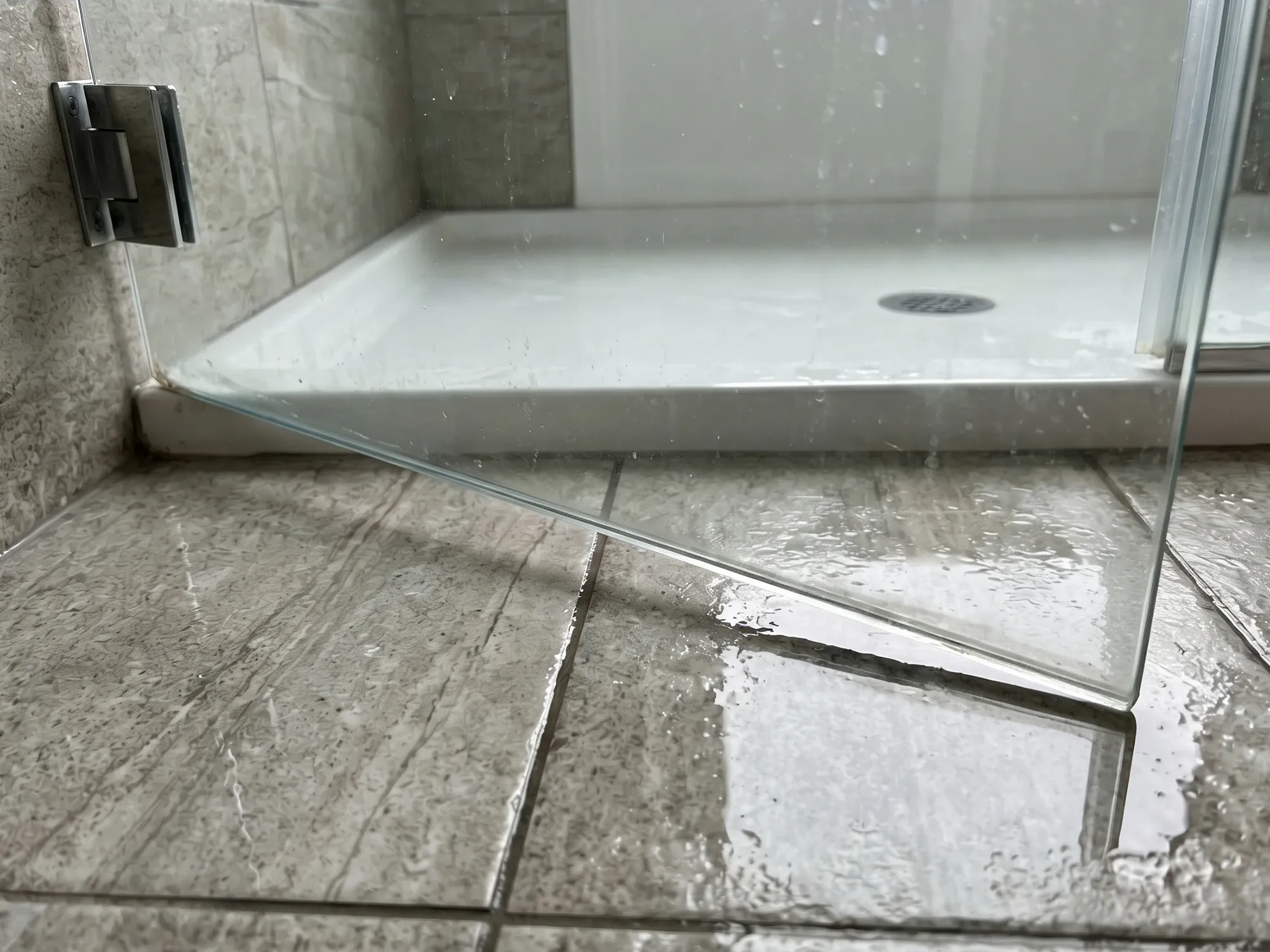
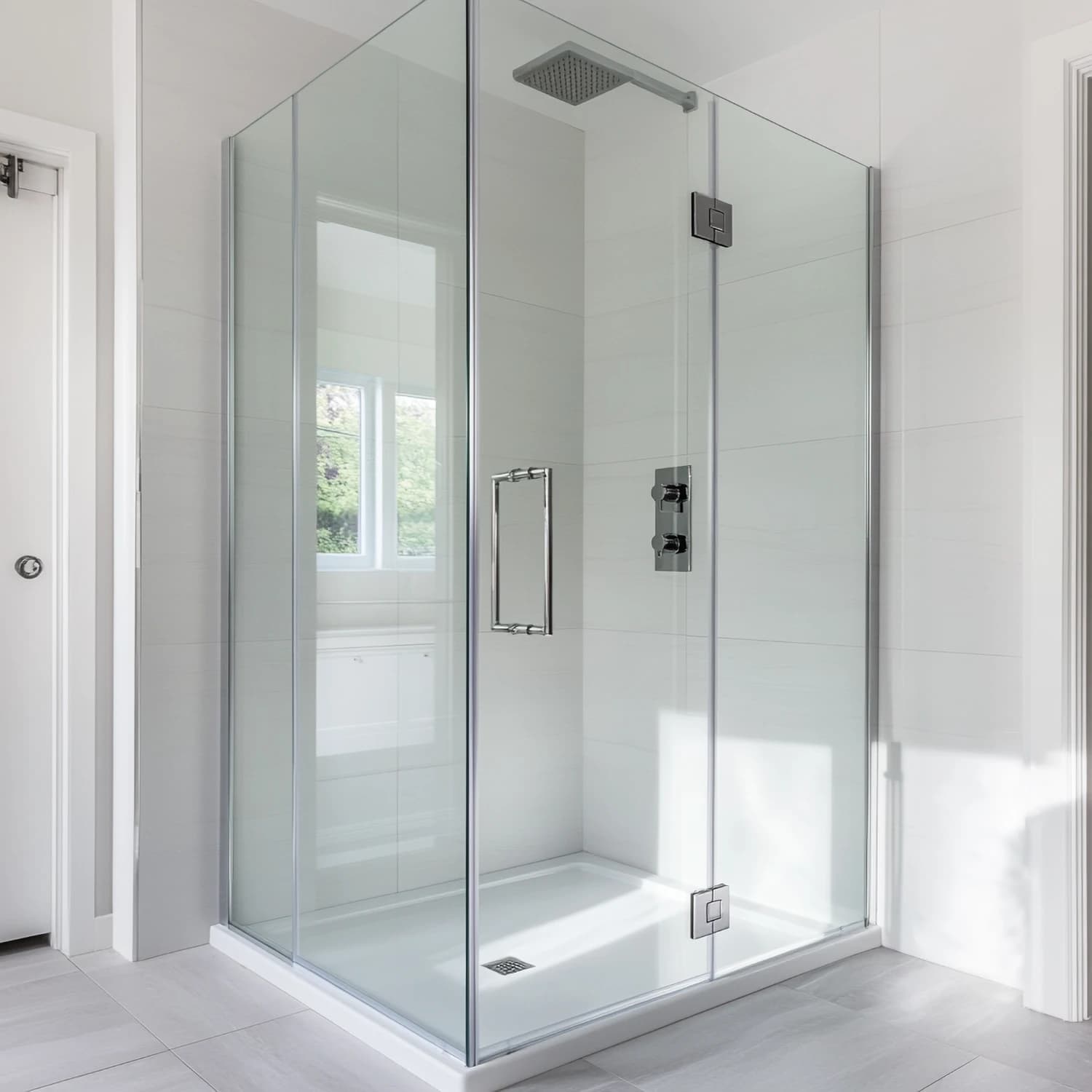
A sagging panel that sits lower than it did at install is a typical sign of worn hinges.
Hinges rarely fail catastrophically. They drift. The door starts dragging on the threshold; the magnetic strike doesn't catch on the first close; water suddenly pools where it didn't before. These are all common shower door hinge symptoms.
Replace the hinges if you see
- Visible sag — the top of the door sits lower than it did when installed (measure to the threshold)
- Spring fatigue — the door doesn't self-close, or it slams instead of easing to closed
- Crunching or grinding on swing — the hinge bushing has worn out
- Visible corrosion on the hinge body or under the cap
- Loose mounting — the hinge wiggles in the wall, not just the wall plate (this is a stud-anchor problem, not always a hinge problem)
- Visible patina lifting on a lacquered finish, suggesting moisture has penetrated the seal
How to Replace Wall-Mount Shower Door Hinges
For most DIY-friendly replacements — wall-mount clamp hinges, same hole pattern, same glass thickness — the procedure is straightforward. Plan on 30 to 45 minutes for two people.
- Support the glass. Two people, or one person plus a glass suction cup brace against the threshold. The door panel must be fully supported before you loosen the existing hinge.
- Loosen the existing hinge wall mount. Remove the cap, then the screws. Keep the original gasket if it's still soft — you may need it as a thickness reference for the new gasket.
- Lift the door clear of the old hinge. The glass clamp half is still on the glass at this point.
- Remove the glass clamp. The glass should be flat on a padded surface or held vertically by your partner. Loosen the clamp evenly — one side at a time tends to crack glass at the edge.
- Set the new hinge on the glass with the gaskets provided by the new hinge's manufacturer. Tighten the clamp evenly, alternating sides, to the spec listed in the hinge instructions. Many clamps fall in the 4 to 7 ft-lb range, but always follow the hinge manufacturer's instructions.
- Lift the door into place and engage the new wall mount. Anchor screws should land in either a stud or the existing 2x blocking. If the new anchor pattern is slightly different from the old, drive new anchors and patch the old holes with silicone.
- Test the swing. The door should self-center on the strike. If it doesn't, the hinge body usually has a small adjustment screw — refer to the instructions.
- Reseal. A bead of clear silicone behind the wall plate prevents water tracking into the wall cavity.
If the new hinge doesn't match the existing glass holes
Don't drill new holes. Tempered glass cannot be drilled in the field — it will shatter. Either match the new hinge to the existing hole pattern, or replace the glass panel.
How to Choose a Replacement Shower Door Hinge
Before you order, confirm three things:
- Glass thickness. 1/4" or 3/8" — the gasket sets in the clamp are different. A 3/8" gasket on a 1/4" panel will let the glass shift; a 1/4" gasket on a 3/8" panel won't seat at all.
- Hole pattern. Measure center-to-center between the existing holes in the glass. The new hinge's bolt spacing must match exactly.
- Hinge rating. Quality hinges list a glass weight rating (often 60 lb or 90 lb per pair). Total your panel weight (glass weighs ~3.3 lb per sq ft at 3/8") and add 20% margin.
Match the finish to the existing hardware in the bathroom. Even slight differences — polished chrome next to brushed chrome — are noticeable at arm's length.
Need Help Matching a Replacement Shower Door Hinge?
Need help matching a replacement hinge? Measure your glass thickness and hole spacing, then contact Dulles Glass or browse our frameless shower door hardware and hinged shower door kits. Dulles Glass offers DIY shower door kits, replacement hardware, and custom installation support.
Explore our frameless shower doors, Solo and Prima DIY shower door kits, shower door hardware, and installation services — or request a quote if you'd like our team to look up the original spec from your order.
FAQs About Shower Door Hinges
What kind of hinges do frameless shower doors use?
Three main configurations: wall-mount (clamp) hinges that attach the glass to a stud-anchored wall plate, glass-to-glass hinges that connect two glass panels at 90° or 180°, and pivot hinges that rotate on a top-and-bottom axis. Most DIY hinged shower door kits use wall-mount clamp hinges. Glass-to-glass hinges show up where a return panel meets the swinging door.
Are solid brass shower door hinges better than stainless steel?
Solid brass is durable, dense, and excellent for plated finishes (satin brass, polished brass, oil-rubbed bronze), while 316 stainless steel offers stronger corrosion resistance in harsh water or coastal environments. Both are appropriate for residential use when sized correctly for the glass weight. Solid brass costs more and is more common on premium product lines.
How long do shower door hinges last?
Solid brass or 316 stainless hinges typically last 15–25 years in normal residential use. Zinc-alloy hinges — common on imported premade doors — usually fail in 5–10 years.
Can I replace shower door hinges myself?
Yes for wall-mount clamp hinges with a matching hole pattern and the same glass thickness. The job takes 30–45 minutes with two people. Glass-to-glass hinges are harder because the holes are pre-drilled in the glass — you usually need a matching part.
Why is my shower door dragging on the threshold?
Hinge sag is the most common cause. Check whether the top of the door sits lower than it did when installed (measure to the threshold). If it does, the hinge springs or bushings have fatigued and replacement is the right fix. Adjusting the door panel without addressing the hinge will only buy a few months.
Can I drill new mounting holes if the patterns don't match?
Not in the glass. Tempered glass cannot be drilled in the field — it will shatter. In the wall, yes — patch old holes with silicone and drill fresh anchors. If only the glass pattern is wrong, the right call is to source a hinge that matches the existing holes, or replace the glass panel.
Standards Referenced
- ANSI Z97.1 — American National Standard for Safety Glazing Materials
- 16 CFR Part 1201 — U.S. CPSC Safety Standard for Architectural Glazing
- NAMI/ANSI A156.32 — Industry standard for swinging door hardware load ratings
- Dulles Glass install-team field notes on hinge wear patterns across residential installations
Need a replacement hinge or a new frameless hinged shower door?
Dulles Glass offers DIY shower door kits, replacement hardware, and custom installation support. Send us your glass thickness and hole spacing and our team can match a profile from the original order.
Why choose Dulles Glass
54+
Years Glass expertise
10,000+
Projects Measured and installed Yearly
3-Year Warranty
On custom installations
4.9/5 Rating
Customer Reviewed
Ready to start your glass project?
Tell us what you are planning and our glass experts will help you find the right solution.