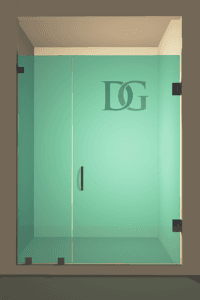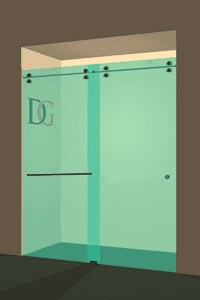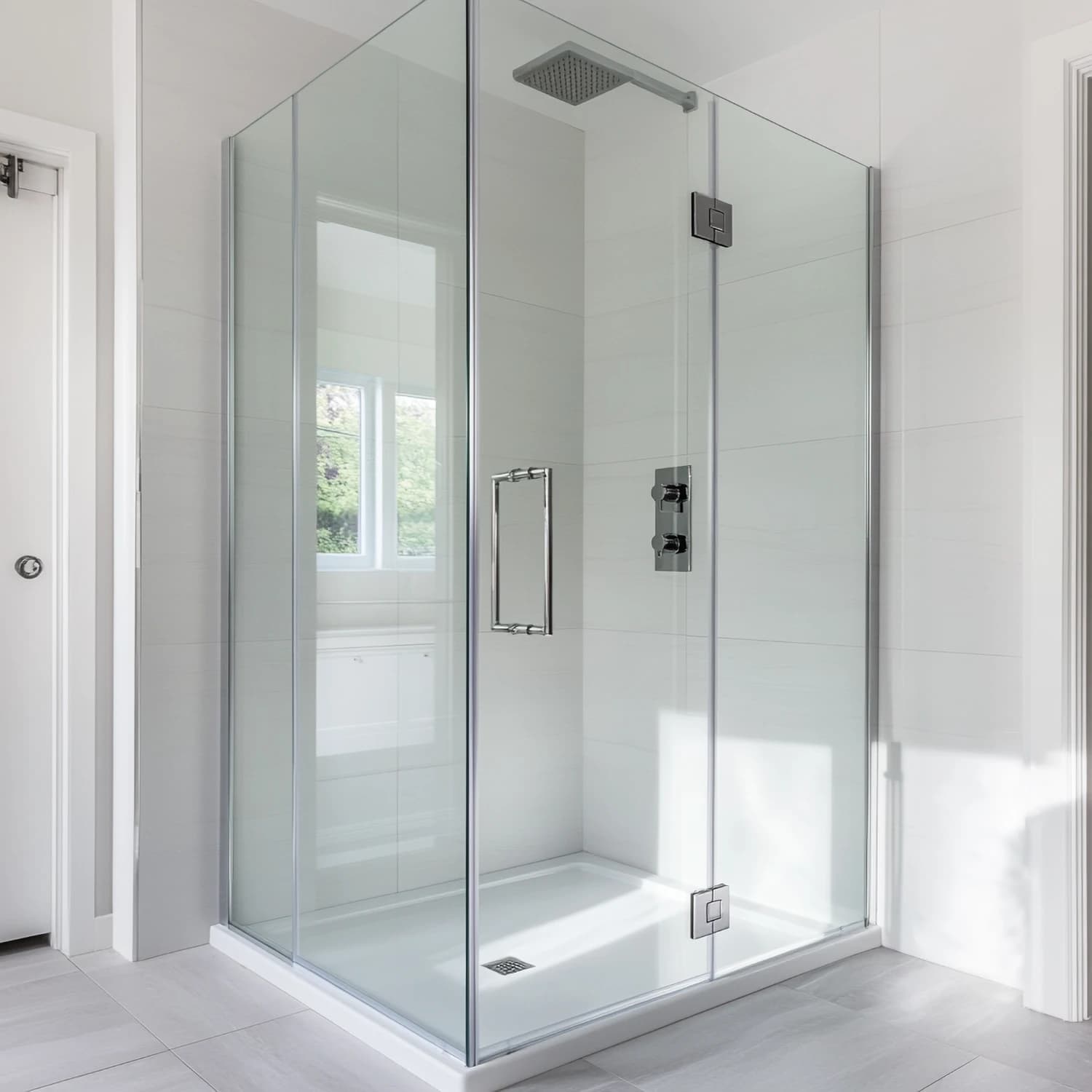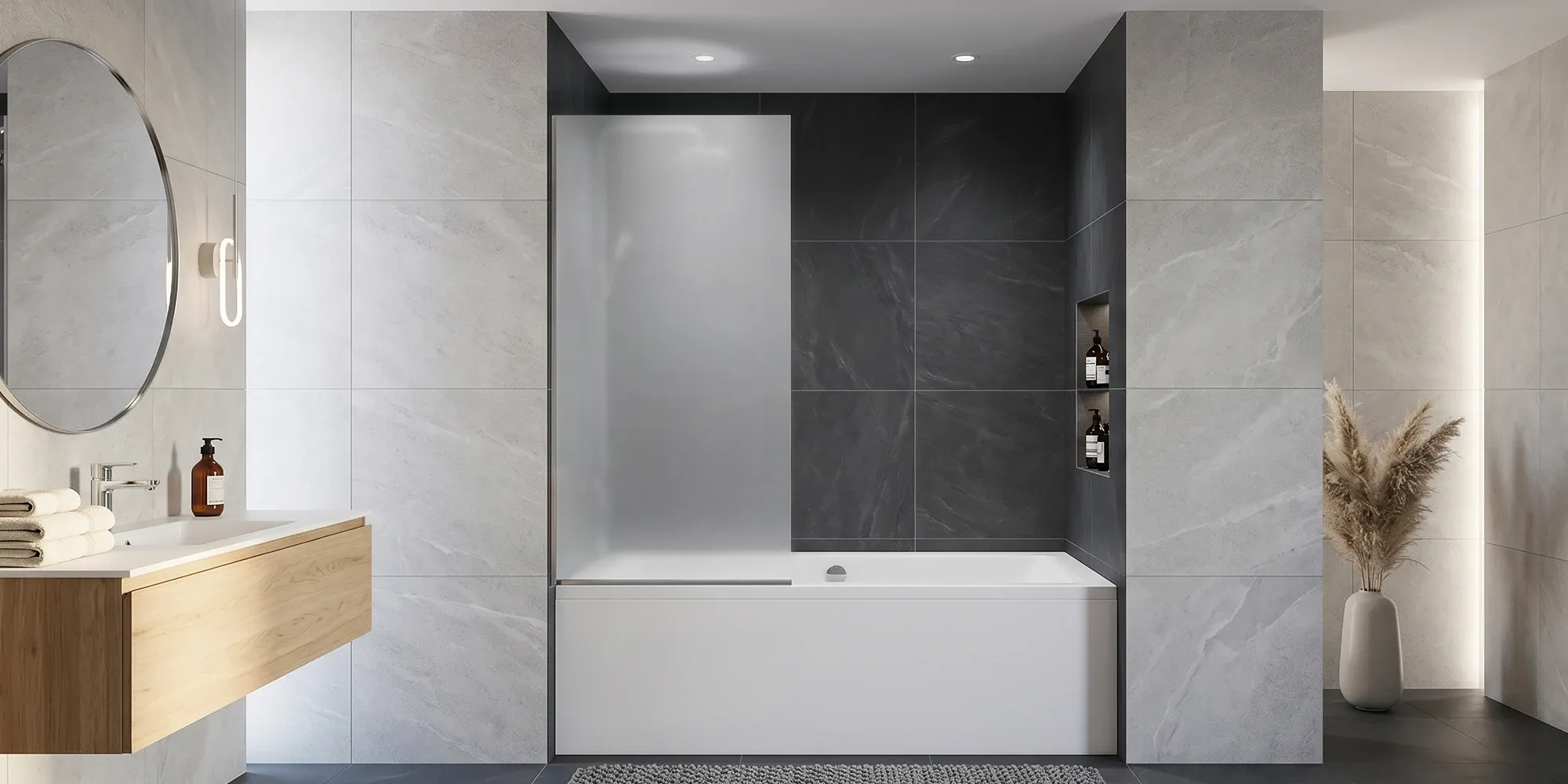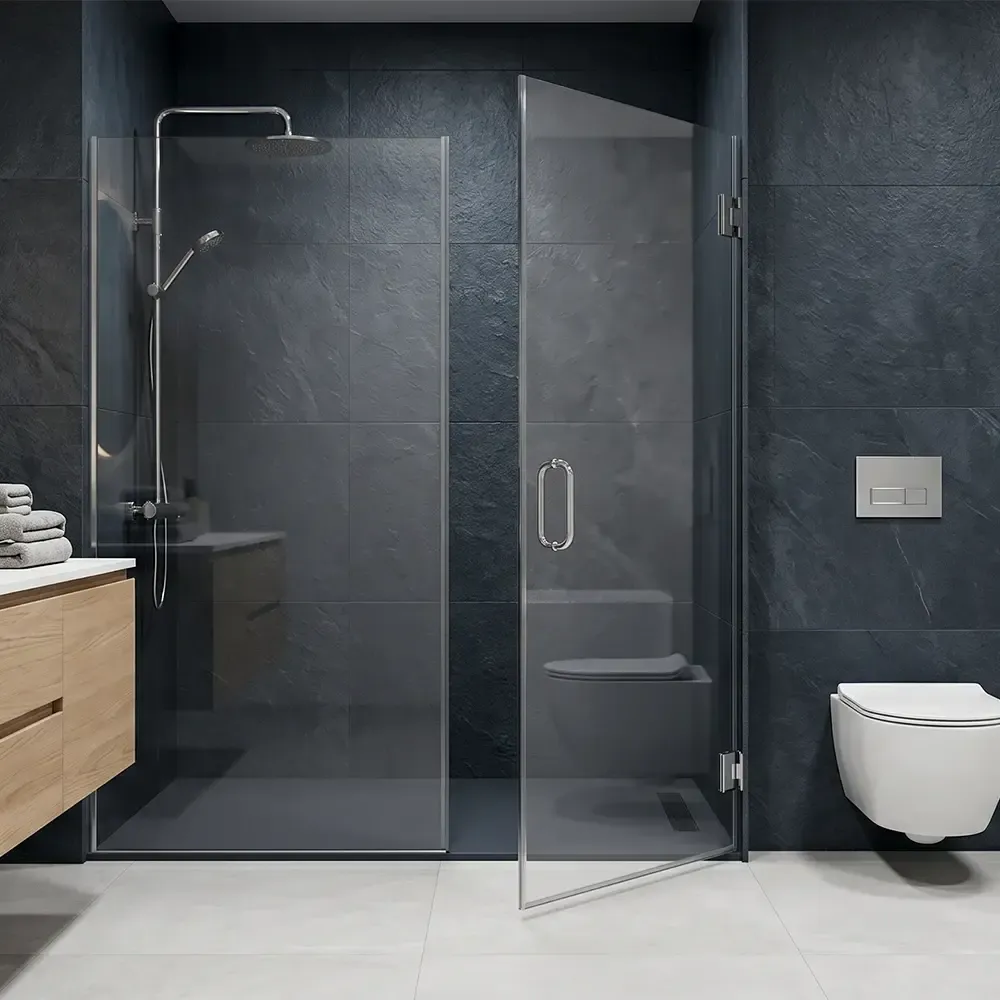
A hinged shower door can look clean, open, and frameless — but it needs room to swing. Before you order, measure the door arc so the glass clears nearby toilets, vanities, towel bars, and walls. Here's the simple way to check hinged shower door clearance and choose the right configuration for your bathroom.
Reviewed by John Flouhouse, Installation Team Lead at Dulles Glass
A hinged shower door needs clear swing space equal to the door panel width, plus about 4 inches for the handle and comfortable movement. A 30-inch hinged shower door needs about 34 inches of clear space in front of the opening. Before ordering, check the swing arc at floor level, toilet-rim height, and vanity height so the door does not hit nearby fixtures. If the swing arc is too tight, a sliding shower door may be the better fit — after fabrication, changing the configuration may require a new panel or layout.
Quick Answer
A hinged shower door needs clear swing space equal to the door panel width, plus about 4 inches for the handle and comfortable movement. For example, a 30-inch hinged shower door needs about 34 inches of clearance.
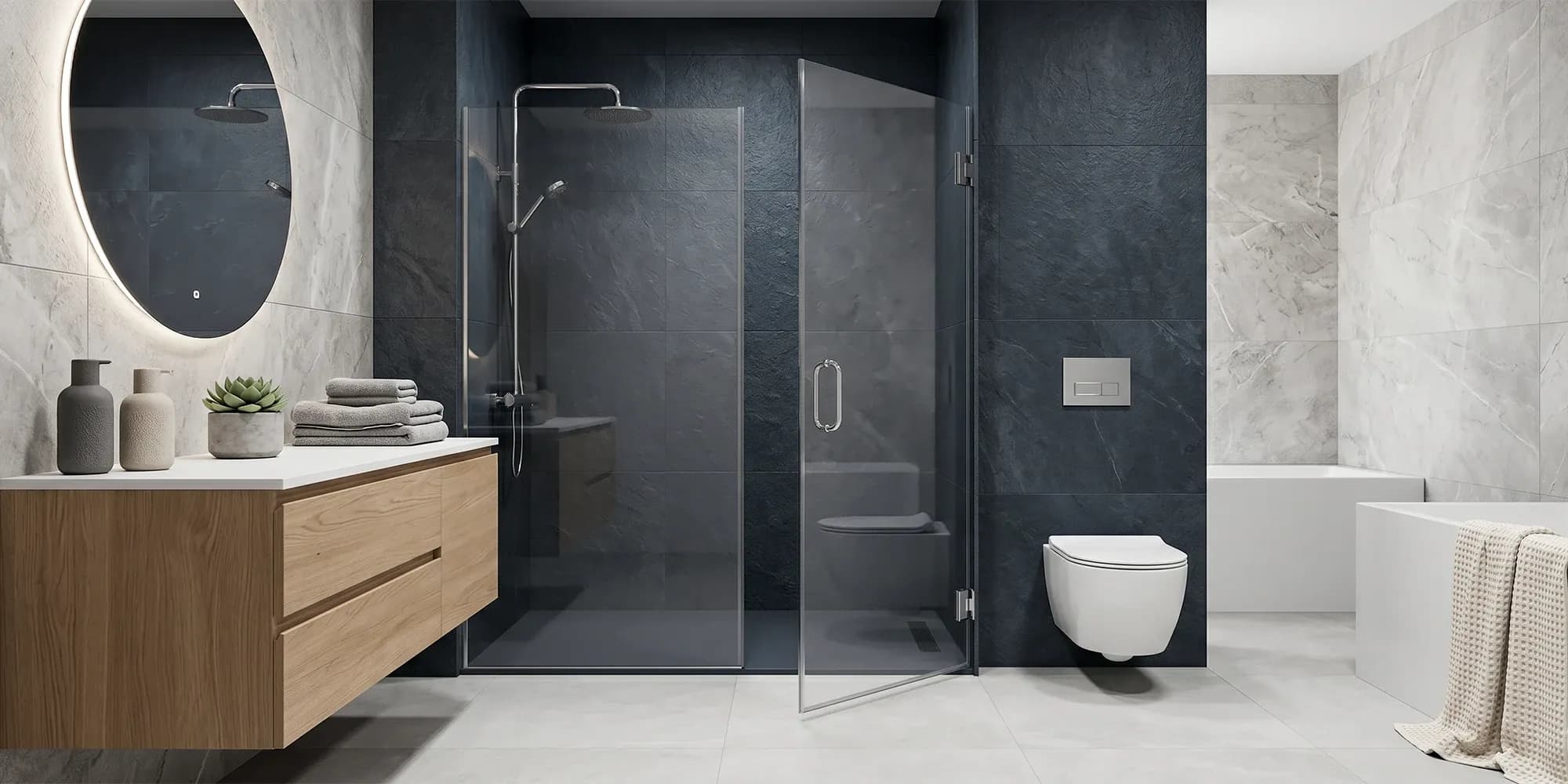
Hinged Shower Door Clearance: The Bottom Line
- Outward-swing radius equals the door panel width. A 30-inch hinged panel needs a 30-inch clear arc in front of it.
- Minimum recommended clearance: panel width + 4 inches between the door and any fixture or wall opposite the opening.
- Check at three heights: floor level, toilet-rim height, and handle/vanity height. Doors hit toilets at the rim height most often.
- Standard hinged panel widths: 22 to 36 inches. Above 36" most doors switch to a swing + fixed-panel configuration.
- If clearance is tight: consider sliding shower doors or a smaller swinging panel with a fixed return.
What Hinged Shower Door Swing Clearance Means
When a hinged shower door swings open, the leading edge of the glass panel travels along an arc. The radius of that arc is the panel width (the distance from the hinge axis to the far edge of the door). A 30-inch wide panel sweeps a 30-inch radius. If anything in front of the door — a toilet, vanity, or wall — sits inside that arc, the shower door hits the toilet or fixture before reaching a comfortable open position.
The 90-Degree Rule
For comfortable use, plan for the door to open at least 90 degrees. Doors that open less than 90 degrees feel cramped at the entry and put extra stress on the hinges every time you push them past the obstruction. If you can only get 75–80 degrees, switch configurations.
How to Measure Hinged Shower Door Swing Clearance
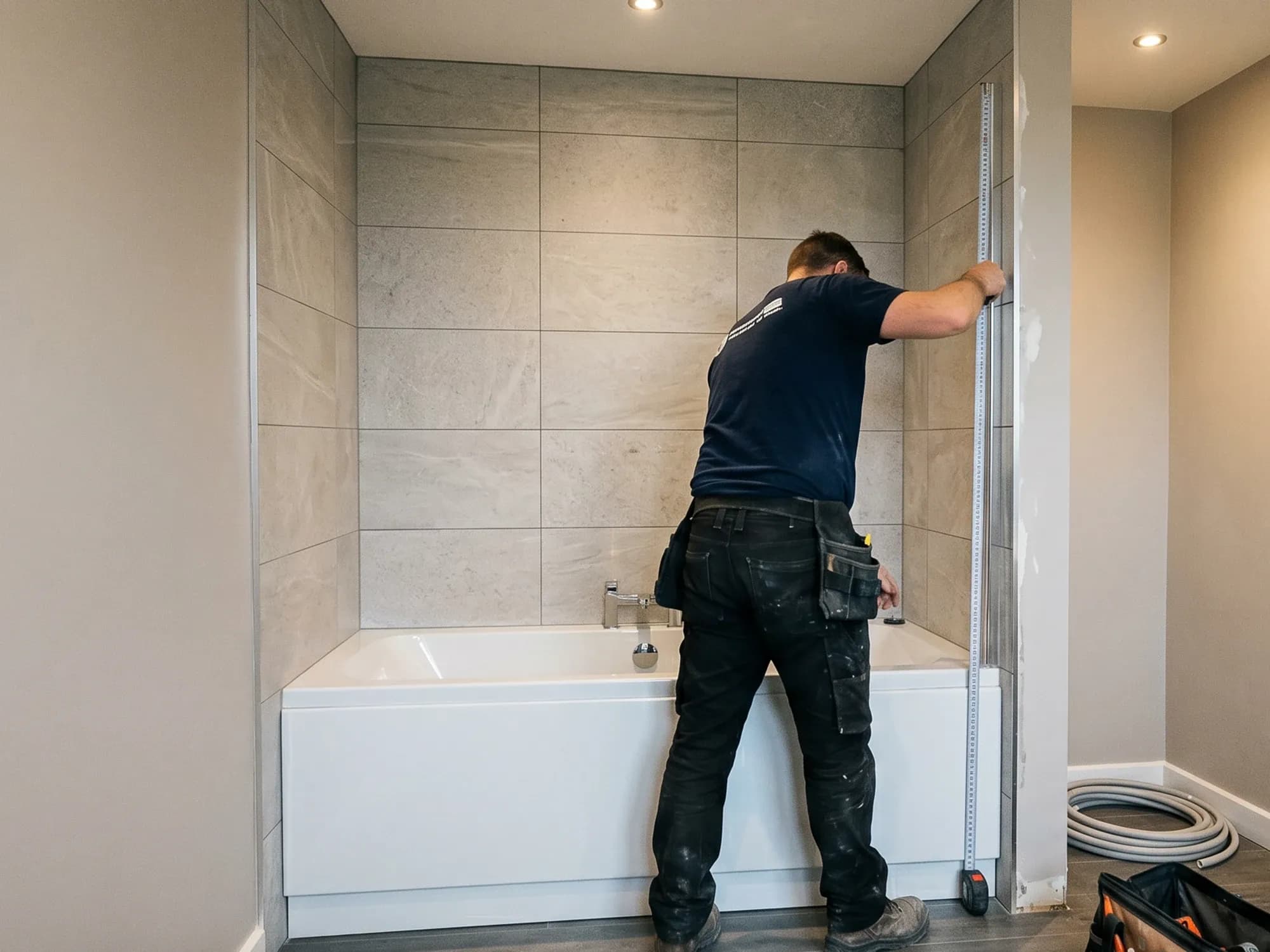
With the existing door (or your tape measure), check the path the new door will travel:
- Mark the hinge axis on the floor. This is the point where the hinge mounts to the wall — typically the corner of the shower opening.
- Use a string or tape from the hinge axis out to the panel width. A 30-inch panel = 30-inch string. Trace the arc on the floor.
- Check the arc at three heights: at the floor (where the threshold meets it), at toilet-rim height (about 17 inches up), and at vanity-counter height (36 inches up).
- Note any contact points. If the arc intersects a fixture at any height, that's the limiting clearance.
Typical Hinged Shower Door Clearance Requirements
| Panel width | Minimum arc clearance | Comfortable clearance |
|---|---|---|
| 22" | 22" + 4" = 26" | 28–30" |
| 24" | 24" + 4" = 28" | 30–32" |
| 28" | 28" + 4" = 32" | 34–36" |
| 30" | 30" + 4" = 34" | 36–38" |
| 32" | 32" + 4" = 36" | 38–40" |
| 36" | 36" + 4" = 40" | 42–44" |
The +4-inch buffer accounts for the door handle (which sticks out from the glass by 2–3 inches), the soft-close action at the end of the swing, and basic walking-around-the-door room.
The Four Most Common Clearance Traps
Trap 1: When the shower door hits the toilet
Toilets installed within the door arc are the single most common planning issue. Standard toilet rims are often around 16–17 inches high, and the bowl can project far enough into the swing arc to block a hinged panel. A toilet against the wall next to your shower probably has its edge 18–24 inches from the shower wall — and that's exactly where a 28-inch hinged door wants to swing.
Check toilet clearance at 17 inches height (the rim) and at floor level. The bowl is widest at the rim and narrower at the base; sometimes only the rim conflicts.
Trap 2: The vanity edge
Vanity counters extend 21–24 inches from the wall. If the vanity is on the same wall as the shower (or adjacent), the counter edge can intersect the arc at 36 inches height. Door handles routinely hit vanity edges in tight primary bathrooms.
Trap 3: The opposing wall
In narrow bathrooms (under 5 feet wide), the wall opposite the shower can be within the door arc. Measure from the hinge axis straight across the room. The opposing wall must be at least panel-width + 4 inches away.
Trap 4: The bathroom door
Both swinging-shower-door arcs and main-bathroom-door arcs share the same room. If the main bathroom door and the shower door arcs intersect, you can't open both at once — minor annoyance, but it shows up when guests want to use the bathroom while you're showering.
Small Bathroom Shower Door Options When Clearance Is Tight
If you measure and find the clearance is insufficient for a hinged door, you have three real options:
- Switch to a sliding door. Sliding shower doors need zero swing clearance — the panels move parallel to the wall. This is the most common fix in tight bathrooms.
- Use a smaller swing panel with a fixed return. Order a 22 or 24-inch swinging panel with a fixed glass panel filling the rest of the opening. The smaller arc fits in tighter clearance.
- Reorient the swing direction. Some opening configurations let you hinge on the opposite wall, which moves the arc to a different part of the bathroom. This only works if the opposite-wall side has the clearance.
Options That Usually Don't Solve the Problem
- Pivot doors are tempting in tight bathrooms but actually need clearance on both sides of the pivot axis — not less than swinging. Pivot is also custom-install only at Dulles Glass, not a DIY product.
- Bi-fold or accordion-style doors are rare in residential showers because they tend to leak more than sliding or hinged.
- Inward-opening hinged doors. Inward-opening doors can create code, egress, and usability concerns depending on the layout and local requirements, so they should be reviewed before ordering. They also tend to trap water at the threshold. Dulles Glass generally recommends outward-swinging or sliding configurations for residential showers.
If the door arc hits anything in the room, a sliding door is usually the simplest fix — same opening, no clearance issue.
Need a Tight-Bathroom Configuration?
Dulles Glass can help you compare hinged, sliding, and fixed-panel layouts based on your opening width, toilet location, vanity depth, and preferred hardware finish. Measure your opening, note nearby toilets or vanities, and request a quote for the best fit.
Explore our frameless shower doors, sliding shower doors, custom shower doors, and shower door installation options — or request a quote and we'll help confirm the right configuration for your space.
Frequently Asked Questions
How much clearance does a hinged shower door need?
Plan on panel width plus 4 inches of clearance in front of the door. A 30-inch hinged panel needs at least 34 inches between the shower wall and any fixture or wall in front of the door. More comfortable: 36–38 inches.
Will a 30-inch hinged door fit if my bathroom is 5 feet wide?
Probably not comfortably. A 60-inch wide bathroom with a shower on one wall and a toilet or vanity opposite leaves around 36–40 inches for the door arc, which is the minimum. If anything sticks into that arc — a toilet bowl at 17 inches height, a vanity edge at 36 — the door hits it. Measure carefully before ordering.
What if the door barely clears the toilet?
If the clearance is exactly minimum, it works but feels cramped at the entry. The door handle scrapes when you walk past. A smaller panel (22 or 24 inches) with a fixed return is usually the better fit — you keep the frameless look without the daily annoyance.
Can a hinged door open into the shower instead of out?
Inward-opening doors can create code, egress, and usability concerns depending on the layout and local requirements, so they should be reviewed before ordering. They also tend to trap water at the threshold. Dulles Glass generally recommends outward-swinging or sliding configurations for residential showers.
Does a pivot door need less clearance than a hinged door?
No. A pivot door usually does not eliminate clearance concerns because part of the panel swings inward and part swings outward. It should be reviewed as a custom layout, especially in tight bathrooms.
How do I know if my opening is too tight for hinged?
Trace the door arc on the floor with a string from the hinge corner. If anything fixed in the room (toilet, vanity, wall) sits inside that arc at any height between floor and 4 feet, the hinged configuration is going to be a problem. A sliding door is usually the better fit.
Sources and Review Notes
- Dulles Glass field-team service notes on hinged-door clearance, 2018–2026 (internal).
- ANSI/BHMA A156.32 — standard for swinging-door hardware, published by the Builders Hardware Manufacturers Association.
- International Residential Code (IRC) — residential bathroom fixture-clearance requirements (minimum clear space at fixtures), published by the International Code Council.
Not sure if a hinged door fits your bathroom?
Send us your opening width, nearby fixture measurements, and a few photos. The Dulles Glass team can help compare hinged, sliding, and fixed-panel configurations before your glass is fabricated.
Why choose Dulles Glass
54+
Years Glass expertise
10,000+
Projects Measured and installed Yearly
3-Year Warranty
On custom installations
4.9/5 Rating
Customer Reviewed
Ready to start your glass project?
Tell us what you are planning and our glass experts will help you find the right solution.