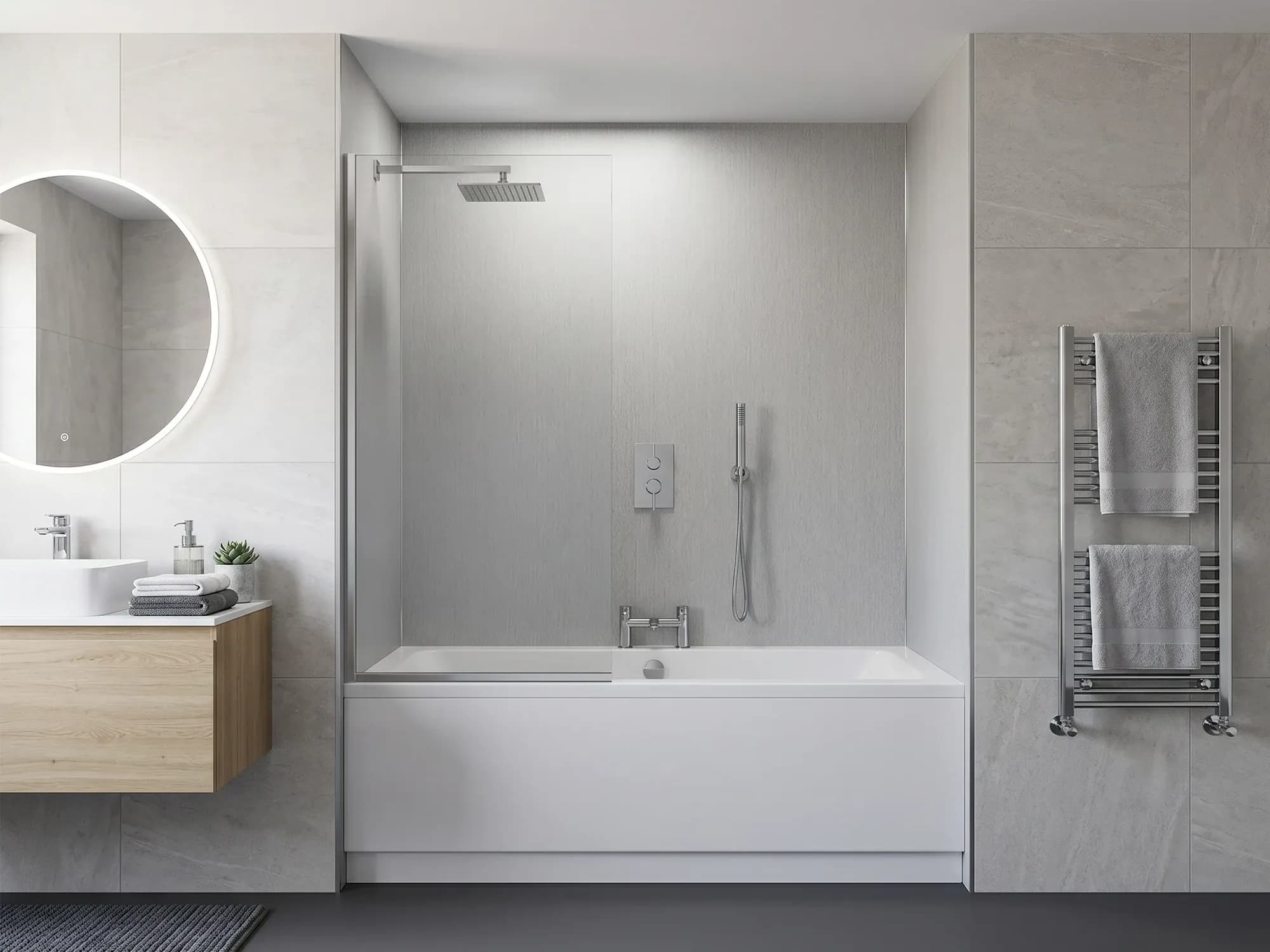
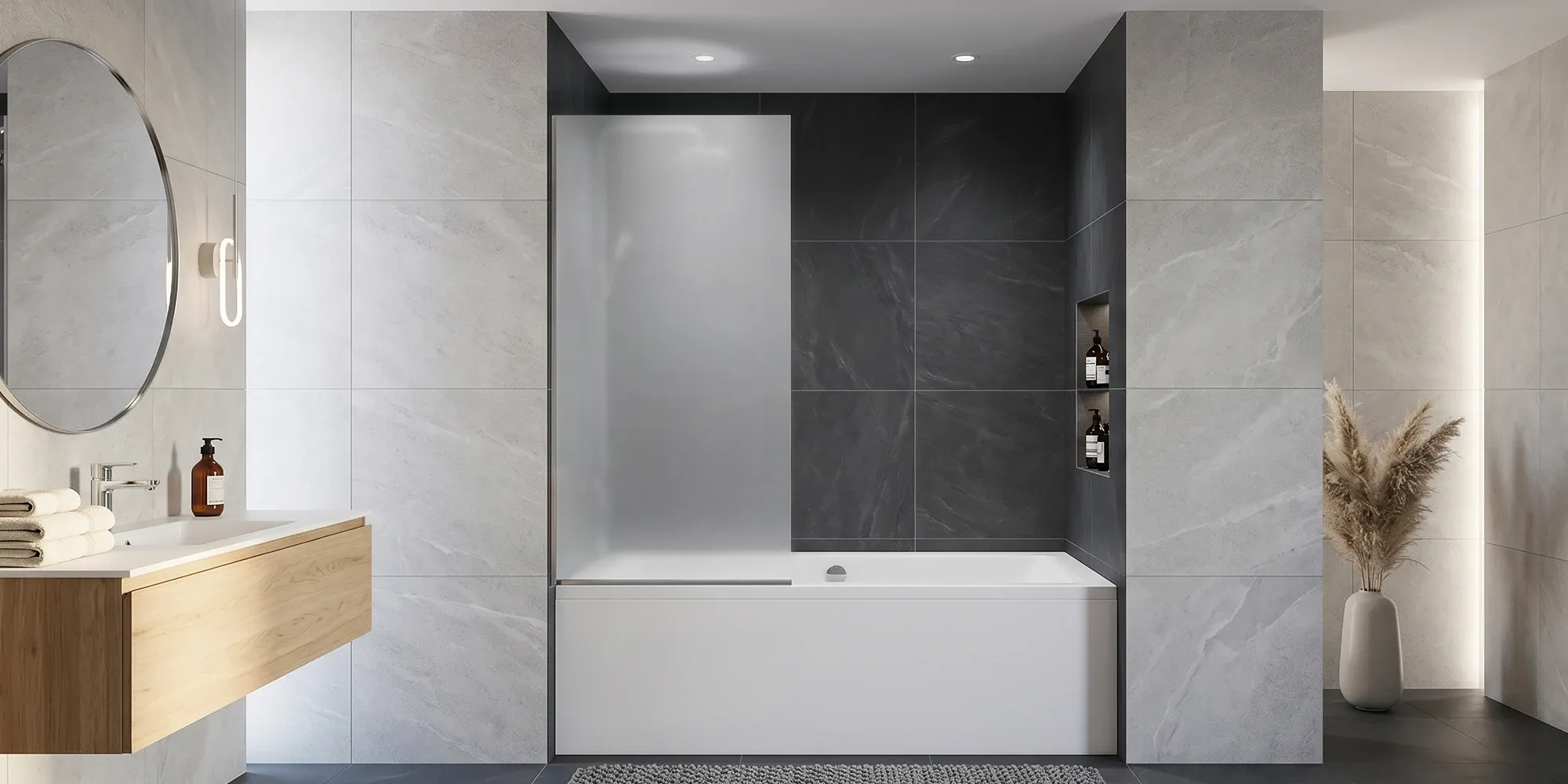
A simple frameless hinged shower door maintenance routine: how to remove hard water stains, which cleaners are safe for glass and hardware, when to replace the shower door seal and bottom sweep, and which products can damage your shower door or affect warranty coverage.
Reviewed by John Flouhouse, Installation Team Lead at Dulles Glass
Frameless hinged shower doors stay clean with a short three-part routine: a daily squeegee to prevent hard water stains, a weekly pH-neutral wipe on glass and hardware, and a monthly check on the seal, sweep, and silicone bead. This simple shower door maintenance routine helps protect the glass, hinges, seals, and bottom sweep without harsh cleaners. In our service calls, the most common preventable damage comes from repeated use of acidic descalers on hardware finishes and from worn bottom sweeps that were not replaced early.
Quick Answer
Squeegee the glass daily, clean weekly with a pH-neutral cleaner and microfiber cloth, and inspect seals, sweeps, hinges, and silicone monthly. Avoid acidic descalers, abrasive pads, ammonia on hardware, and harsh tile or grout cleaners.
Key Takeaways
- 15 seconds a day: squeegee the glass after the last shower of the day. This single habit prevents hard water spotting.
- 5 minutes a week: pH-neutral cleaner on glass and hardware, soft microfiber, plain warm water rinse on seals.
- 30 minutes a month: inspect and clean the seal, sweep, and hinge mounts. Inspect the visible silicone bead around wall plates. If silicone has lifted around hinge plates or moisture is present, schedule service — don't work near load-bearing hinge hardware yourself.
- Replace the seal and sweep every 3-5 years — sooner if cracked or brittle. Replacing worn seals early is a simple way to help prevent costly water damage.
- Avoid: CLR, Lime-Away, ammonia glass cleaners on hardware, abrasive scrub pads, or anything labeled for tile and grout.
Before You Start
Check whether your glass has a protective coating. If it does, follow the coating manufacturer's care instructions and avoid polishing compounds unless approved.
Daily Shower Door Cleaning Routine (15 Seconds)
Hard water spots aren't a cleaning problem — they're a drying problem. When water sits on glass and evaporates, the dissolved calcium and magnesium are left behind. After enough cycles, those mineral deposits bond to the glass surface and become difficult to remove without acid.
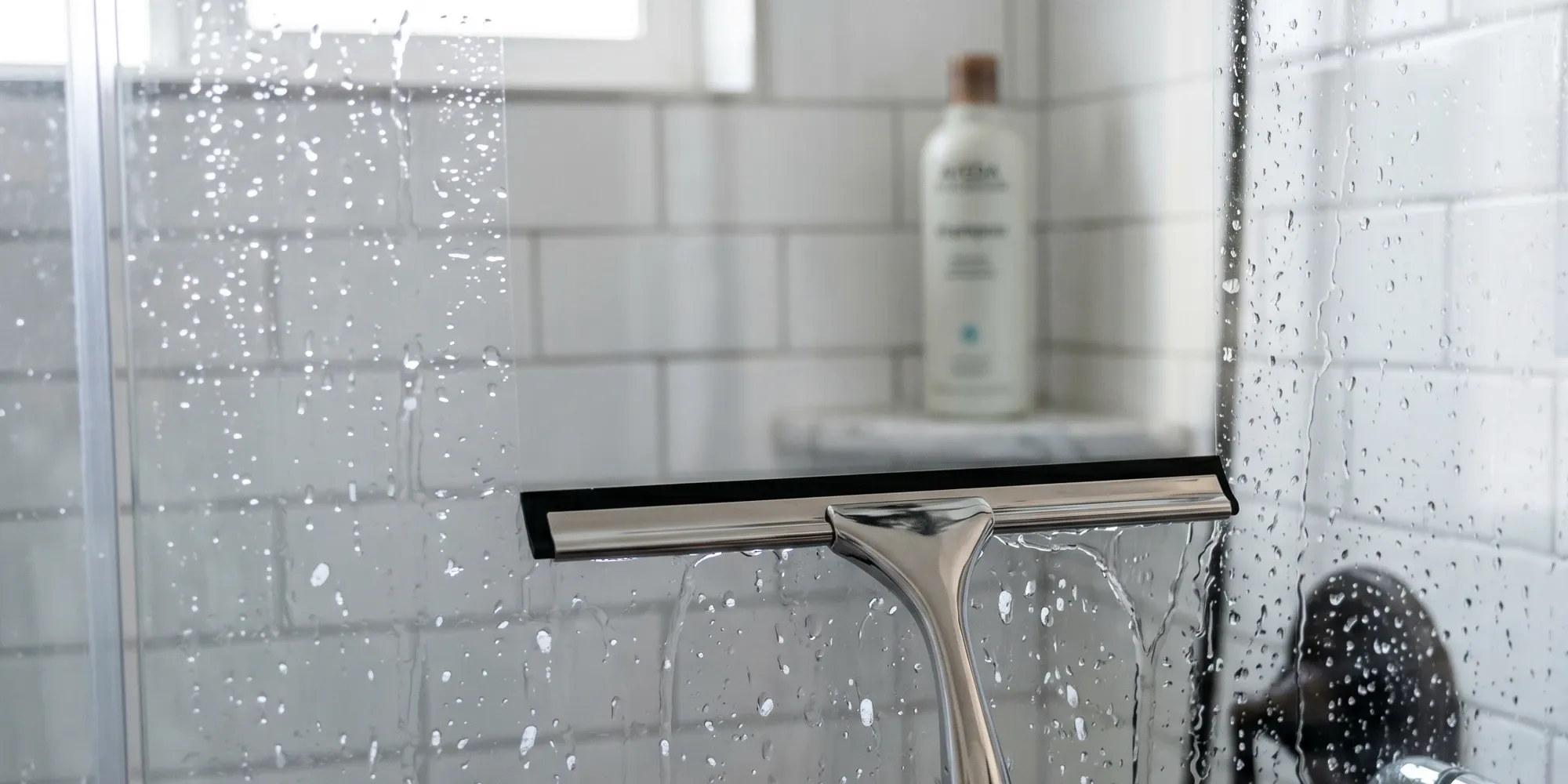
The fix is to remove the water before it dries. After the last shower of the day, pull the squeegee top-to-bottom across the inside glass surface in three overlapping strokes. This removes most of the water film — no spray, wipe, or cleaner needed.
The Squeegee Routine
- Hang the squeegee inside the shower at hand height
- After the last shower of the day, pull the squeegee top-to-bottom across the inside glass surface in three overlapping strokes
- Work left side, then center, then right side for a standard door
- Tap it dry against the threshold
Weekly Cleaning: Shower Glass and Hardware
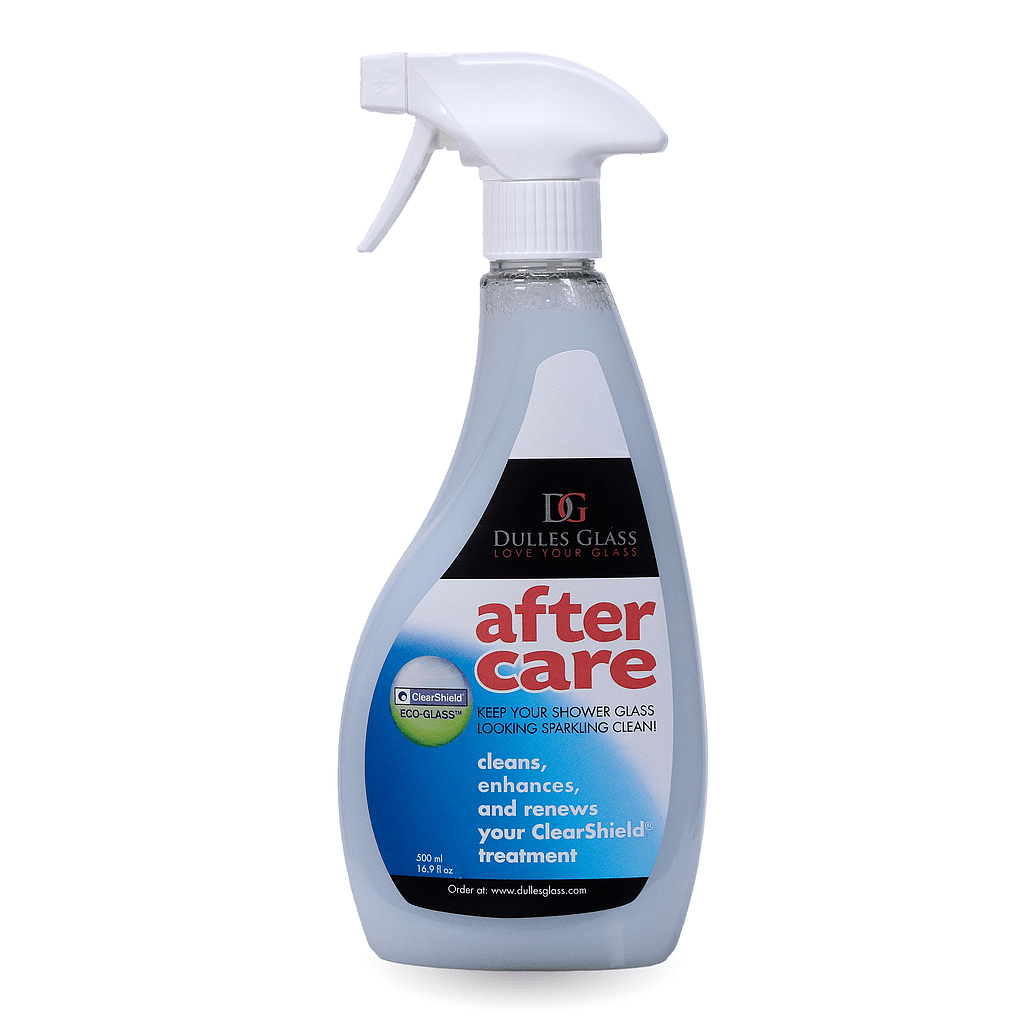
Once a week, the glass and hardware get the actual cleaner treatment. The product matters here — most shower-specific sprays are mildly acidic to dissolve light soap scum, which is fine for glass but harsh on metal finishes if used daily.
5-minute glass and hardware wipe
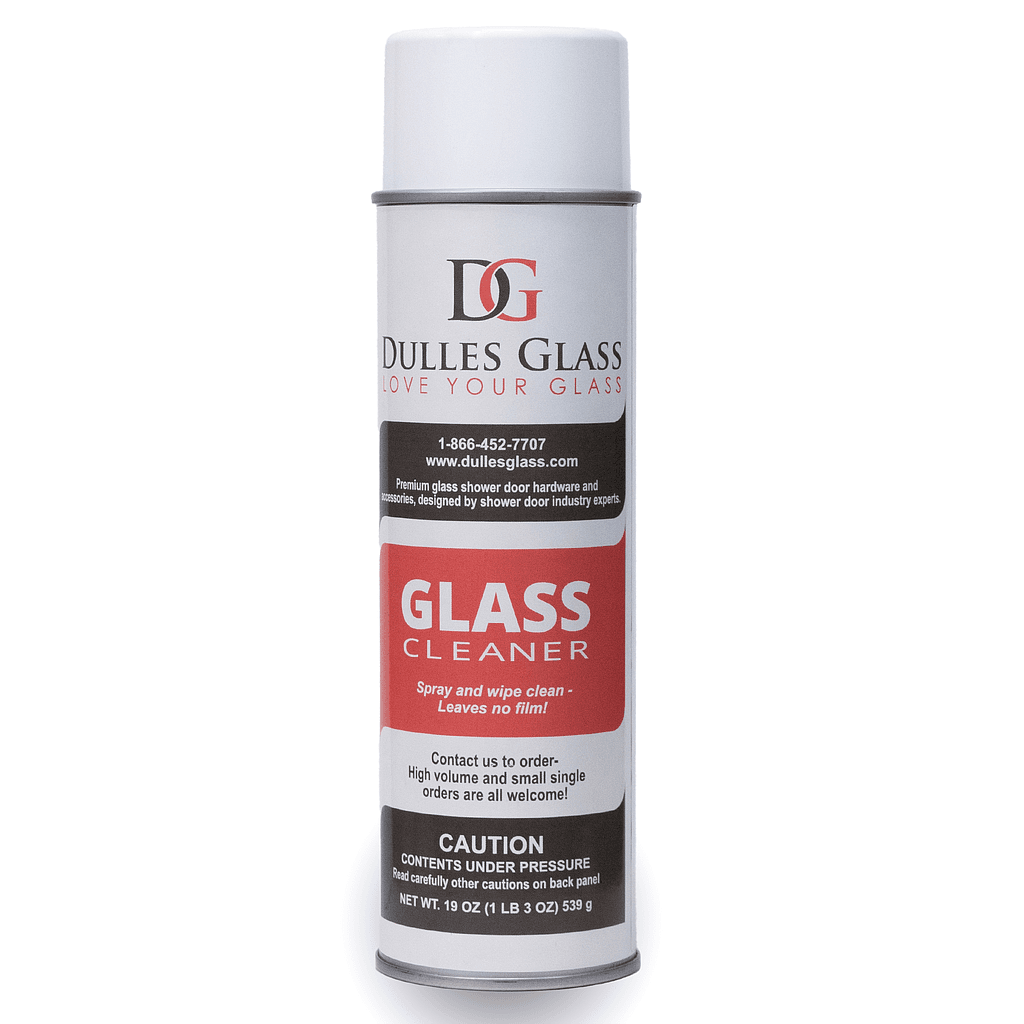
- Spray a pH-neutral shower cleaner on the inside glass. For light mineral residue, diluted white vinegar can help on glass only — keep it off brass, oil-rubbed bronze, and matte finishes.
- Wait 30 seconds, then wipe with a clean microfiber cloth.
- Dry the hardware separately with a different cloth. Brushed nickel and chrome handle weekly cleaner fine; matte black and oil-rubbed bronze should only see plain warm water plus the dry microfiber.
- Rinse the glass with clean water and squeegee once.
Monthly Shower Door Maintenance Check
Once a month, the seals, sweeps, and hinge mounts get inspected. This is the part of hinged shower door maintenance where most homeowners catch problems early — a sweep starting to crack, a hinge anchor starting to weep, a silicone bead lifting from the wall — at the point where a quick fix prevents a much larger repair later.
30-minute hardware and seal check
- Lift the bottom sweep and wipe the threshold underneath with warm water. Mineral and soap residue collects here and accelerates sweep wear.
- Check the vertical seal where the door meets the strike jamb. It should sit flat against the glass when closed. A seal that's pulling away has lost its compression — replace it.
- Inspect the hinge mounts. Both wall-side hinge areas should look dry and stable. A weep stain below a hinge means moisture is getting past the silicone seal — schedule service before it tracks into the wall cavity.
- Wipe glass-to-glass hinge bodies with a damp microfiber. Don't spray cleaner directly onto these — the moisture wicks into the clamp gasket and accelerates aging.
- Visual check on the silicone bead around every wall plate. If silicone has lifted around hinge plates or moisture is present, schedule service — don't loosen or work near load-bearing hinge hardware yourself.
How to Replace a Shower Door Seal and Bottom Sweep
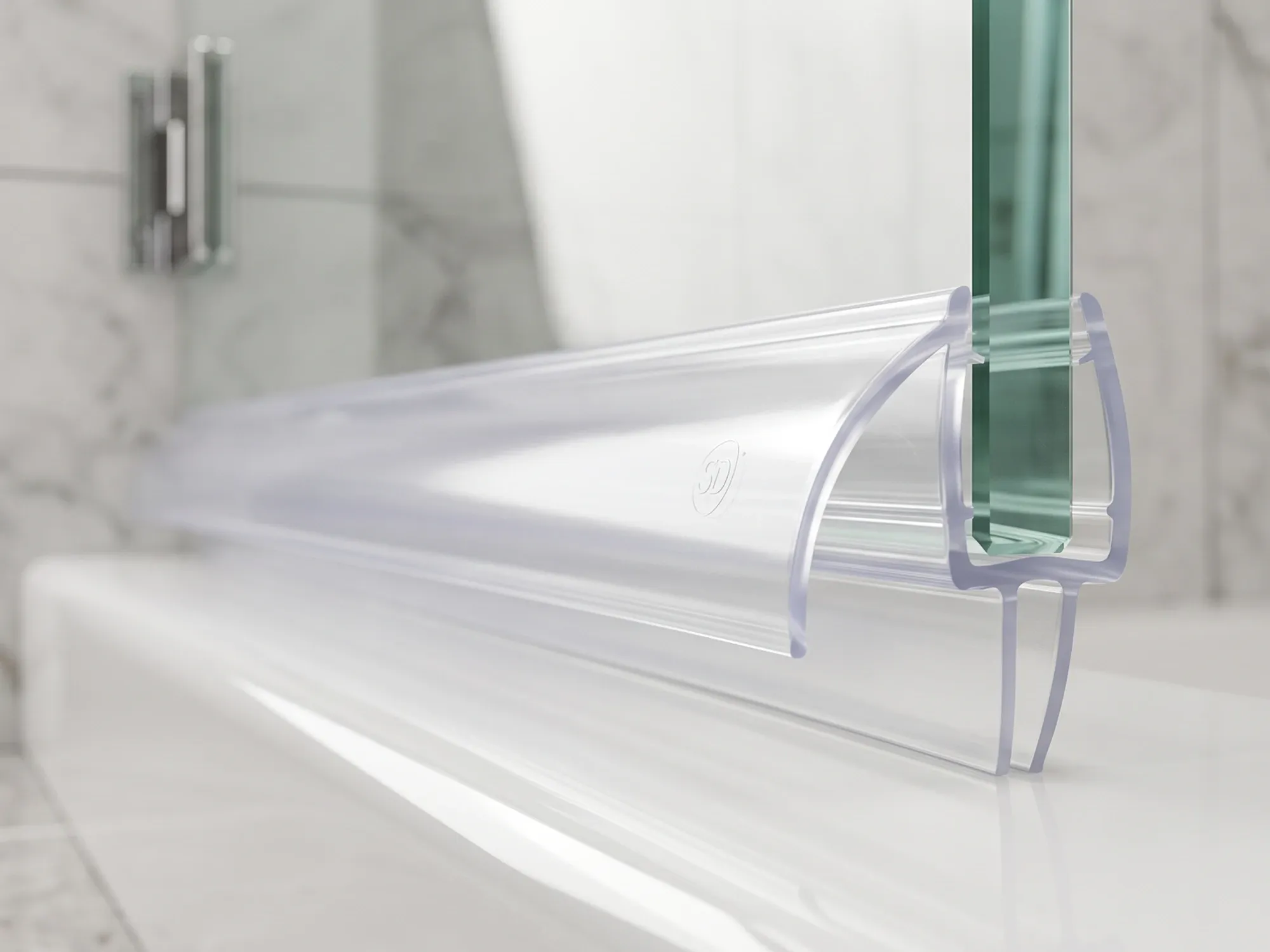
The two pieces of vinyl on a frameless glass shower door — the bottom sweep and the side seal — do most of the actual water-management work. They're also the parts homeowners forget about until water is on the bathroom floor.
What they do
The sweep runs along the bottom of the door. It's a strip of vinyl with a flexible fin that drags against the threshold or curb, deflecting water back into the shower as the door swings closed.
The seal (also called a side seal, jamb seal, or magnetic strike) runs vertically where the door meets the wall or the fixed return panel. It compresses when the door closes, stopping water from spraying through the gap.
How long they last
Quality vinyl seals and sweeps typically last 3 to 5 years in normal residential use. A shower door leaking at the bottom is one of the most common signs it is time for a replacement. Failure shows up as:
- Visible cracking, especially at the bend where the sweep meets the bottom of the glass
- The vinyl turning chalky or hard (it should stay slightly pliable)
- Water leaking past the bottom of the door even when closed properly
- A gap visible between the side seal and the glass when the door is closed
How to replace them
Both shower door seal replacement and shower door sweep replacement are field-replaceable jobs that take 10-15 minutes per piece. Most slide into a channel at the bottom or side of the glass — pull out the old piece, cut the new one to length, and slide it into place.
The two things to get right:
- Match the channel profile. Seals are sold by glass thickness (1/4" or 3/8") and channel type (U-channel, H-channel, magnetic strike). Bring the old piece when ordering so the profile matches.
- Cut to length with a sharp blade. A clean miter at each end prevents the sweep from curling up.
Shower Door Hardware Care by Finish
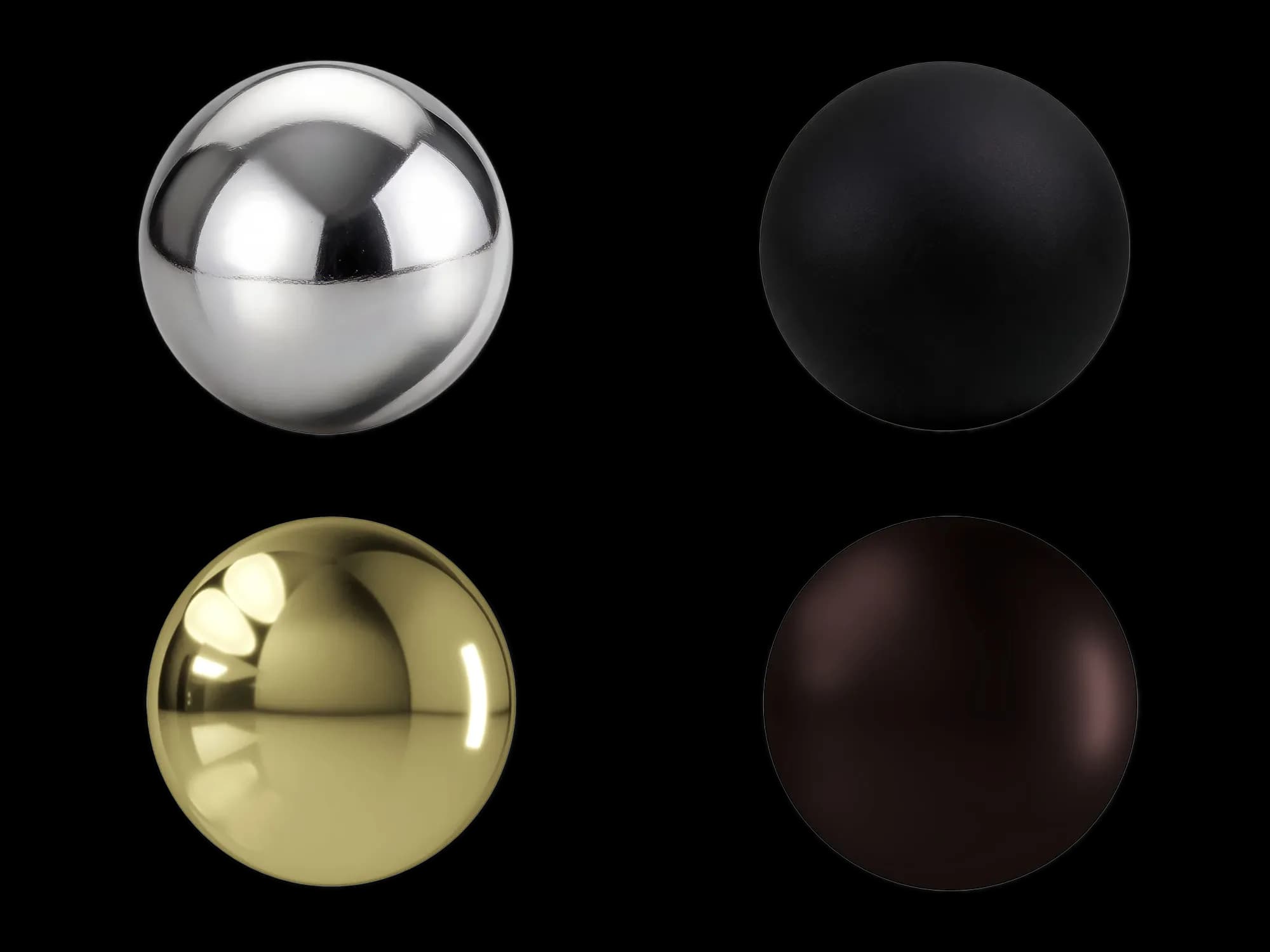
Different finishes of shower door hardware need different care. A cleaner that is safe for chrome may be too harsh for matte black, brass, or oil-rubbed bronze.
| Finish | Safe | Avoid |
|---|---|---|
| Brushed Nickel | pH-neutral cleaner, microfiber, plain water | Acidic descalers, abrasive pads |
| Polished Chrome | pH-neutral cleaner, microfiber, ammonia-free glass cleaner | Ammonia glass cleaners (can dull or discolor the finish over repeated use), abrasive pads |
| Matte Black | Plain warm water, microfiber, gentle pH-neutral cleaner | All acidic cleaners, abrasive pads, alcohol-based sprays — the matte coating is the most fragile |
| Satin Brass / Polished Brass | Plain warm water, microfiber, occasional pH-neutral cleaner | Acidic cleaners (strip the lacquer), abrasive pads. Living-finish brass develops patina naturally — don't fight it with chemicals |
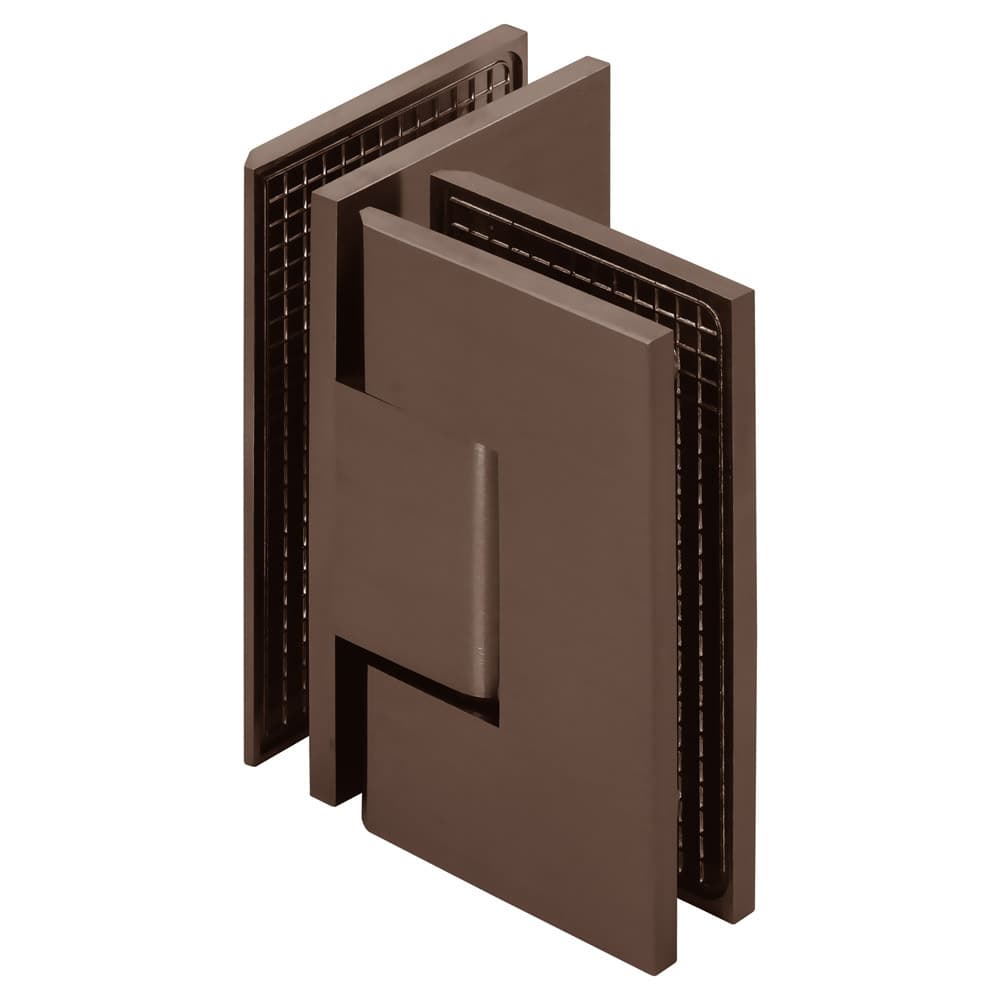
| Oil-Rubbed Bronze | Plain warm water and a microfiber, nothing else | All cleaners. The dark coating sits on top of brass; cleaners strip it unevenly |
Living-finish brass and patina
If your shower door has solid brass hardware in a "living finish" (unlacquered satin brass or polished brass), the finish is supposed to change over time. The brass develops a softer, slightly darker patina over years of humidity exposure. This isn't damage — it's the design intent. Polishing it back to factory-new shine is a personal preference, not a maintenance requirement.
Cleaners That Damage Frameless Shower Door Hardware
Products that damage glass, finishes, or seals
- CLR, Lime-Away, or any "calcium / lime / rust" remover — acidic; pits chrome, strips brass lacquer, etches glass over time
- Ammonia glass cleaners (Windex blue) on hardware — can dull or discolor some finishes over repeated use
- Abrasive scrub pads (Scotch-Brite green, steel wool) — scratches glass and finishes; once scratched, you can't undo it
- Tile and grout cleaners — formulated for porous surfaces, often acidic, damages everything else
- Magic Eraser (melamine foam) — avoid on hardware and coated glass; use only on uncoated glass if approved by the manufacturer. It abrades finishes off metal hardware
- Bleach on vinyl seals and sweeps — accelerates cracking and brittleness
- Vinegar straight (not diluted) — fine occasionally on glass; will strip brass lacquer if used regularly
Strong descaling products may remove buildup quickly, but repeated use can damage glass, seals, and hardware finishes over time.
What Can Void Your Shower Door Warranty
Most shower door warranties cover defects in materials and workmanship, but exclude damage caused by improper care. The specific exclusions usually include:
- Damage from acidic cleaners (CLR, Lime-Away, vinegar concentrate)
- Damage from abrasives
- Damage from water that wasn't properly sealed at install (e.g., silicone bead never applied)
- Damage from impact (door slammed beyond hinge spring range)
- Damage from chlorine pool chemicals (rare in residential, but worth knowing if the door is near a pool deck shower)
The practical rule: if you stick with the daily squeegee, the weekly pH-neutral wipe, and the monthly inspection, you greatly reduce the risk of cleaning-related warranty issues. The damage clauses exist for the situations where harsh chemical cleaners are used to remove buildup that the daily routine would have prevented.
Need a Replacement Seal, Sweep, or Hinge?
If your shower door is leaking at the bottom seal, the sweep has cracked, or a hinge has started to sag, replacement is usually the right fix. Dulles Glass stocks matched seals, sweeps, hinges, and handles for our DIY shower door kits and custom installations. If you bought your door from us, our team can help identify the correct replacement part using your original order details.
Explore our full range of shower doors, including the Solo and Prima DIY shower door kits, browse shower door hardware, and learn about professional installation, or request a quote for replacement parts or a service appointment.
Frequently Asked Questions
How often should I clean a frameless hinged shower door?
A 15-second squeegee after every shower keeps glass clear without any cleaning product. Add a 5-minute weekly wipe with a pH-neutral cleaner, and a 30-minute monthly check on the seals, sweep, and hardware. Skipping the daily squeegee is what creates hard water buildup that's hard to remove later.
How often should I replace the shower door seal and bottom sweep?
Vinyl seals and sweeps typically need replacement every 3 to 5 years in residential use. Replace sooner if you see visible cracking, brittleness, water leaking past the bottom, or if the seal no longer seats flat against the glass when the door is closed.
What shower glass cleaner is safe for frameless hinged doors?
Use a pH-neutral shower cleaner for glass and hardware. For glass only, diluted white vinegar can help with light mineral residue, but keep it off brass, oil-rubbed bronze, and matte finishes. Avoid abrasive scrubs, ammonia glass cleaners on metal finishes, and any cleaner formulated for tile, grout, or mineral deposits.
Are daily shower sprays safe for frameless shower doors?
Yes, with caveats. Daily-shower sprays are formulated to be sprayed without wiping, which is convenient. They work best in conjunction with the squeegee, not as a replacement — spray after squeegeeing the glass once. Spraying without squeegeeing still leaves a thin water film that mineralizes over time.
Will hard water stains permanently etch shower glass?
Yes if left long enough. Calcium and silicate deposits eventually bond to the silica in the glass. Light deposits come off with a pH-neutral cleaner; heavy deposits can require a polishing compound (and risk leaving the glass slightly cloudy). The daily squeegee prevents this entirely.
Can steam damage shower door seals?
Yes — steam cleaners are not recommended on shower door seals. Steam is fine on glass and tile, but the temperature can soften the vinyl in seals and sweeps, accelerating cracking. A warm-water-and-microfiber routine cleans seals safely.
How do I care for matte black shower hardware?
Matte black coatings are the most fragile finish on shower hardware. Use plain warm water and a soft microfiber cloth. Skip acidic cleaners, abrasive pads, and alcohol-based sprays — they all strip the matte coating unevenly. Brushed nickel and chrome are far more forgiving by comparison.
Does cleaning the hardware void the warranty?
Cleaning doesn't void warranty. Using the wrong product can. Acidic descalers (CLR, Lime-Away) can pit chrome and remove finish from brass. Many shower door warranties exclude damage caused by acidic cleaners, abrasive scrubs, or improper maintenance. Check the warranty card that came with your shower door kit before using any cleaner on glass or hardware.
When to Call a Pro
Call for service if the door sags, the hinge moves, water stains appear below the hinge, the bottom sweep does not contact the curb after replacement, or the silicone has failed around a wall-mounted hinge.
References
- ASTM C724 — Standard Test Method for Acid Resistance of Ceramic Decorations on Architectural-Type Glass
- ANSI Z97.1 / 16 CFR Part 1201 — Safety Glazing Standards
- Dulles Glass DIY hardware warranty terms (1-year on in-stock kits, 3-year on custom installations)
- Manufacturer guidance for matte black, satin brass, and oil-rubbed bronze finishes from major shower-hardware suppliers
Need replacement seals, sweeps, or hardware?
Dulles Glass stocks matched seals, sweeps, hinges, and handles for our DIY kits and custom installations. Service available. If you bought your door from us, our team can help identify the correct replacement part using your original order details.
Why choose Dulles Glass
54+
Years Glass expertise
10,000+
Projects Measured and installed Yearly
3-Year Warranty
On custom installations
4.9/5 Rating
Customer Reviewed
Ready to start your glass project?
Tell us what you are planning and our glass experts will help you find the right solution.