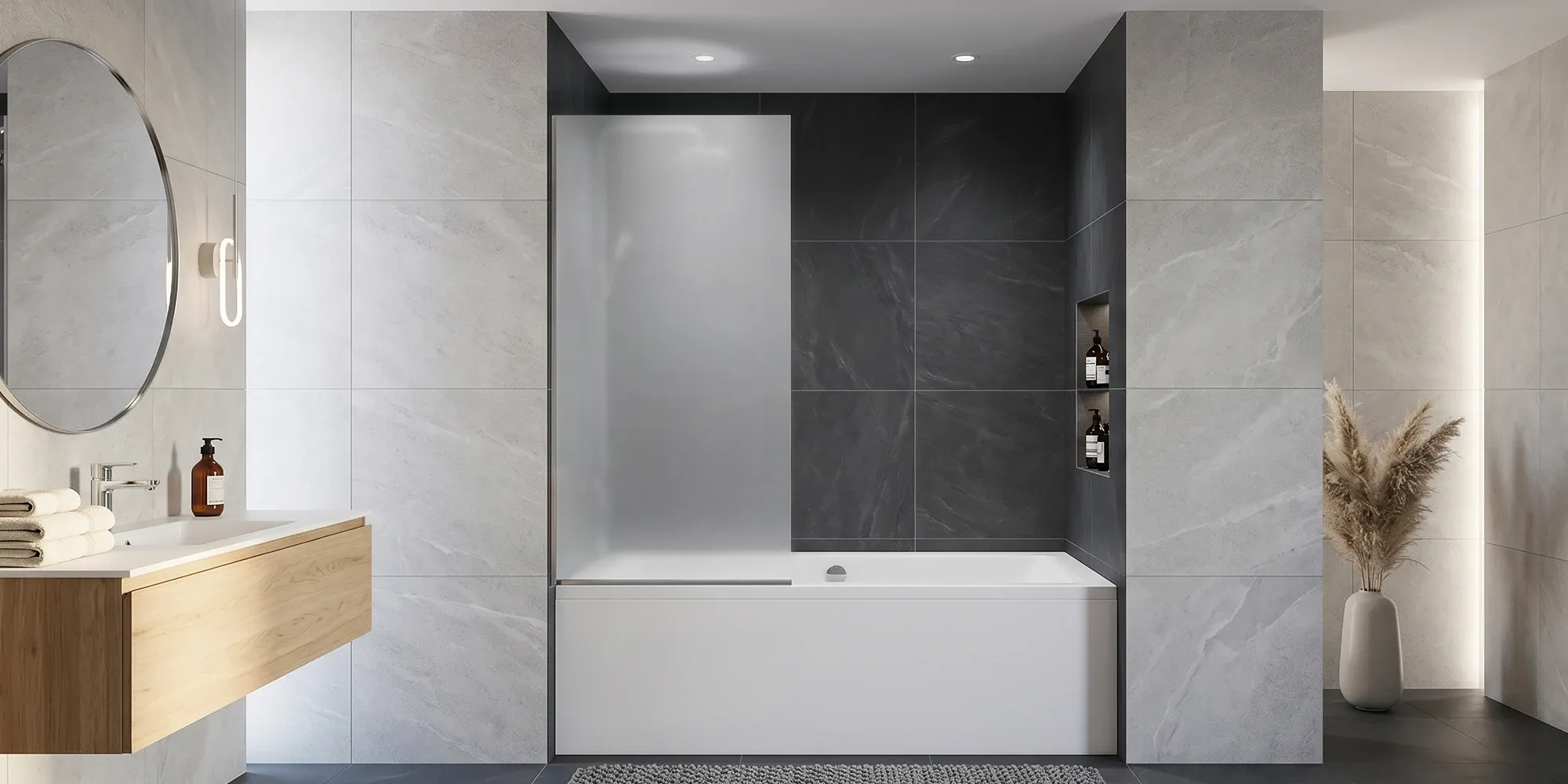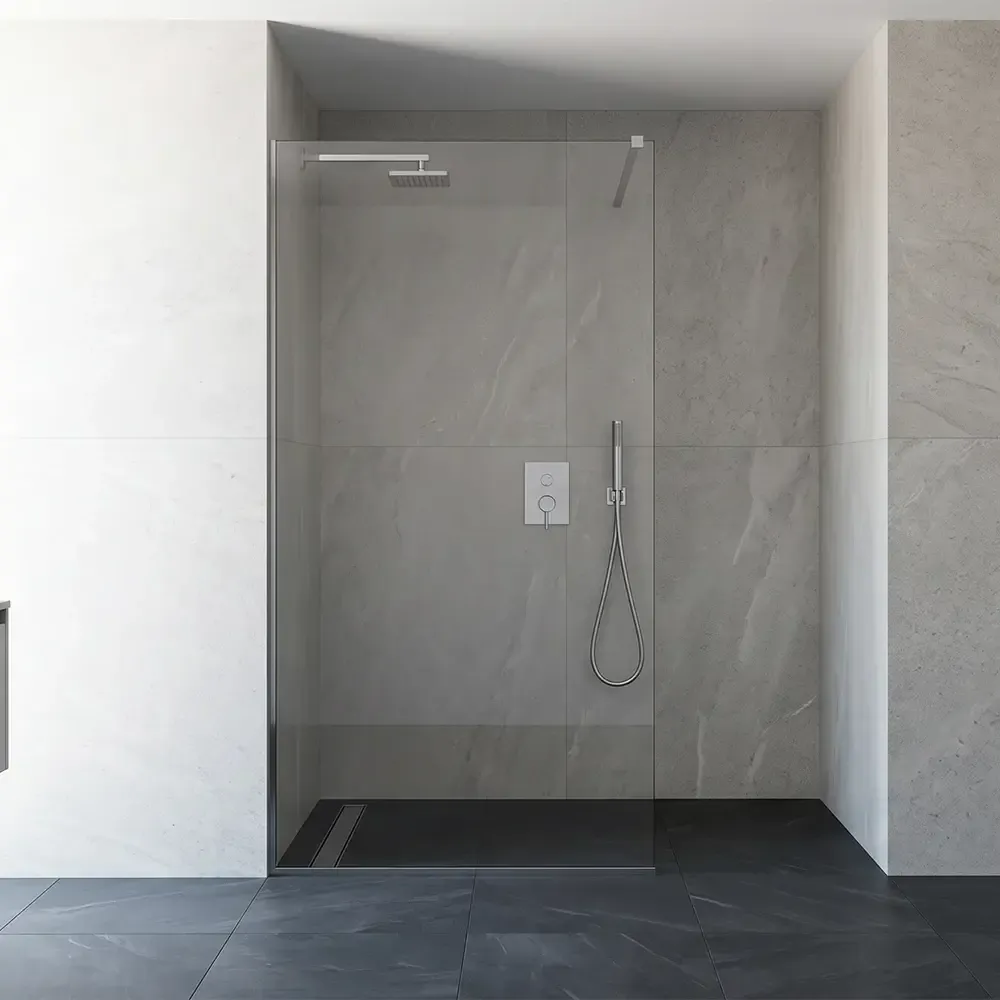
Standard fixed shower screen widths range from 24 to 60 inches. The right width depends on your opening size, shower head position, and how much splash control you need. Here's how to size a fixed shower panel for your walk-in.
Reviewed by John Flouhouse, Installation Team Lead at Dulles Glass
The most common question homeowners ask about fixed shower screens is: how wide should the panel be? For most walk-in showers, the answer is about two-thirds of the opening. A 60-inch opening usually pairs with a 40- to 48-inch fixed panel, depending on shower head position, splash control, and the layout of nearby fixtures.
Key Takeaways
- Two-thirds rule: the fixed shower panel should cover about two-thirds of the opening.
- Standard widths: 36 inches and 48 inches cover most residential walk-ins.
- Single-panel width: many 3/8" tempered glass fixed panels top out around 60 inches before additional support may be recommended, depending on height, anchoring, wall condition, and layout.
- Shower head position matters more than width. A back-wall shower head allows a narrower screen.
- For openings wider than 60 inches: add a return panel or step up to a fixed-panel-plus-hinged-door configuration.
Quick Answer: Fixed Shower Screen Width
For a standard walk-in shower, plan on a fixed shower screen that covers about two-thirds of the opening. For a 60-inch opening, start around 40 inches — a 36-inch panel may work with a back-wall shower head, while a 48-inch panel gives stronger splash control. The exact width depends on shower head position, glass thickness, and how much splash control you want.
If you're comparing options, see our Tela shower screens, frameless shower doors, and custom shower doors.
Standard Fixed Shower Screen Widths
Fixed shower screens come in a range of standard widths. The most common residential sizes:
- 24 inches — smallest standard. Used as a return panel or in compact alcove showers.
- 30 inches — compact walk-in or a narrow bathtub-to-shower conversion.
- 36 inches — very common. Fits 48-54" walk-in openings well.
- 42 inches — mid-range, fits 60" walk-ins under the two-thirds rule.
- 48 inches — the most popular size for primary-bath walk-ins.
- 54 inches — wider walk-ins, often with a small return panel.
- 60 inches — often the upper end of single-panel layouts before additional support may be recommended.
Custom widths between these increments are available for any opening that doesn't match a standard size.
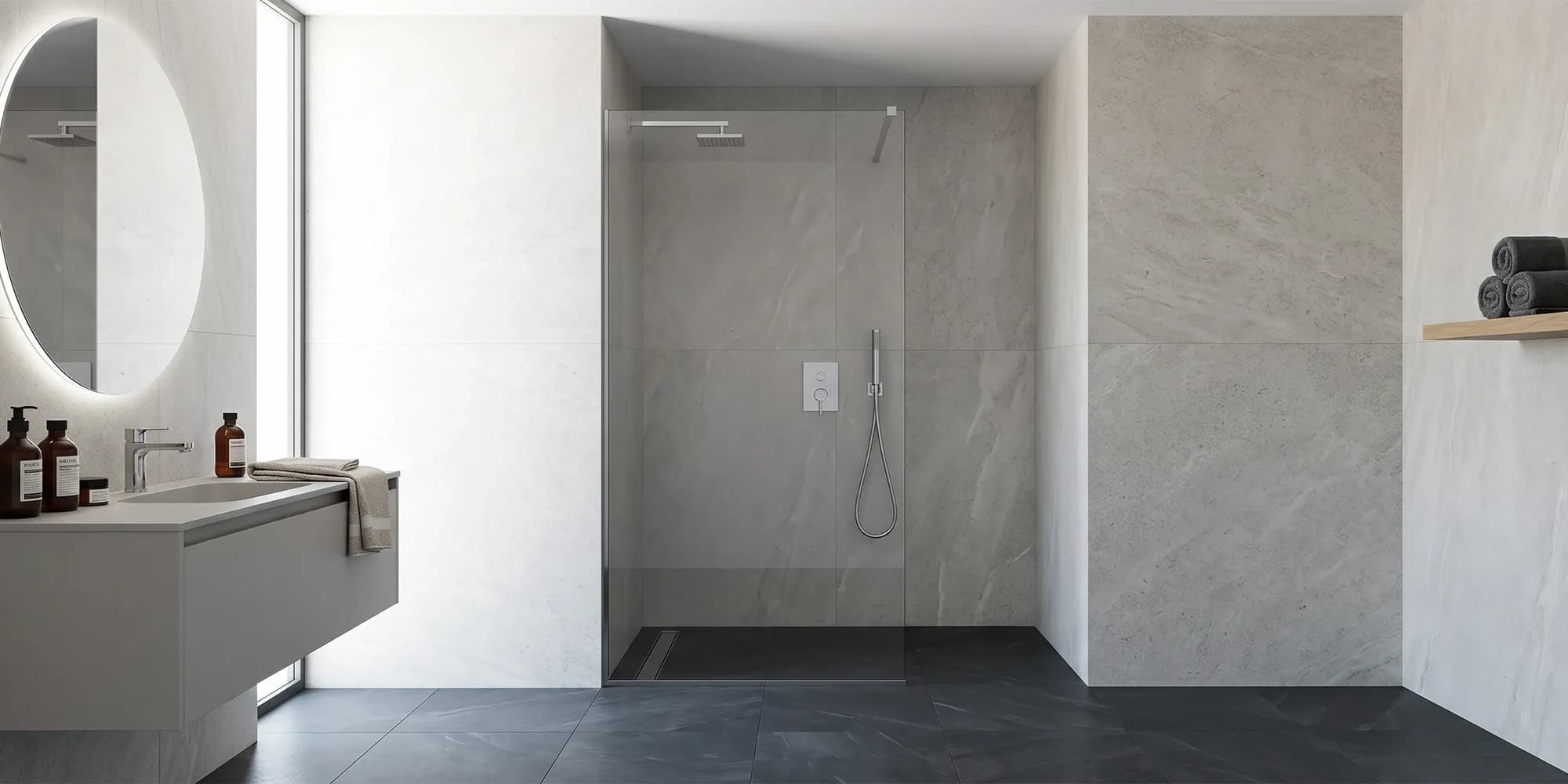
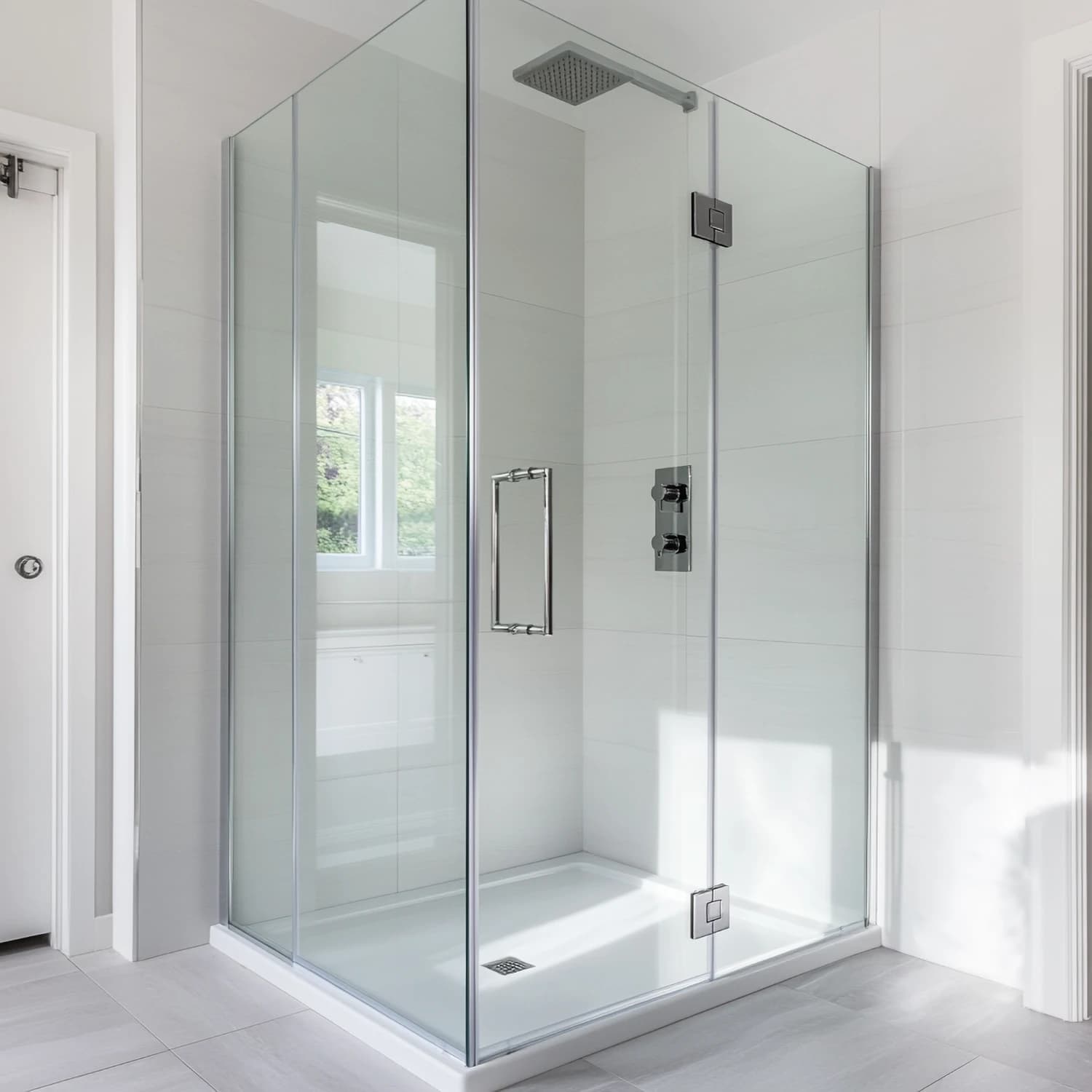
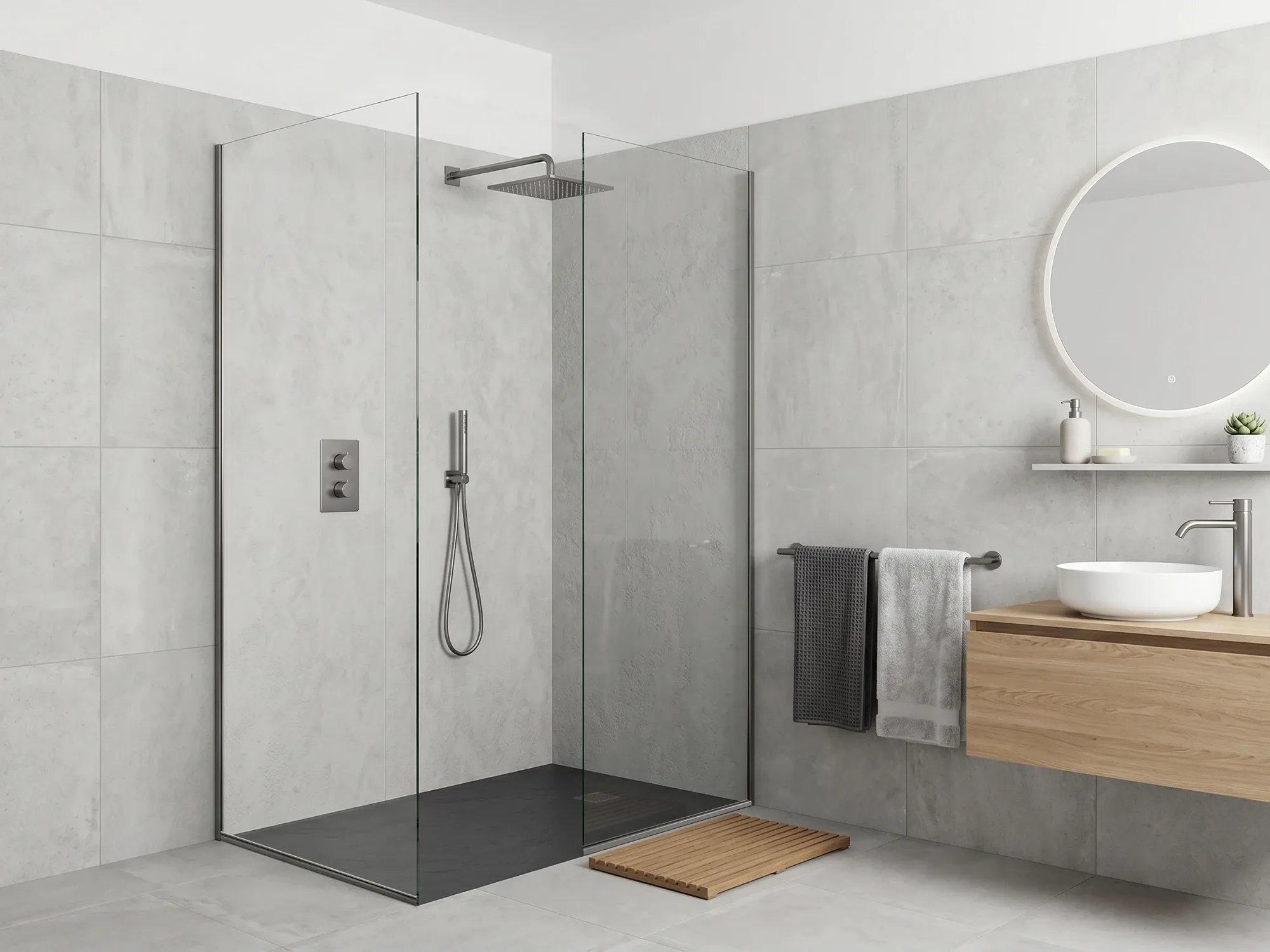
A fixed shower screen in a walk-in shower, sized to cover most of the opening.
The Two-Thirds Rule
A common sizing guideline is: a glass shower screen should cover about two-thirds of the shower opening, leaving roughly one-third for the walk-in entry.
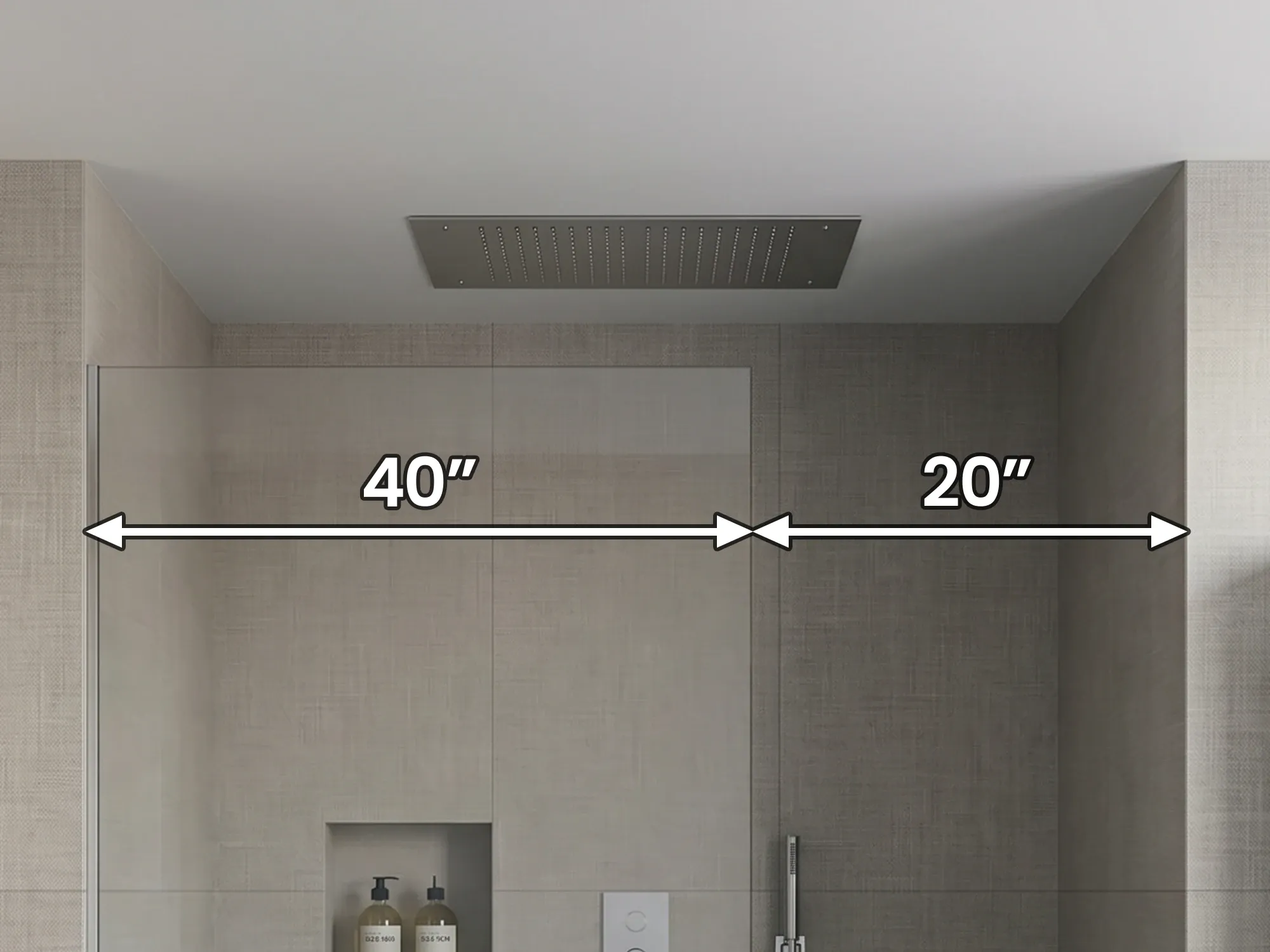
Two-thirds rule: a 60-inch opening pairs with a ~40-inch fixed panel, leaving a ~20-inch walk-in entry.
The two-thirds rule comes from splash physics: as long as the shower head is positioned behind the panel or on the back wall, the panel works as a shower splash guard, blocking the direct spray cone. The remaining one-third stays dry because no spray hits it.
Coverage above two-thirds (say a 50-inch panel on a 60-inch opening) closes off the walk-in feel without much added splash protection. Coverage below two-thirds (a 30-inch panel on a 60-inch opening) lets spray escape unless the shower head is angled aggressively away from the open side.
Fixed Shower Screen Width Chart by Opening Size
| Opening width | Recommended screen width | Notes |
|---|---|---|
| 36" | 24" | Compact alcove walk-in |
| 42" | 28"-30" | Standard small walk-in |
| 48" | 32"-36" | Mid-size walk-in — classic two-thirds |
| 54" | 36"-40" | Larger walk-in |
| 60" | 40"-48" | Standard primary-bath walk-in |
| 66" | 44"-50" | Wider walk-in — consider return panel |
| 72" | 48"-54" | Usually better as fixed + return or fixed + hinged door |
| 72"+ | Custom configuration | Fixed + return, or fixed + hinged door |
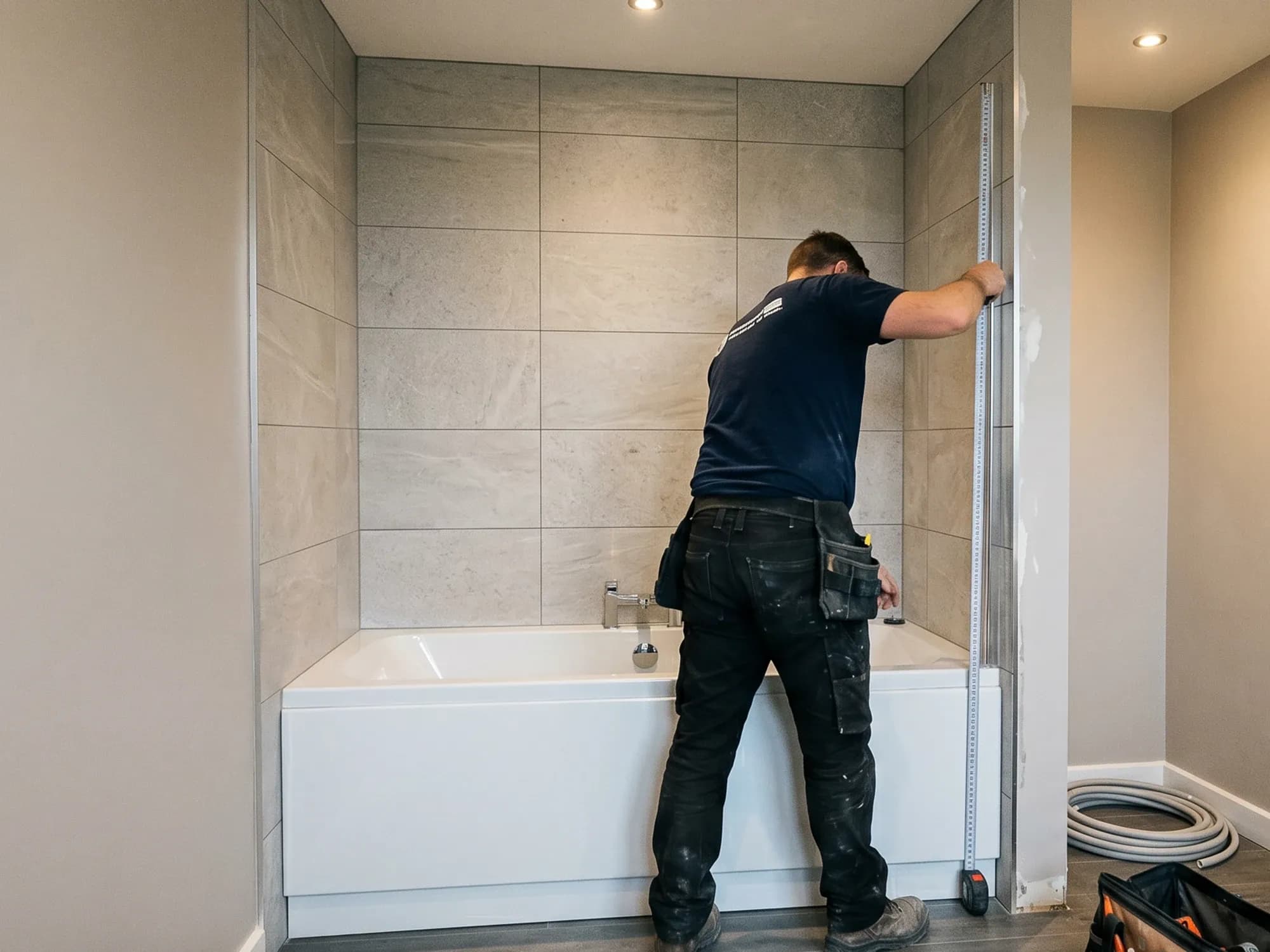
These are starting points. The final width is confirmed during the in-home measurement, where the installer accounts for wall plumb, threshold level, and shower head position.
For the most accurate fit, measure the finished tile-to-tile opening after the shower walls and threshold are complete.
At Dulles Glass, we confirm the final width during measurement because even a small change in wall plumb, pan slope, or shower head angle can affect splash control.
When to Choose 36 vs. 48 Inches
Two sizes cover most residential walk-ins. Which one fits your bathroom comes down to room size, shower head placement, and what's next to the open side.
- 36-inch fixed panel — best for smaller walk-ins, back-wall shower heads, and homeowners who want a more open entry.
- 48-inch fixed panel — better for larger primary bathrooms, stronger splash control, and layouts with nearby vanities, toilets, or doors.
Maximum Single-Panel Width
There's a practical limit on how wide a single frameless shower panel can go before extra support is recommended. The factors:
- Glass thickness — 3/8" tempered is standard. A 3/8" panel around 60 inches wide is often where a header brace or a step up to 1/2" glass starts to be recommended, depending on height and anchoring.
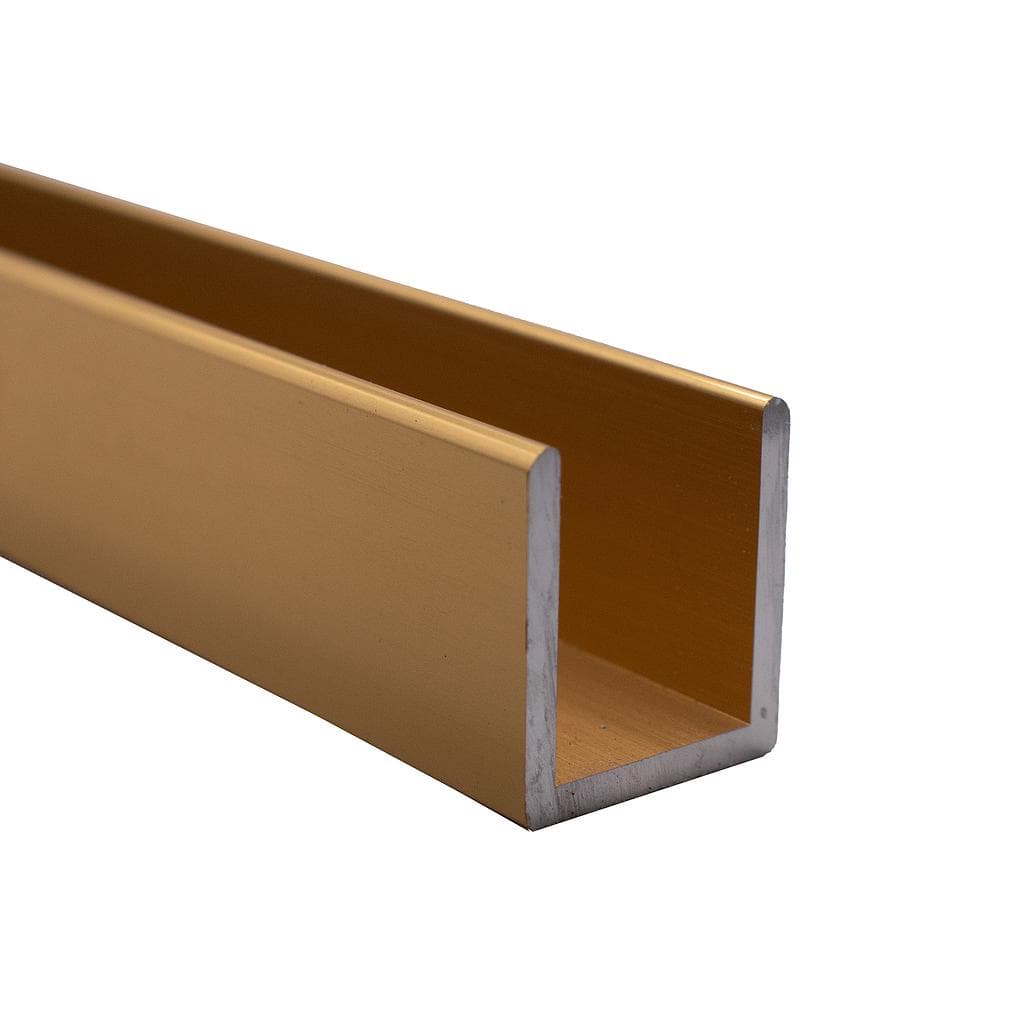
- Wall anchor strength — clamps and U-channels distribute load. Wider panels put more force on the anchors.
- Panel weight — 3/8" glass weighs about 5 lb per square foot. A 60" x 76" panel weighs ~95 lb; wider panels can exceed what standard clamp-only installations are designed to support.
- Wall type — tile over cement board typically provides a stronger anchoring surface than acrylic or fiberglass surrounds, but the installer still needs to confirm blocking, substrate, and fastener suitability.
For panels wider than 60 inches, the options are:
- Step up to 1/2" tempered glass — the thicker glass handles wider spans, but adds weight.
- Add a structural header or top brace — a horizontal extrusion that supports the top edge of the glass.
- Switch to a fixed-plus-return configuration — two panels at 90 degrees share the load.
- Add a hinged door alongside the fixed panel — the door fills the open side and provides additional structural attachment.
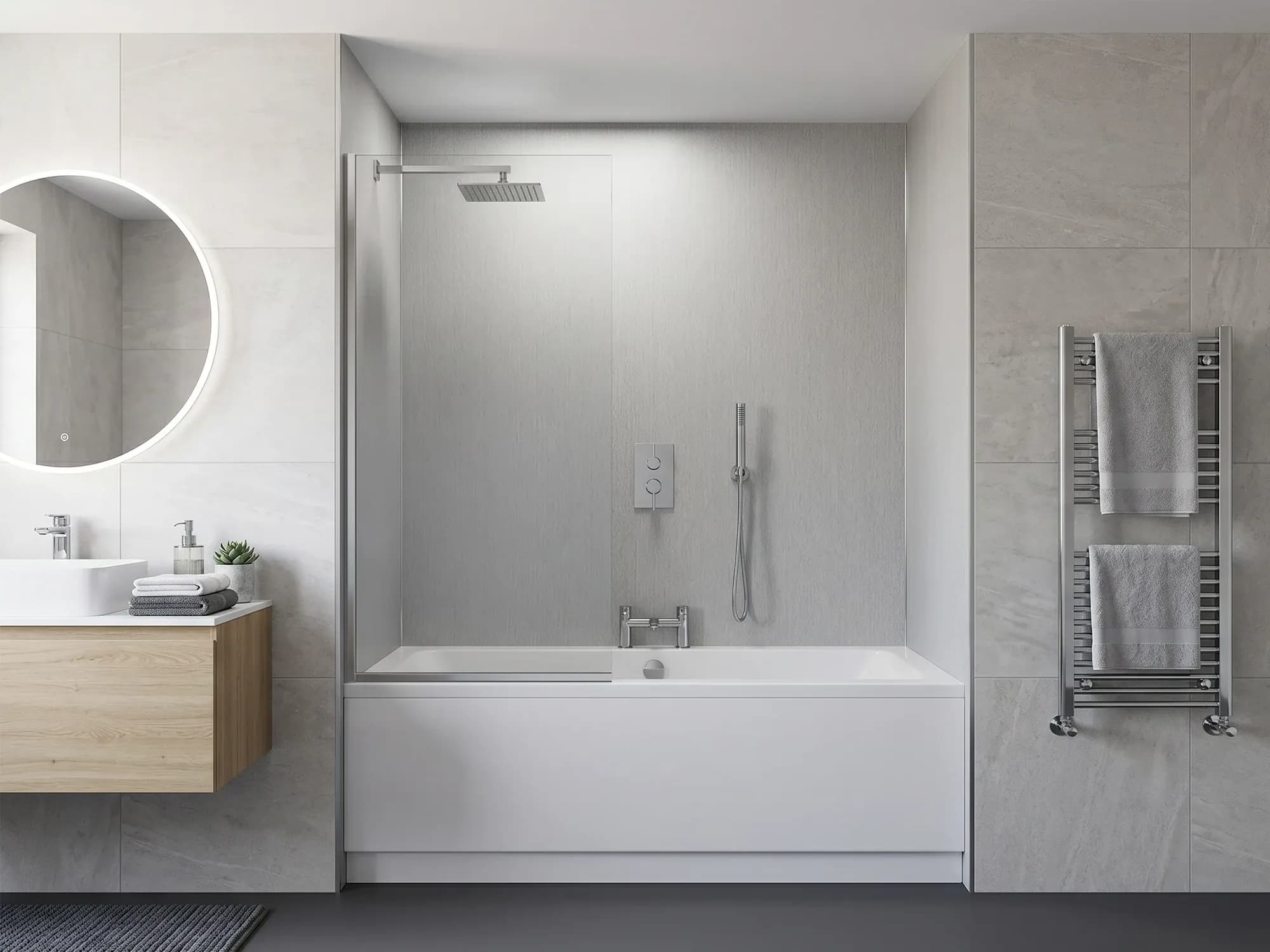
A fixed shower panel paired with a short 90-degree return panel on a wider opening.
Factors That Change the Recommended Width
Shower head position
Back-wall shower heads allow narrower fixed panels because the spray is contained between the panel and the back wall. Side-wall shower heads (on the screen-side wall or open-side wall) require wider panels to control splash.
Multiple shower heads
Showers with two or more fixed shower heads, body sprays, or rain heads have overlapping spray cones. The fixed panel alone usually can't contain all of them — plan on a return panel or a hinged enclosure.
Adjacent fixtures
If a vanity, toilet, or bathroom door is within 24 inches of the open side, splash on those surfaces becomes a concern even with two-thirds coverage. Either widen the panel or add a return.
Walk-in feel preference
Some homeowners prioritize the open walk-in feel over maximum splash control. In that case, a narrower walk-in shower glass panel (slightly under two-thirds) is fine if you're willing to manage occasional spray.
The two-thirds rule is the starting point. Shower head position and adjacent fixtures decide whether you push wider or stay tighter.
How Dulles Glass Sizes Your Panel
Our team confirms the opening width, wall plumb, threshold slope, shower head location, and surrounding fixtures before fabrication. That measurement step helps prevent gaps, poor splash control, and panels that feel too large for the room. Because every fixed shower panel is cut to your exact opening, that on-site check is what separates a panel that simply fits from one that fits well.
Need Help Sizing a Fixed Shower Screen?
Walk-in shower sizing depends on opening width, shower head location, pan slope, and how the rest of the bathroom is laid out. Dulles Glass confirms all of these during an in-home measurement, then specifies the exact panel width before fabrication. Service availability depends on your project location.
Dulles Glass can help you compare Tela shower screens, frameless shower doors, custom shower doors, and professional installation options for your bathroom. Request a quote with your opening dimensions to get started.
Frequently Asked Questions
How wide should a fixed shower screen be?
For a standard walk-in shower, plan on a fixed shower screen that covers about two-thirds of the opening. For a 60-inch opening, start around 40 inches — a 36-inch panel may work with a back-wall shower head, while a 48-inch panel gives stronger splash control. The exact width depends on shower head position and glass thickness.
What is the standard fixed shower screen width?
Standard fixed shower screen widths range from 24 to 60 inches. The most common sizes are 36 and 48 inches, which fit the majority of residential walk-in shower openings. Custom widths between these increments are available.
What is the maximum width for a single fixed shower panel?
Many 3/8-inch tempered glass fixed panels top out around 60 inches before additional support may be recommended, depending on height, anchoring, wall condition, and layout. For wider panels, the glass often steps up to 1/2-inch tempered, or a structural clamp or header is added.
How much of the shower opening should a fixed screen cover?
A common guideline is two-thirds. A fixed screen that covers roughly two-thirds of the opening provides splash control while keeping the walk-in feel of the open one-third. Narrower coverage works best when the shower head is on the back wall and angled inward.
What if my opening is wider than a single fixed shower screen can cover?
For openings wider than 60 inches, the right call is usually a fixed screen plus a short return panel at the open end, or a hinged glass door filling part of the opening. Both keep the open feel while controlling splash on a wider opening.
Need a custom-sized fixed shower screen?
Dulles Glass fabricates and installs custom fixed shower screens in any width. Send us your opening dimensions and we'll recommend the right panel size.
Why choose Dulles Glass
54+
Years Glass expertise
10,000+
Projects Measured and installed Yearly
3-Year Warranty
On custom installations
4.9/5 Rating
Customer Reviewed
Ready to start your glass project?
Tell us what you are planning and our glass experts will help you find the right solution.