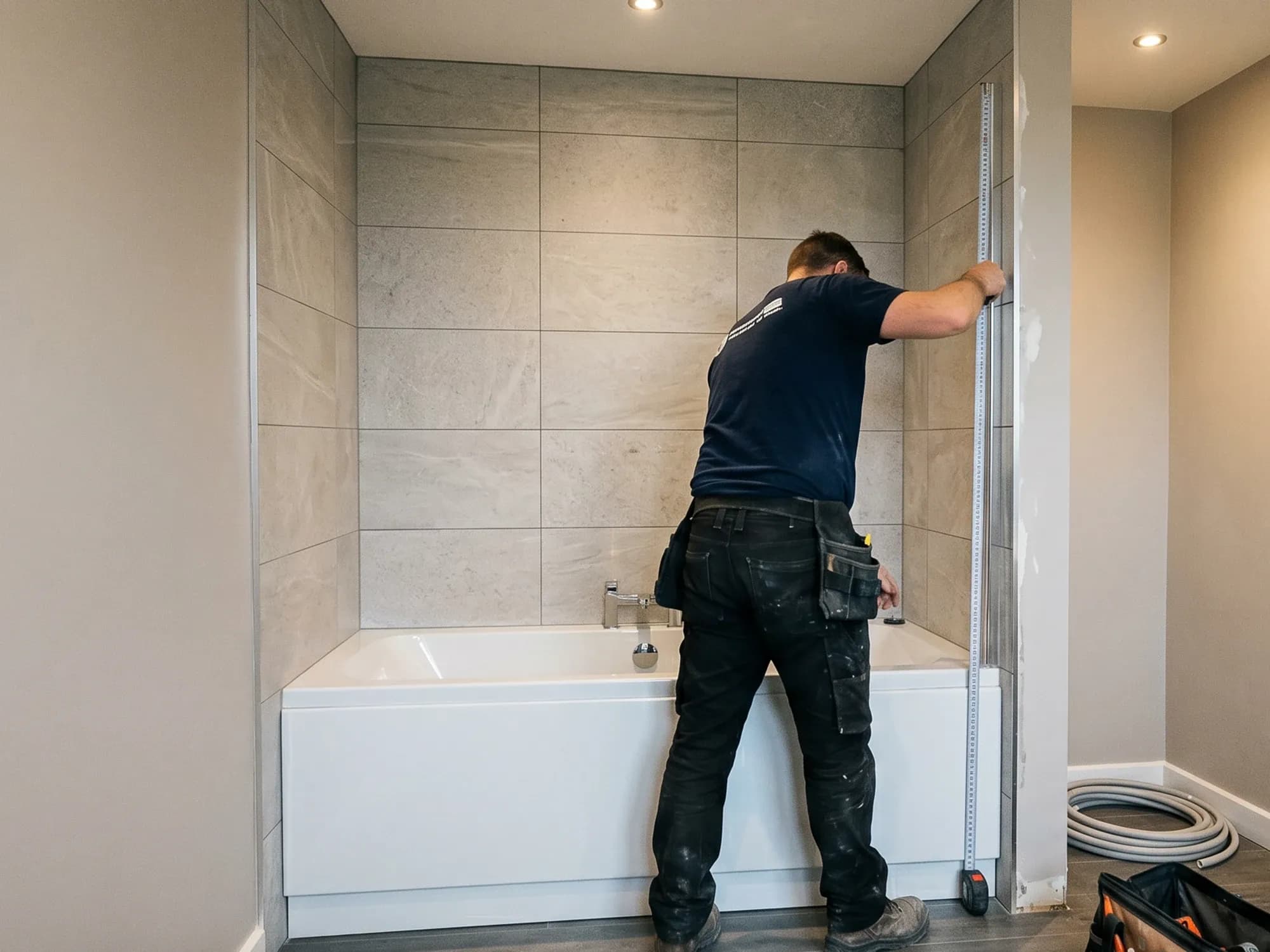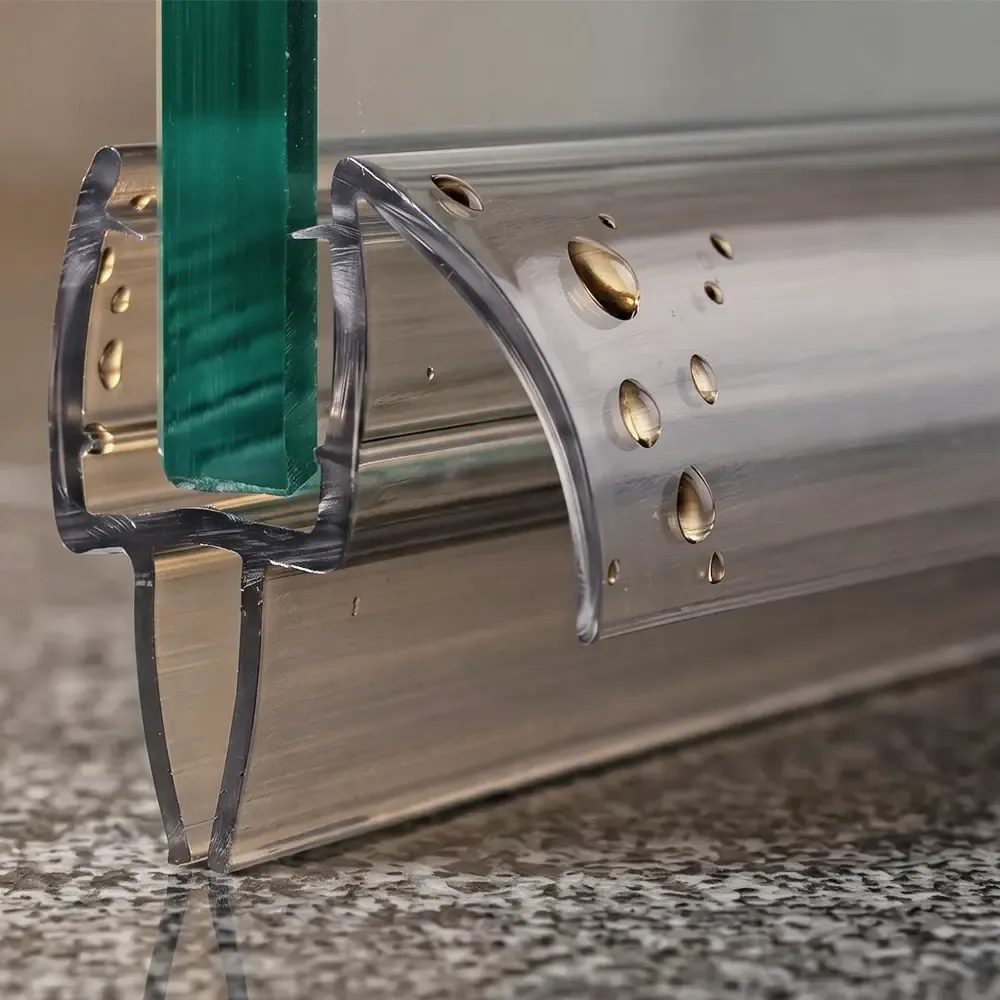
A worn shower door sweep is one of the most common reasons water ends up on the bathroom floor. Here's how to tell whether yours needs replacing, how to match the right part, and how to swap it yourself in about 10 minutes.
Reviewed by John Flouhouse, Installation Team Lead at Dulles Glass
A shower door sweep, also called a shower door bottom seal or drip rail, is the vinyl strip attached to the bottom of a glass shower door. When it cracks, hardens, or stops touching the threshold, water can leak under the door onto the bathroom floor. In most cases, the right fix is replacement, not repair.
Short Answer
In most cases, a worn shower door sweep should be replaced, not repaired. If the vinyl is cracked, brittle, yellowed, or no longer touches the threshold evenly, adhesives will not hold up to daily flexing. A matched replacement sweep usually costs $8–$25 and can often be installed in about 10 minutes.
The Bottom Line
- The sweep is a vinyl drip rail at the bottom of the glass that deflects water back into the shower.
- Lifespan: 3–5 years in residential use. Sooner with heavy bleach exposure or abrasive cleaning.
- Most sweeps slide into a U-channel at the bottom of the glass. Replacement often takes about 10 minutes with no special tools.
- Repair is rarely worth it. Cracked vinyl usually cannot be re-bonded reliably; replacement is the only practical fix.
- $8–$25 in materials per sweep at most suppliers. Bring the old sweep to the supplier or photograph it before ordering to match the profile.
What Is a Shower Door Sweep?
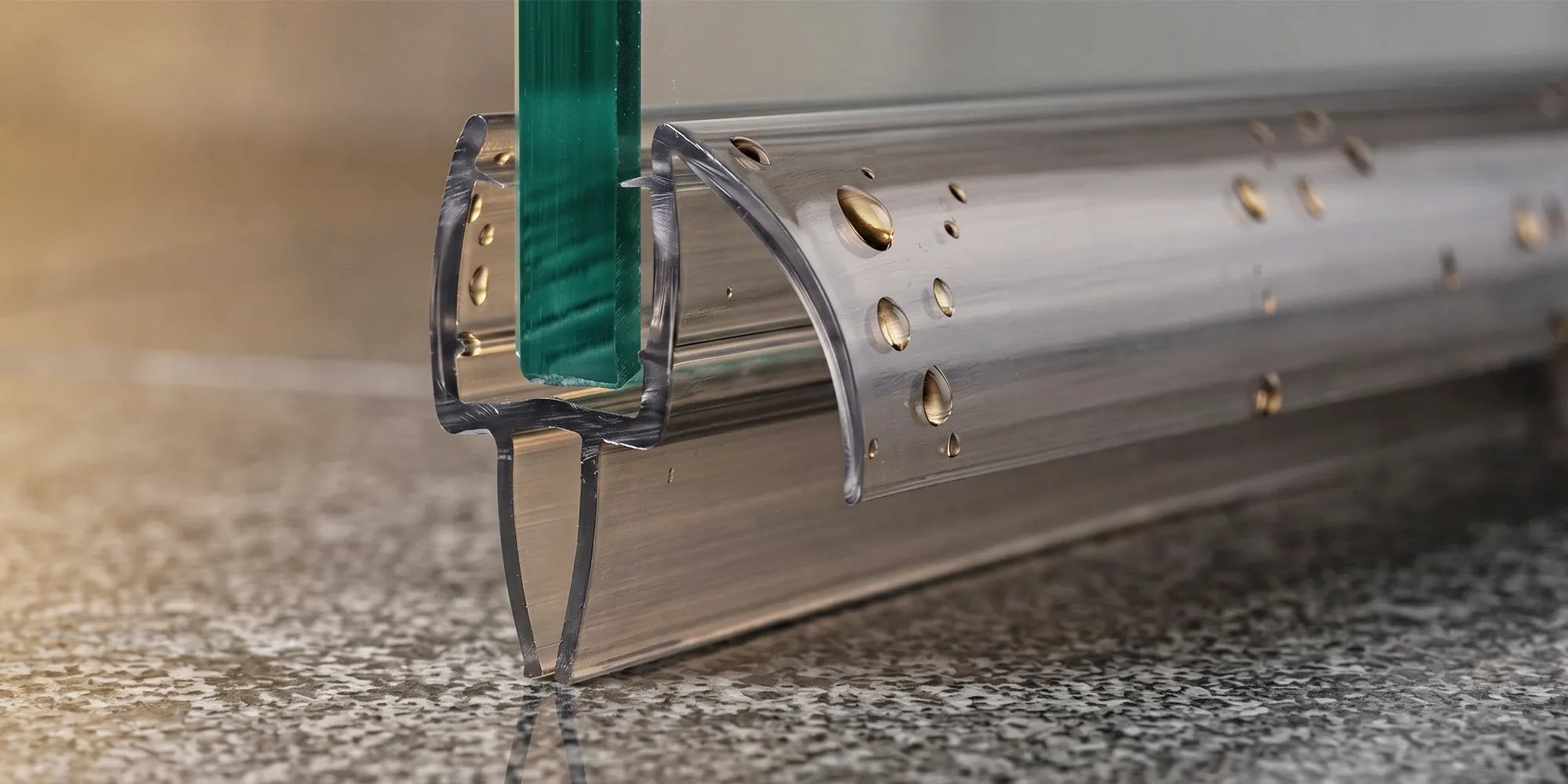
A U-channel sweep grips the bottom edge of the glass while the flexible fin meets the threshold.
When water sprays inside the shower, it tends to run down the inside of the glass and pool at the bottom edge. Without a shower door bottom seal, that water runs out under the door onto the bathroom floor. The sweep's job is to deflect it back inside.
Two common sweep designs:
- Drip rail (most common): a flexible vinyl fin angled inward toward the shower. Water hits the fin and deflects back into the pan.
- Bottom seal: a flat vinyl strip that sits flush against the threshold, sealing the gap between the glass and the curb. Used on sliding shower doors and on thresholds where the door doesn't pivot.
Shower Door Sweep vs. Shower Door Threshold
The shower door sweep is a vinyl strip attached to the bottom of the glass. The threshold is the masonry or tile curb that the sweep drags against. They're two different things — the threshold is fixed in place and usually needs less frequent attention; the sweep is consumable and needs replacement every 3–5 years. If you're seeing a leak under the shower door at the bottom edge, the sweep is usually the first part to check.
Why Shower Door Sweeps Fail
Vinyl is durable, but it does wear down over time. The chemistry and physics of a shower bathroom degrade vinyl in predictable ways:
- UV exposure — even indirect daylight from a bathroom window slowly degrades the polymer over years
- Heat cycling — hot water in the shower, cool room temperature between uses, repeated thousands of times
- Chemical exposure — bleach, ammonia, acidic descalers all accelerate cracking
- Mechanical fatigue — the sweep flexes every time the door opens and closes; thousands of cycles wears the fin
- Hard-water mineral deposits — calcium and silicate buildup makes the vinyl brittle at the contact edge
Signs You Need to Replace a Shower Door Sweep
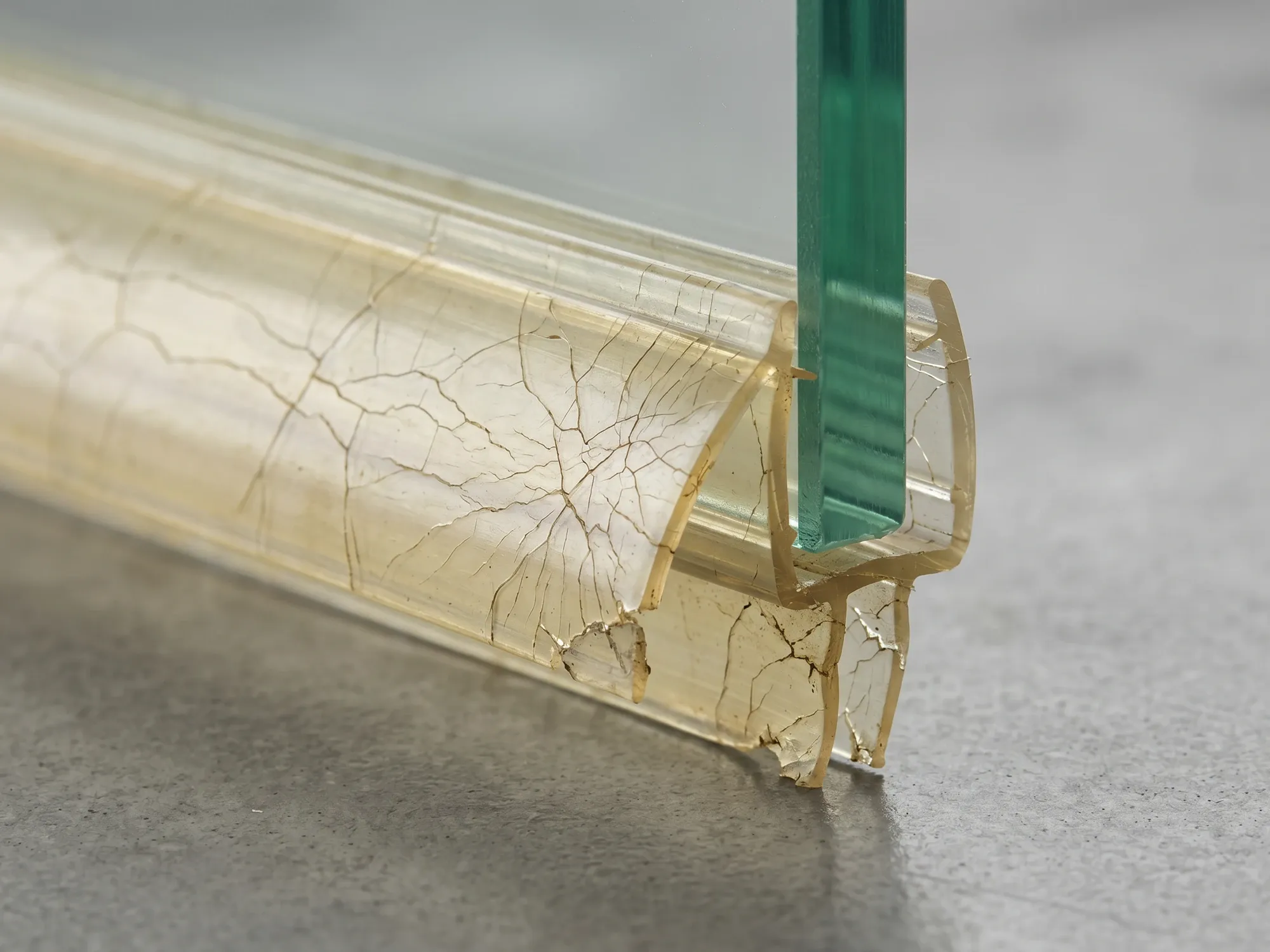
Cracked, chalky vinyl is a clear sign the sweep needs replacing.
Replace the Sweep if You See
- Visible cracking along the fin or at the bend
- The vinyl is chalky, hard, or brittle (it should stay slightly pliable)
- Water on the bathroom floor outside the shower after every use
- The fin no longer makes contact with the threshold across the full width
- Discoloration or yellowing that doesn't wipe off (the vinyl has absorbed cleaning chemistry)
- Visible mineral buildup that can't be cleaned off the contact surface
Can You Repair a Shower Door Sweep?
| Problem | Repair possible? | Best fix |
|---|---|---|
| Sweep loose at one end | Sometimes | Slide it back into the channel; a dab of clear silicone at the end-cap holds it |
| Vinyl cracked | No | Replace the sweep |
| Fin torn | No | Replace the sweep |
| Sweep yellow or brittle | No | Replace the sweep |
| Door still leaking after replacement | N/A | Check door alignment, threshold slope, and strike seal |
Almost never worth it. The vinyl chemistry that makes a sweep flexible also makes it impossible to bond reliably with silicone, super glue, or any common adhesive. "Repairs" with caulk or sealant typically fail within weeks because the daily flex cycles separate the bond.
The one situation where repair makes sense:
- If the sweep is otherwise intact but has come loose from the channel at one end, slide it back in and add a dab of clear silicone at the channel end-cap to hold it. This is maintenance, not really repair.
Every other failure mode — cracking, brittleness, fin tearing, water leakage — calls for replacement, not repair.
How to Identify the Right Replacement Sweep
Before ordering, identify the existing sweep:
Glass thickness
Most shower doors use 1/4-inch (6mm), 5/16-inch (8mm), 3/8-inch (10mm), or 1/2-inch (12mm) glass. Measure the glass at the bottom edge before ordering, because sweep channels are sized to the glass thickness.
Channel attachment
The two common attachments:
- U-channel slide-in: the sweep slides over the bottom edge of the glass with a U-shaped channel that grips both sides. Most common.
- H-channel or under-glass: the sweep seats in a metal channel that's adhered to the bottom edge of the glass. Common on framed and semi-framed doors.
Fin direction
Look at which way the fin points:
- Inward (toward the shower): deflects water back inside. Used on hinged doors that open outward.
- Straight down or outward: seals against the threshold. Used on sliding shower doors or on thresholds where the door doesn't pivot.
Bottom gap to bridge
Measure the gap between the bottom of the glass and the threshold with the door closed. The fin needs to bridge that gap without dragging so hard that the door sticks.
Photo Before Ordering
The fastest way to get the right replacement: photograph the existing sweep from below (looking up at the bottom edge of the glass), and send the photo with your order. Suppliers can usually identify the profile in seconds from a photo.
Tools and Materials Needed
- Tape measure
- Utility knife or shears
- Microfiber cloth
- Mild cleaner
- Replacement sweep matched to your glass thickness and channel profile
- Optional: putty knife and a little soapy water
How to Replace a Shower Door Sweep
Often About 10 Minutes per Sweep
- Open the door fully and prop it so you can access the bottom edge.
- Pull the old sweep out by sliding it sideways out of the U-channel. Steady firm tension; if it sticks, a thin putty knife loosens it.
- Wipe the channel clean with a damp microfiber. Mineral buildup or vinyl residue in the channel will prevent the new sweep from seating fully.
- Measure the channel length and cut the new sweep to match. Use a sharp utility knife or shears — a clean cut prevents the sweep from curling.
- Slide the new sweep into the channel from one end. A light film of soapy water on the channel helps it slide if the fit is tight.
- Work it across the full length, pressing firmly into the channel.
- Trim excess at the far end with the utility knife.
- Test: close the door, look for the fin making even contact with the threshold across the full width. Run a brief test shower to verify no water gets past.
What to Avoid During Replacement
- Don't use a heat gun to soften the vinyl — it permanently damages the polymer.
- Don't apply silicone or adhesive in the channel — it makes future replacements much harder.
- Don't cut the sweep short to make installation easier — the seal needs to extend the full width of the door.
- Don't reuse the old sweep "until next time" if it's already failing — every shower with a bad sweep is putting water somewhere it shouldn't.
How Much Does a Shower Door Sweep Cost?
Most replacement shower door sweeps cost about $8–$25 for the part itself, depending on profile, length, and supplier. Professional help may cost more if the door is misaligned, the threshold slopes outward, or the glass hardware needs adjustment beyond a simple sweep swap.
If the sweep itself is in good shape but the leak hasn't stopped, the issue is usually one of three things: the door is misaligned (hinges have sagged, panel hangs off-square), the threshold slopes outward instead of inward, or the wall-side strike seal has also failed. None of those are sweep problems — the sweep just gets the blame.
How to Make a New Shower Door Sweep Last
The same care that extends seal life extends sweep life:
- pH-neutral cleaners only
- Daily squeegee to reduce mineral buildup at the contact line
- Don't let bleach pool against the vinyl
- Wipe the contact edge dry weekly during the routine clean
With careful maintenance, sweeps can run 5–7 years before needing replacement. With neglect (bleach, abrasive scrub, no daily squeegee) they fail in 18 months.
The sweep is the cheapest, easiest fix on the whole shower door. There's no reason to live with a failing one.
Sweep Replaced and Still Leaking?
If replacing the sweep does not stop the leak, the issue may be door alignment, threshold slope, or worn shower hardware. Dulles Glass can help inspect, repair, or replace custom shower glass and shower door components. Explore our frameless shower doors, custom shower doors, and shower door hardware for help finding the right replacement part.
If you're not sure which sweep profile fits your door, our team can help match the part from a photo or inspect the shower door in person.
Shower Door Sweep FAQs
How often should I replace my shower door sweep?
Every 3–5 years in normal residential use. Replace it sooner if the vinyl shows cracking or chalkiness, especially if you use bleach-based cleaners regularly.
Can I repair a cracked shower door sweep?
Almost never worth it. Vinyl can't be reliably bonded with common adhesives, and the daily flex cycles separate any repair within weeks. Replacement is the only practical fix.
How do I know what shower door sweep to buy?
Three identifications: glass thickness (1/4, 5/16, 3/8, or 1/2 inch), channel type (U-channel slide-in or H-channel under-glass), and fin direction (inward for hinged doors, straight or outward for sliders). The fastest path is to photograph the old sweep from below and send it to the supplier.
How do I replace a shower door sweep?
Open the door, slide the old sweep out of its channel (steady firm tension), wipe the channel clean, cut the new sweep to length with a utility knife, and slide it in from one end. Often about 10 minutes total, with no special tools beyond a tape measure and a sharp knife.
Why is water getting under my shower door?
Either the sweep has cracked, the fin no longer makes even contact with the threshold (door is misaligned), or the threshold itself is sloping outward (less common). Replace the sweep first — it solves many bottom-edge leak cases.
Are shower door sweeps universal?
Some profiles are widely shared across manufacturers, but glass thickness and channel type both vary. "Universal" sweeps from big-box stores work for some doors but not all. Best practice: photograph the old one and match the profile.
References
- C.R. Laurence shower door sweep product specifications
- Dulles Glass replacement shower door sweep inventory and installer guidance
- Dulles Glass shower door installation and repair experience
Need a replacement shower door sweep?
If Dulles Glass made or installed your shower door, our team can help identify the correct replacement sweep using your original order details. For doors we didn't make, photograph the old sweep and we can help identify a compatible profile. Service available.
Why choose Dulles Glass
54+
Years Glass expertise
10,000+
Projects Measured and installed Yearly
3-Year Warranty
On custom installations
4.9/5 Rating
Customer Reviewed
Ready to start your glass project?
Tell us what you are planning and our glass experts will help you find the right solution.