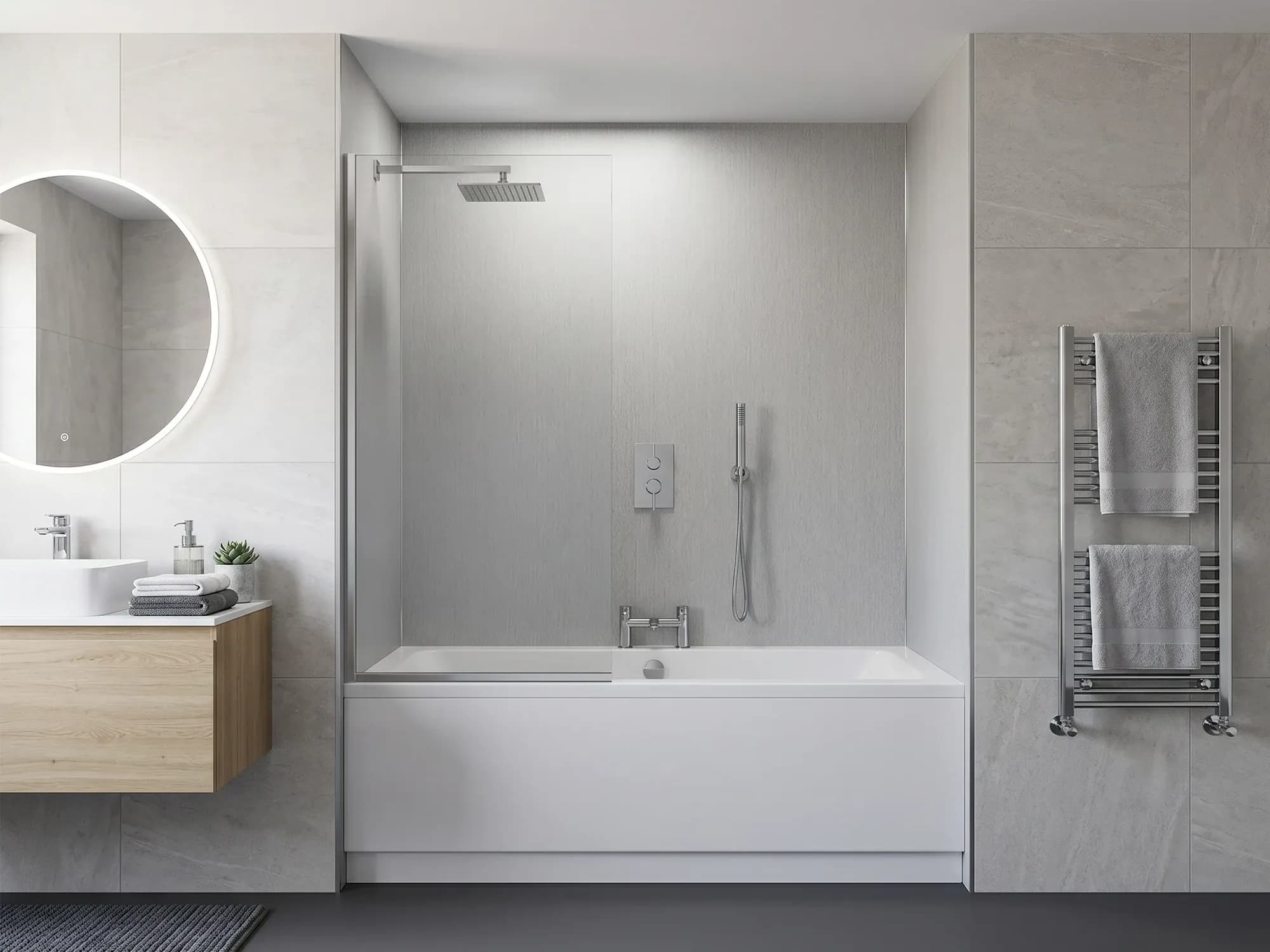
A single panel bathtub screen is one piece of tempered glass mounted to the shower-head end of the tub, replacing a curtain or sliding door. Here's how they work, common sizes, splash control, and when a single panel is the right call.
Reviewed by John Flouhouse, Installation Team Lead at Dulles Glass
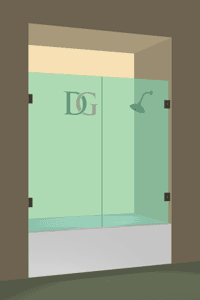
A single panel bathtub screen — also called a single panel bathtub door or frameless bathtub screen — brings the clean look of a frameless shower panel to a tub-shower combo. The single panel anchors to one end of the tub and covers the shower-head side. The other end stays open for easy tub access, and the frameless build keeps the bathroom feeling open.
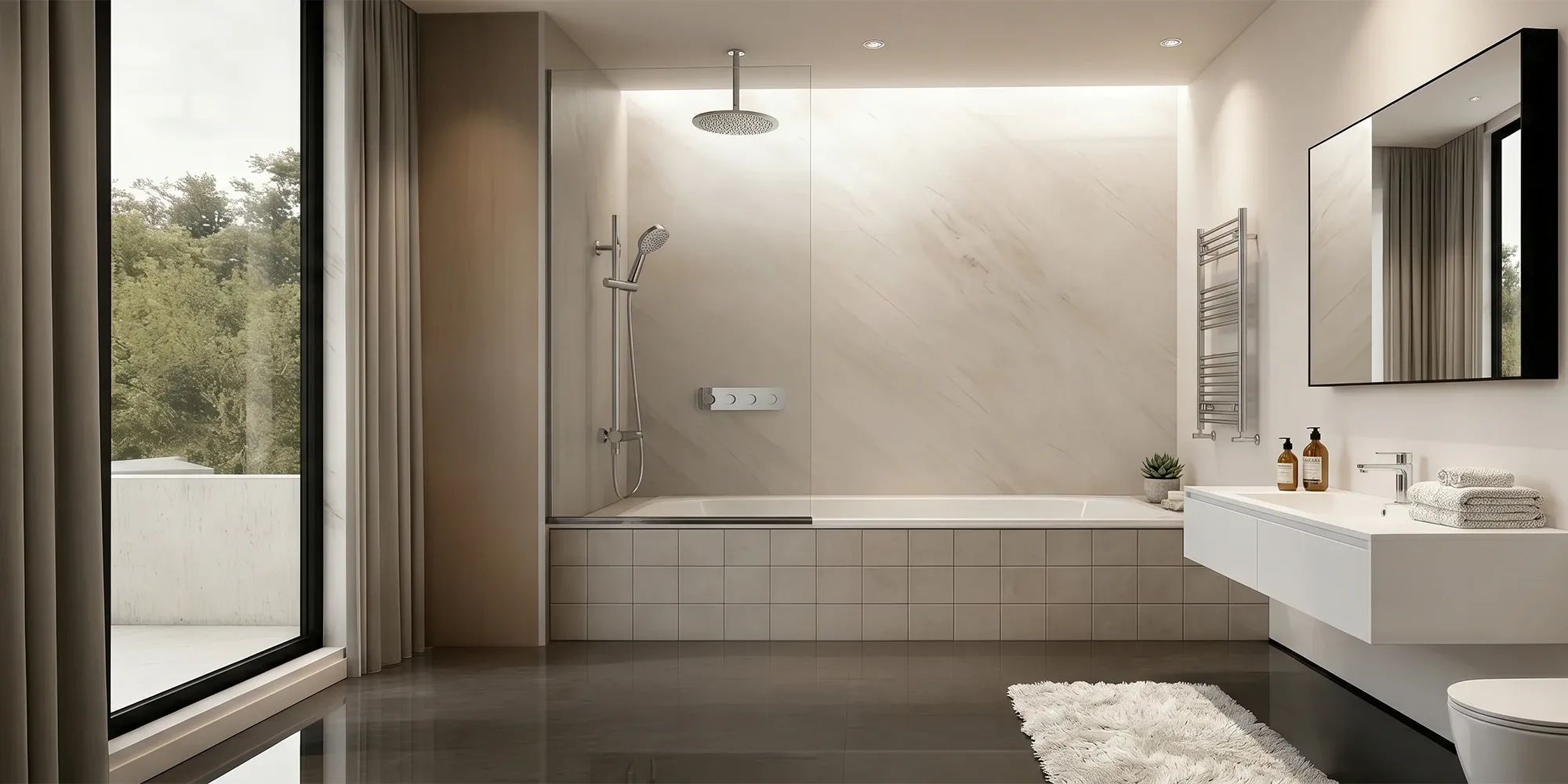
A single panel bathtub screen on a standard alcove tub, covering the shower-head end.
Key Takeaways
- One panel of tempered glass anchored to the shower-head end of the tub.
- Standard sizes: 28-36 inches wide, 56-60 inches tall.
- Two main types: fixed panel (no movement) and pivoting panel (swings outward for tub access).
- Splash control on the shower-head side; open access on the opposite end.
- Cleaner look and longer life than a shower curtain or sliding tub door.
What Is a Single Panel Bathtub Screen?
A single panel bathtub screen is usually made from tempered glass, often 3/8 inch for frameless installations, anchored to the wall above one end of a bathtub. The panel rises from the tub edge to roughly head height (56-60 inches), forming a glass shield between the shower spray and the bathroom.
It replaces:
- Shower curtains — the most common existing setup on alcove tubs.
- Sliding tub doors — the framed-bypass sliders found on older tub-shower combos.
- Folding or bifold tub doors — a less common older configuration.
The panel doesn't fully enclose the tub. The opposite end of the tub stays open for stepping in and out, which keeps the bathroom feeling open and gives the tub accessibility a curtain offers but a full enclosure doesn't.
Dulles Glass builds these as part of our bathtub doors and screens line, alongside custom shower doors and full installation service.
Types of Single Panel Bathtub Screens
Fixed (stationary) panel
The panel is rigidly anchored to the wall with clamps and stays in one position. This fixed tub panel is the simplest configuration — no moving parts. Best for users who don't need to move the panel for cleaning or for getting in and out of the tub.
Pivoting (swinging) panel
The panel hinges at the wall mount and can pivot outward, depending on the hinge style and bathroom clearance. This hinged bathtub screen is used when access to the inside of the tub matters — cleaning, helping a child bathe, or installing in a tight space where a fully fixed panel would block reach.
Fixed panel with hinged section
A wider fixed panel with a smaller hinged door on the open end. Combines the splash control of a fixed panel with full enclosure when the door is closed. Mid-range configuration that suits larger alcove tubs.

Fixed tub panel versus a pivoting bathtub screen — the pivoting version swings outward for tub access.
Sizing for a Standard Alcove Bathtub
Standard residential bathtubs are 60 inches long, 30-32 inches wide, and 14-18 inches deep. A single panel screen on a standard tub:
| Dimension | Typical range | Notes |
|---|---|---|
| Panel width | 28-36" | Covers shower-head end; leaves 24-32" open at the opposite end on a standard 60" tub |
| Panel height | 56-60" | Tall enough to block most typical shower spray; final height depends on shower head placement and user preference |
| Glass thickness | 3/8" tempered | Standard for frameless. 1/4" only on framed configurations. |
| Wall anchor | Stud or solid blocking | Acrylic or fiberglass surrounds may require special anchoring after wall support is confirmed. |
Custom sizes are available for non-standard tubs — older cast iron tubs, drop-ins with apron sides, or alcove tubs with unusual widths.
What to Measure Before Ordering
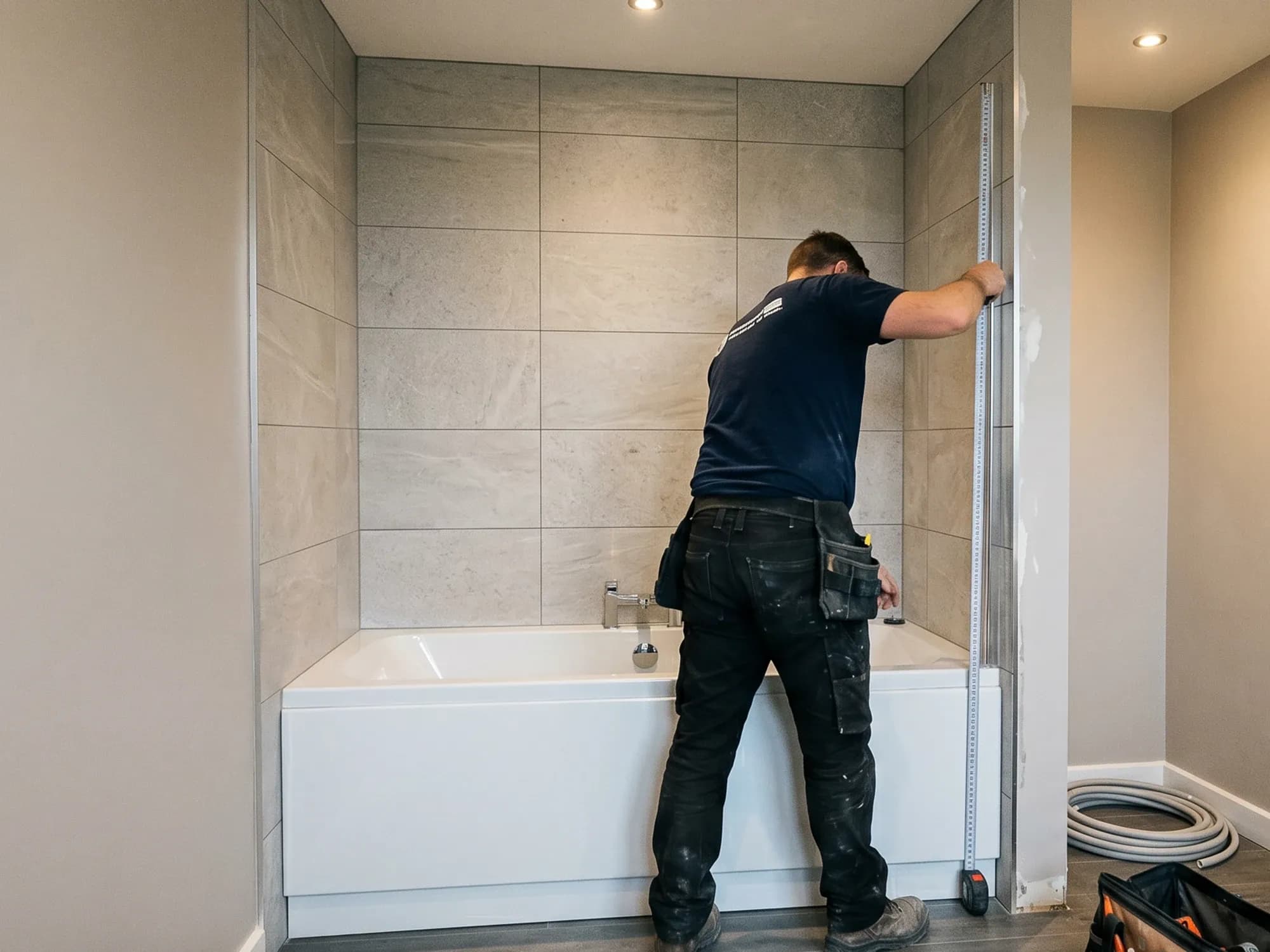
Before we fabricate a single panel bathtub door, our team confirms a short list of details. If you're gathering numbers for a quote, these are the ones that matter:
- Tub length — most alcove tubs are 60 inches, but older tubs vary.
- Tub width — typically 30 to 32 inches.
- Wall material — tile, acrylic, or fiberglass, which decides the anchoring hardware.
- Shower-head location — which wall it sits on and how high it is mounted.
- Desired panel width — how much of the tub you want the glass to cover.
- Hardware finish — chrome, brushed nickel, matte black, or a specialty finish.
- Fixed or hinged — whether the panel should stay stationary or pivot for access.
Hardware and Glass Options
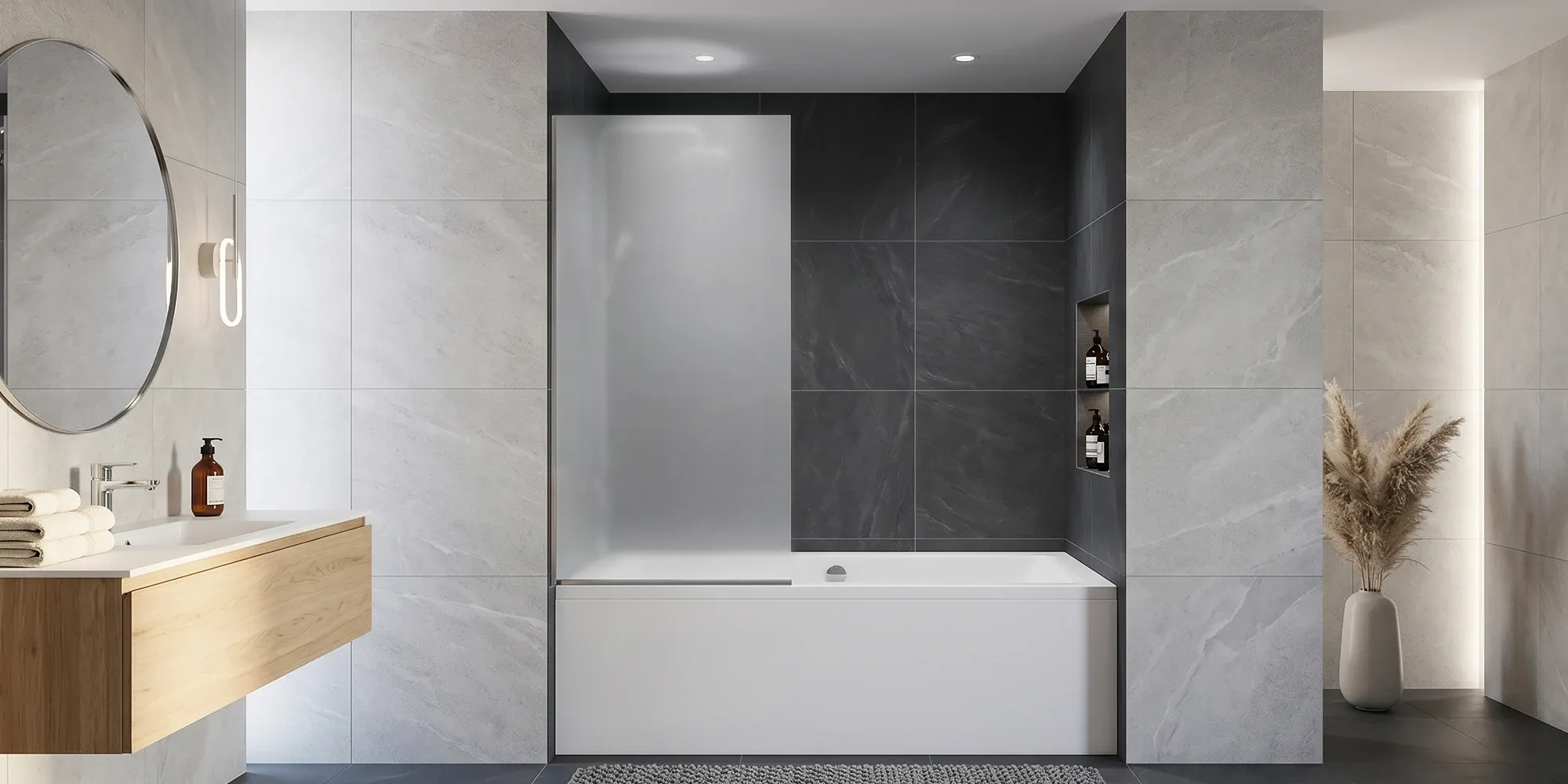
A glass tub screen keeps a clean frameless look and pairs with chrome, brushed nickel, matte black, or specialty finishes to match the rest of the bathroom:
- Glass — standard clear tempered glass, ultra-clear low-iron glass with no green tint, or frosted glass for added privacy.
- Hardware finish — chrome and brushed nickel are the common choices, with matte black and specialty finishes available.
- Protective coating — an optional protective glass coating helps the glass shed water and stay cleaner between washes.
- Mounting hardware — wall clamps for a fixed tub panel, or a hinge set for a pivoting screen.
How Single Panels Control Splash
A single panel works because of where the spray comes from: the shower head is mounted on one end wall, and the spray cone hits the back wall and the floor of the tub. The panel covering the shower-head end of the tub catches sideways spray before it exits.
The open end stays mostly dry because the spray pattern doesn't reach it. The exception is rain shower heads or wider-spray fixtures, where overhead spray can exit the open end — these layouts usually need a wider or hinged-extension configuration.
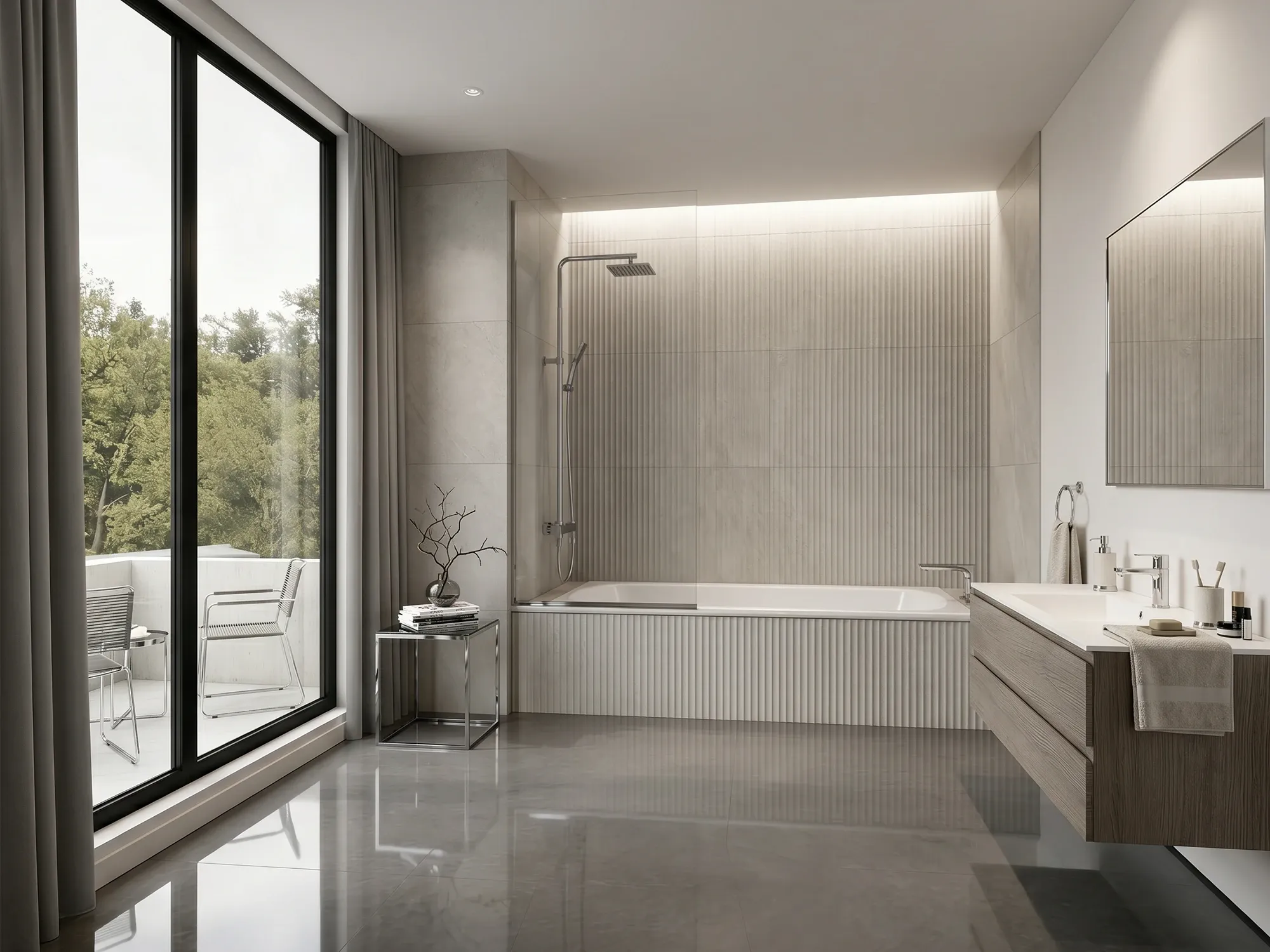
The panel covers the shower-head end of the tub; the open entry end stays mostly dry when spray is directed away from it.
When a single panel won't control splash
If the shower head is mounted on the long wall of the tub (the back wall), the spray points across the open end of the tub. In that case, a single panel at the head end of the tub doesn't block the spray. Plan on a fixed-plus-hinged configuration or relocate the shower head during the remodel.
Single Panel vs Shower Curtain or Sliding Tub Door
| Factor | Single panel screen | Shower curtain | Sliding tub door |
|---|---|---|---|
| Splash control | Good on head end | Variable — curtains can blow inward | Best — full enclosure |
| Visual look | Modern, clean | Casual, basic | More enclosed, often framed |
| Lifespan | Long-lasting with care | 1-3 years | 10-20 years |
| Maintenance | Easy — daily squeegee | Replace; wash regularly | Track collects soap scum |
| Cost | Higher upfront | Lowest | Mid-range |
| Tub accessibility | Open one end | Pulls aside | Half-width walk-through |
When to Choose a Single Panel Bathtub Screen
The configurations where a single panel is the right call:
- Alcove tub with the shower head on a short wall — the standard residential setup.
- Bathroom upgrade replacing a curtain — modernizes the look without rebuilding the tub.
- Tub used mostly for showering with occasional baths.
- Modern or minimalist bathroom design — a glass panel reads cleaner than any curtain or sliding system.
- Aging in place planning — easier to step into than a sliding tub door (no track at the threshold).
Not the right call for:
- Tubs in shared bathrooms where full privacy matters (a sliding door encloses more)
- Rain shower heads or multi-spray installations
- Soaking tubs used primarily for baths (no shower)
A single panel bathtub screen is the cleanest upgrade for a tub-shower combo when you want the look of glass without the cost of a full enclosure.
How Much Does a Single Panel Bathtub Screen Cost?
Pricing varies with the glass, hardware, and tub layout, so Dulles Glass quotes each single panel bathtub screen individually rather than listing a flat price. A few factors typically move the cost:
- Glass size — a wider or taller panel uses more tempered glass.
- Fixed vs. hinged hardware — a hinge set for a pivoting panel adds more than the simple wall clamps used on a fixed tub panel.
- Low-iron or frosted glass — ultra-clear low-iron glass and frosted glass cost more than standard clear tempered glass.
- Wall material — tile, acrylic, or fiberglass surrounds call for different anchoring hardware.
- Installation complexity — non-standard tubs, limited wall support, or tight clearances add labor.
Every panel is custom fabricated, then professionally measured and installed, so a quote based on your tub is the most accurate way to compare options.
How Installation Works
A professional installer confirms the tub dimensions, wall material, shower head location, and available wall support before fabrication. For fixed panels, the glass is secured with wall clamps or channels. For pivoting panels, the hinge position and swing clearance are checked before the glass is ordered. Because bathtub screens rely on secure anchoring, final measurements and wall support matter as much as the glass size itself.
Need Help Choosing a Single Panel Bathtub Screen?
The right size and configuration depend on the tub layout, shower head position, and how the tub is used. Dulles Glass fabricates and installs custom single panel bathtub screens, hinged screens, and full sliding tub doors.
Our installation team measures the tub opening, confirms wall support, and recommends fixed or hinged hardware based on the shower layout.
Explore our bathtub enclosures, doors, and screens, custom shower doors, and professional installation — or request a quote with your tub dimensions.
Frequently Asked Questions
What is a single panel bathtub screen?
A single panel bathtub screen is one piece of tempered glass mounted to one end of a bathtub. It replaces a shower curtain or a sliding tub door with a clean, frameless glass shield. It can be fixed in place or designed to pivot for easier tub access.
Do single panel bathtub screens stop water splash?
Yes, when sized and positioned correctly. A panel covering the shower-head side of the tub stops most direct side spray. Standard panels usually cover about half of a 60-inch tub, while wider custom panels can improve splash control.
What size single panel bathtub screen do I need?
Standard single panel bathtub screens range from 28 to 36 inches wide and 56 to 60 inches tall. The panel covers the shower-head end of the tub and leaves enough open space for comfortable entry, often about 24 inches or more on a standard 60-inch tub.
Are single panel bathtub screens better than shower curtains?
For most users, yes. A glass screen looks cleaner, controls splash better, and is long-lasting when installed correctly and maintained with regular cleaning, versus a curtain that needs replacement every few years. The trade-offs: higher upfront cost, and no full enclosure if you want to fully close off the tub.
Can a single panel bathtub screen be installed on any tub?
Most standard alcove and three-wall bathtubs accept a single panel screen. Drop-in tubs in a corner alcove typically work well; freestanding tubs and tubs with curved or sloped sides usually need a custom-fitted panel.
How wide should a fixed glass panel be for a bathtub?
On a standard 60-inch tub, a fixed glass panel is usually 28 to 36 inches wide, covering the shower-head end while leaving comfortable entry room. The exact width depends on the tub size, the shower head location, and how much splash coverage you want.
Ready to replace a curtain with a glass bathtub screen?
Dulles Glass fabricates custom bathtub screens and installs shower and bathtub glass. Send us your tub dimensions, shower head location, and preferred hardware finish to schedule an in-home measurement.
Why choose Dulles Glass
54+
Years Glass expertise
10,000+
Projects Measured and installed Yearly
3-Year Warranty
On custom installations
4.9/5 Rating
Customer Reviewed
Ready to start your glass project?
Tell us what you are planning and our glass experts will help you find the right solution.